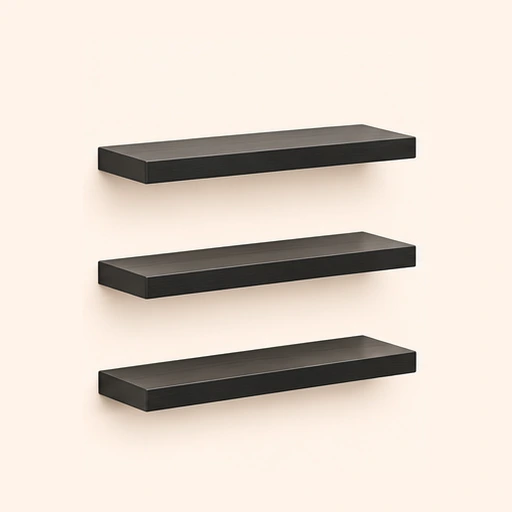
BAYKA Black Floating Shelves 15.7in, Set of 3, Wall Mount Wood Shelf
BAYKA's three black wood shelves are listed at 15.7 inches, offering a matching set for a compact wall display.
Start with the wall construction and intended load. Compare shelf depth, bracket style and the clearance above a chair or walking route.
As an Amazon Associate I earn from qualifying purchases. Product illustrations are representative. View Amazon for actual product photographs and specifications.
BAYKA's three black wood shelves are listed at 15.7 inches, offering a matching set for a compact wall display.
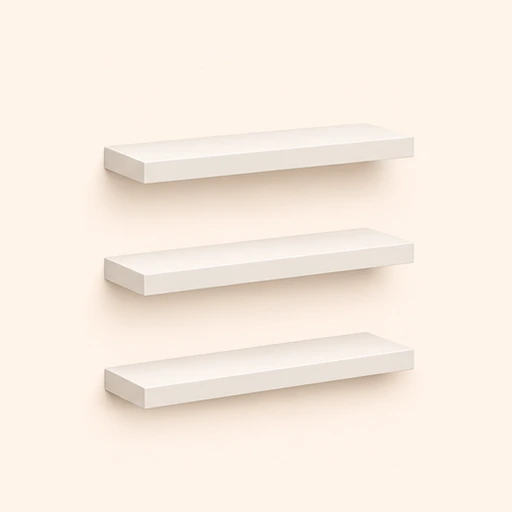
Amada's three white 15.7-inch shelves provide a lighter alternative for displaying decor against a pale wall.
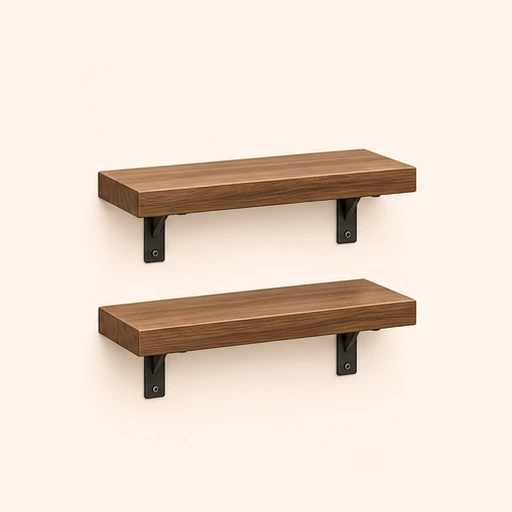
Two brown 15.7-inch QEEIG shelves offer a coordinated pair for small bathroom accessories.
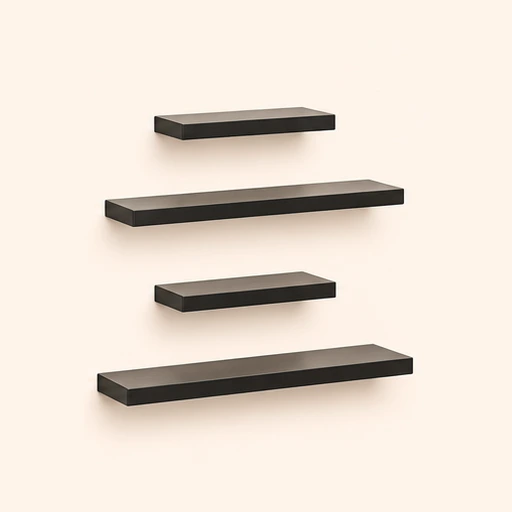
BAYKA's four black shelves in mixed sizes, listed at 16.5 inches, allow a more varied wall arrangement.
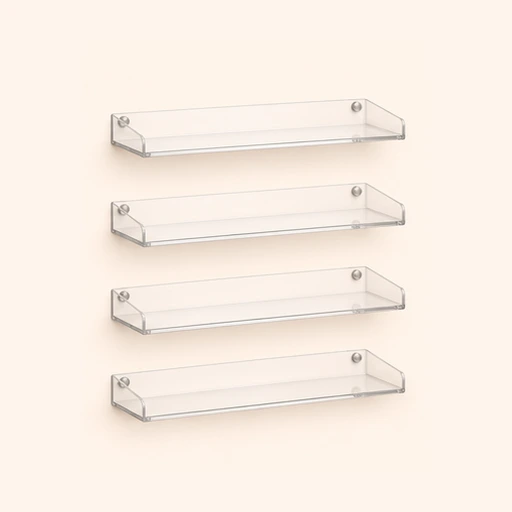
Lifewit's four clear 14-inch acrylic shelves keep bathroom items visible without the look of a solid wood ledge.
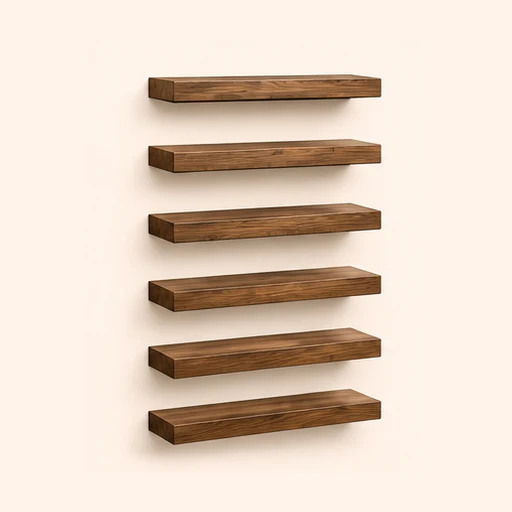
Six rustic-brown floating shelves provide enough pieces to spread small displays across a larger wall area.
Kitchen floating shelves can keep spices, mugs and small everyday items accessible without using counter space. Decide what you want to display before choosing shelf depth.
Check wall construction, mounting hardware and the stated weight limit. Keep shelves away from locations where heat or moisture could damage their finish.
Measure shelf depth against the objects you plan to display and keep work surfaces clear.
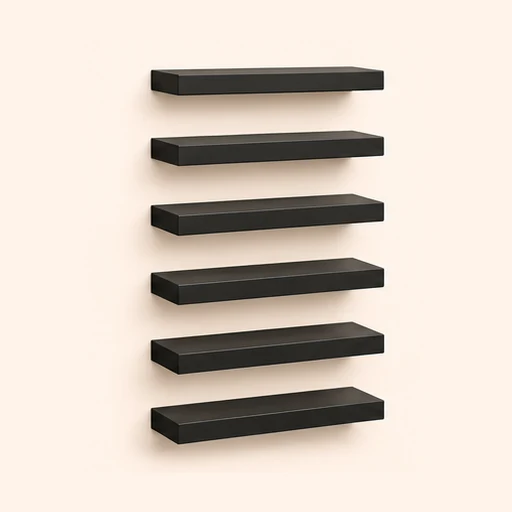
The six black 15.7-inch upsimples shelves suit a repeated, uniform display arrangement.
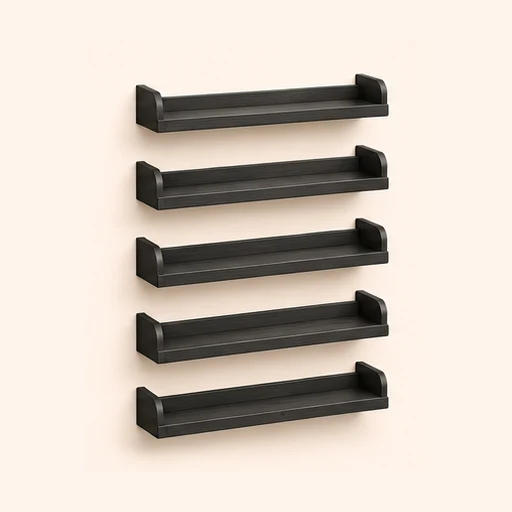
RICHER HOUSE's five black wood shelves feature a raised lip that helps define the front edge of a display.
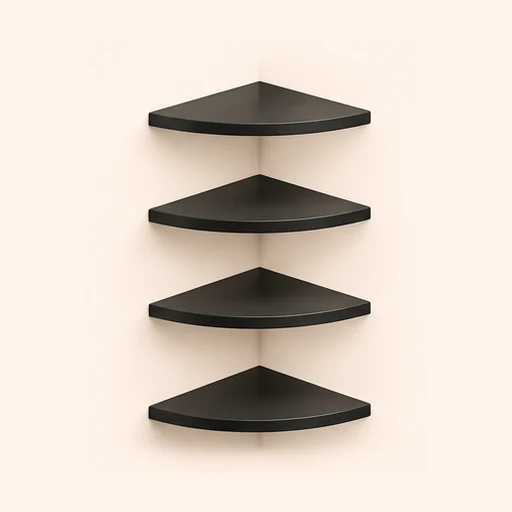
Four black corner shelves put otherwise unused wall corners to work; check the corner angle and mounting surface.
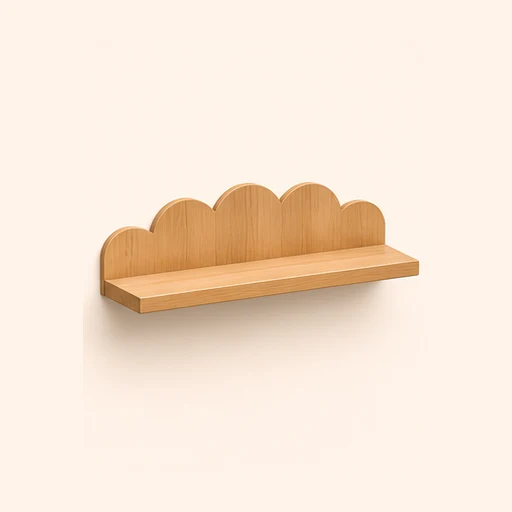
A scalloped wood wall shelf adds a decorative edge to a small display rather than the straight profile of standard ledges.
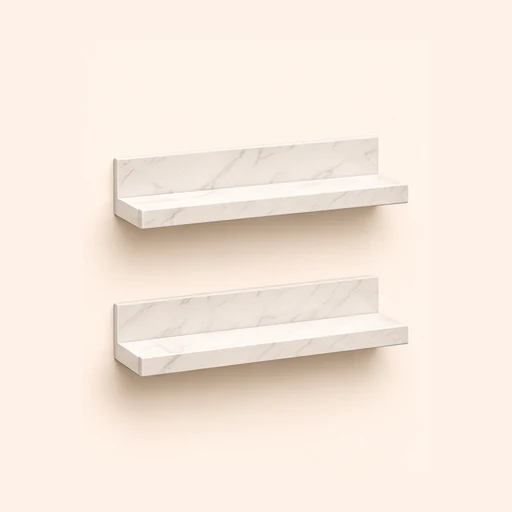
Two quartz Command display ledges include eight medium strips and are listed for up to two pounds; follow surface instructions.
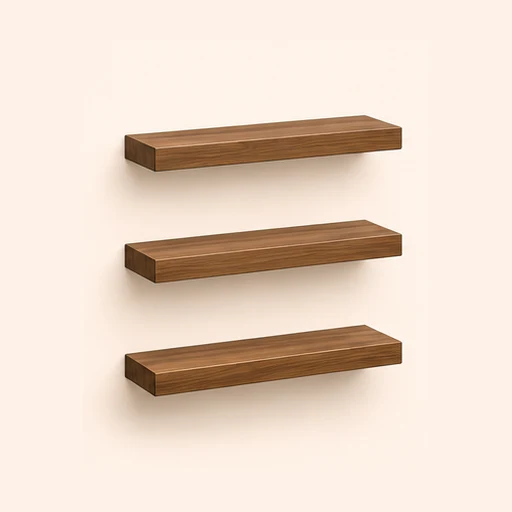
QEEIG's three brown 15.7 × 6.7-inch shelves offer a defined depth for small objects; check mounting and loading guidance.
Bathroom floating shelves can create storage above a toilet or beside a vanity. Choose a location that does not interfere with doors, mirrors or towel rails.
Consider moisture-resistant materials and hardware appropriate for the wall. Use lightweight baskets for small items and follow the installation instructions.
Choose materials suitable for bathroom humidity and follow the specified wall-mount method.
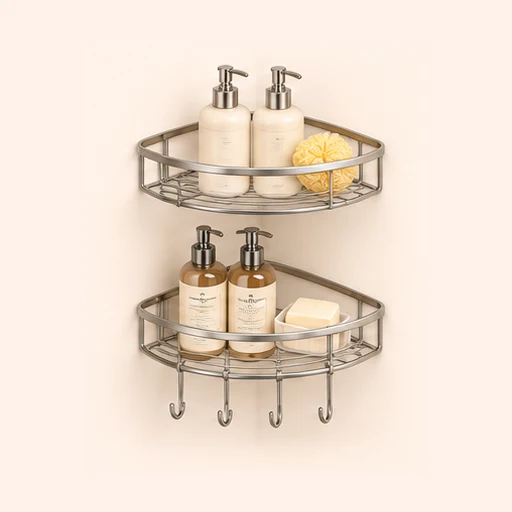
YASONIC's stainless-steel adhesive corner shower caddy combines a soap holder and twelve hooks; verify surface compatibility.
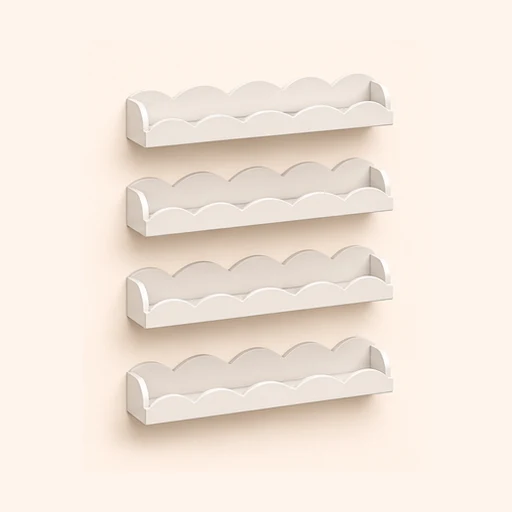
Four white scalloped Shario nursery book shelves provide a decorative way to arrange children's books; mount securely.
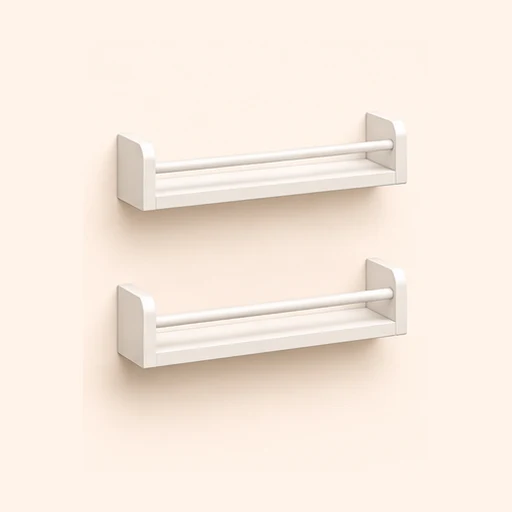
Two white 16-inch shelves with a front lip suit a coordinated pair of display ledges.
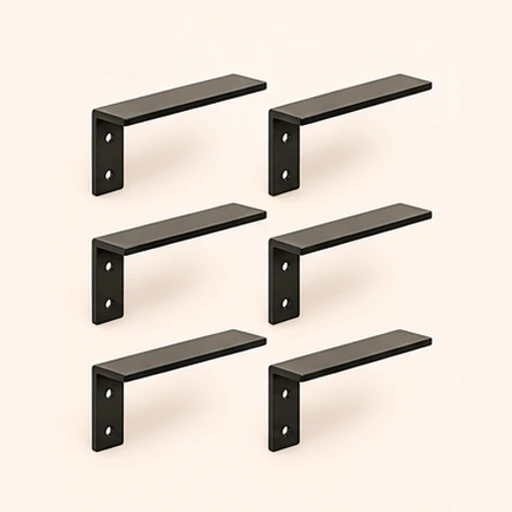
Six-inch L-shaped supports are a six-pack of brackets rather than complete shelves; choose compatible boards and fixings.
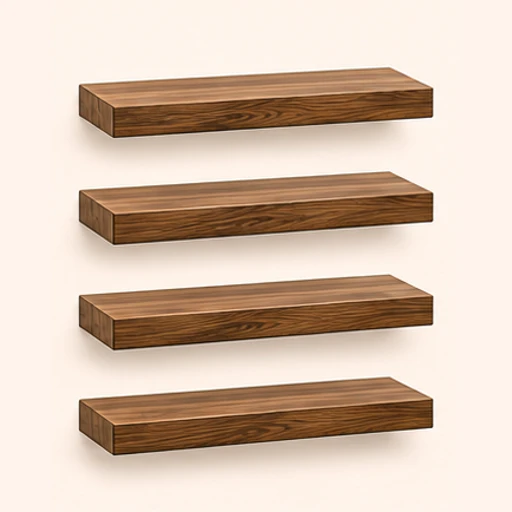
Fixwal's four brown shelves measure 16.5 inches, providing a matched wood-tone display arrangement.
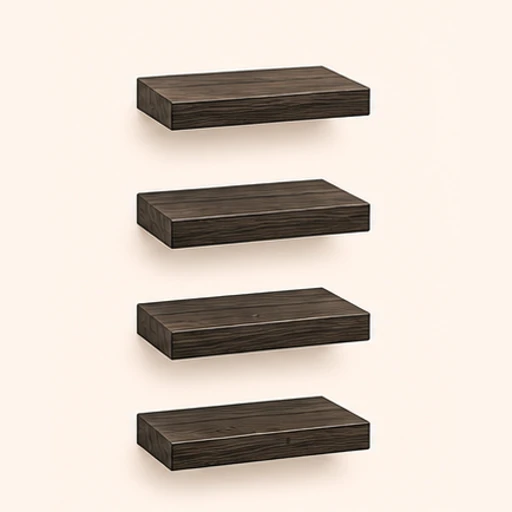
Four dark-carbonized five-inch Fixwal shelves are suited to small individual objects rather than wide storage loads.
Floating shelves ideas work best when the shelves have a clear job, whether displaying books, storing essentials or creating a small decorative arrangement.
Mark the planned positions on the wall before drilling. Leave enough vertical clearance for tall objects and use suitable fasteners for the wall type.
Check the wall construction, mounting hardware and rated load before installing shelves.

How to evaluate these options: compare wall material, mounting hardware, shelf depth and manufacturer load ratings. The cards offer practical product-type suggestions, not hands-on test results. Confirm the exact listing, dimensions, installation instructions and current availability on Amazon before buying.
Concealed brackets give a cleaner profile. Exposed brackets make the support layout visible and may suit a different wall and load.
Check fit Check what wall and mounting hardware the manufacturer permits.
A ledge is shallow and suited to lightweight framed pieces. A deeper shelf holds larger objects.
Check fit Measure your largest object and surrounding walkways.
A fixed shelf keeps a permanent arrangement simple. Rails let you change the height as needs change.
Check fit Check installation permissions, mounting points and applicable load ratings.
Measure the largest object and choose where the shelf will not obstruct movement.
Use only the mounting setup allowed by the shelf and hardware manufacturers.
Confirm the wall construction and use the specified fasteners; do not assume supplied anchors suit every wall.
Use the rating for the actual wall, hardware and installation method.
Allow room above each object to lift it off without scraping.
A rated picture ledge is a compact option for lightweight display.
Check lease and mounting permission before making holes or consider a freestanding display.
Confirm the exact packaged contents and required fasteners before purchase. A board, a complete floating shelf and a bracket-based shelf system are not interchangeable.
Locate suitable studs or structural mounting points. Manufacturer load recommendations depend on how the shelf is mounted and on the wall substrate.
A deep shelf can obstruct walking routes, doors and windows. Make a cardboard outline at the intended height and check head clearance.
Books, ceramics and plants can be heavier than expected. Allow margin for uneven loading and never treat a decorative shelf as a grab bar.
IKEA publishes the U.S. LACK wall shelf (item 902.821.80). Verify what comes with the exact product, mounting instructions and suitability for your wall before buying.
Decide whether the shelf will hold lightweight decor, books or frequently handled objects before selecting its depth. Concealed brackets create a clean appearance but must be installed according to the supplied instructions. Exposed brackets can be easier to inspect and may have different mounting requirements. Check the specified load limit, wall construction and permitted fasteners for the exact model; a shelf’s appearance does not establish its safe capacity. Keep heavy or fragile objects away from edges and avoid mounting above beds or seating without appropriate installation guidance.
Lay the intended items on a table and measure their widest and deepest footprints. A six-inch picture ledge and a twelve-inch storage shelf solve different problems. Check whether your objects will be lifted on and off frequently, especially near seating or above a desk. Decorative depth is not always usable depth when the back rail and front lip take up space.
Consider a no-purchase option first: rearrange a bookcase, relocate seasonal objects, or reduce the number of display pieces. For a shelf above a place where people sit or sleep, consider the consequences of an item being dislodged, not just whether the arrangement looks balanced.
Sketch the wall with outlets, switches, vents, baseboards, and nearby doors. Make sure a shelf will not block a walkway or become a head-height obstacle. Record the lowest and highest reach points for the person who will actually use it.
Drywall, masonry, tile, plaster, and wood framing are not interchangeable mounting surfaces. A fastener that is appropriate for one may be unsuitable for another. A listing that says “easy installation” does not tell you whether the hardware is right for your wall or whether drilling into that location is safe.
Look for the manufacturer’s installation guide before buying. Confirm which wall types are supported, whether studs are required, how many attachment points are needed, and whether the specified anchors come in the box. Do not invent a load rating by multiplying the capacity advertised on individual anchors.
If you rent, ask about permitted drilling before ordering. Adhesive or removable mounting should never be substituted for a required structural fixing. When hidden utilities, fragile wall finishes, or load-bearing uncertainty are involved, consult a qualified installer.
Floating shelves conceal their support, which creates a clean look, but the concealed bracket system dictates load and wall requirements. Verify the actual bracket design rather than assuming a thick shelf is automatically strong.
Visible-bracket shelves expose more of the structural arrangement and can suit utility areas. The relevant comparison is the complete shelf and bracket assembly under its tested conditions, not the visual thickness of the bracket.
Picture ledges use a lip to help contain shallow frames or small display objects. They are generally a different storage category from deep shelving for books, bins, or kitchenware. Check the product’s stated intended use and never place unstable or heavy objects overhead.
Check three distances: wall-to-front depth, vertical clearance to the shelf above, and clearance needed to lift an item out. A basket that fits the shelf width may still be unpleasant to remove if there is no hand clearance above it.
Make a cardboard strip the depth of the proposed shelf and tape it temporarily against the wall to judge projection. Walk past it, sit below it, and open nearby doors. This cheap rehearsal often tells you more than a styled product photograph.
Plan placement around comfortable reach. The shelf nearest the ceiling may be attractive in a rendering but poor for anything needed daily. Avoid layouts that encourage standing on chairs or reaching awkwardly while carrying heavy objects.
Use the manufacturer’s load rating, mounting instructions, and maintenance guidance. The rating may assume a particular wall substrate or evenly distributed load. Confirm these conditions before deciding that the shelf can safely carry books, plants, or appliances.
For heavier storage, freestanding furniture secured as instructed may be a more suitable solution. The CPSC recommends furniture anchoring to reduce tip-over hazards; a decorative floating shelf cannot replace the furniture manufacturer’s safety system.
Before ordering, check whether mounting hardware, end caps, finishing tools, and replacement parts are included. Compare the finished installation cost as well as the shelf price. Save the wall measurements to My Room Project and use Before You Buy for final checks.