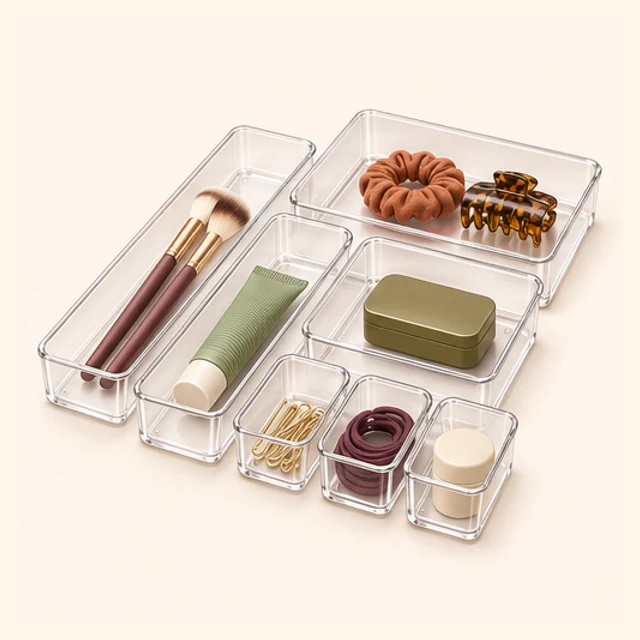
Vtopmart 25 Pack Clear Plastic Drawer Organizers with Non-slip Rubber Pads
Vtopmart's 25 clear plastic trays with nonslip pads allow a custom layout for small kitchen tools.
Compare trays and dividers for utensils and kitchen supplies.
As an Amazon Associate I earn from qualifying purchases. Product illustrations are representative. View Amazon for actual product photographs and specifications.
Vtopmart's 25 clear plastic trays with nonslip pads allow a custom layout for small kitchen tools.
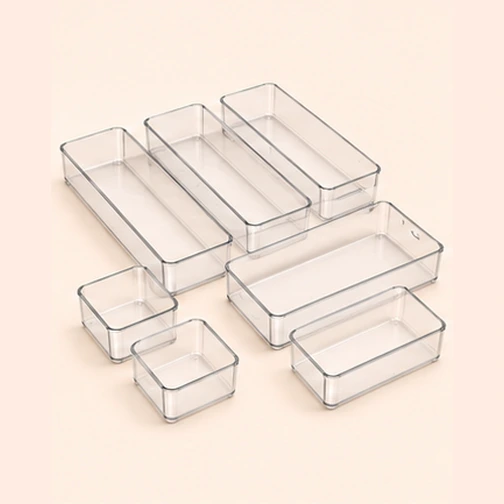
Twenty-five separate clear organizers offer flexible compartment placement for mixed utensils and small accessories.
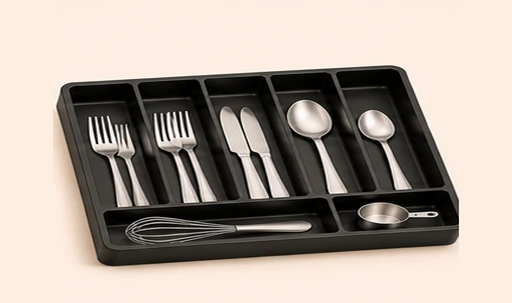
This extra-large black expandable flatware tray is an option for wide drawers that need adjustable cutlery storage.
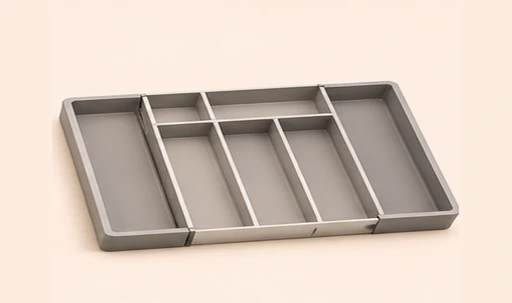
Lifewit's expandable utensil tray lets the organizer width adapt to the drawer rather than leaving a fixed side gap.
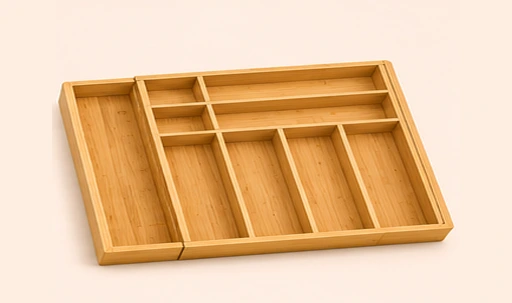
ROYAL CRAFT WOOD's bamboo organizer adds a warm wood finish to a silverware drawer.
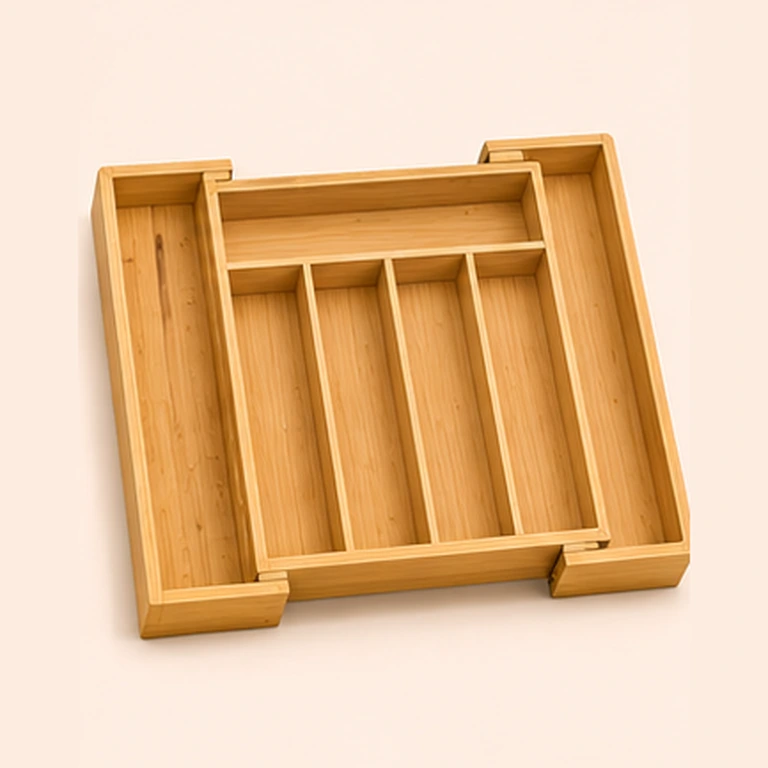
Pipishell's large expandable bamboo tray combines wooden styling with an adjustable width for cutlery.
Kitchen drawer organization ideas work best when the drawer contents are grouped by task. Separate everyday cutlery, cooking tools and less frequently used gadgets.
Measure the drawer’s internal dimensions and remove unnecessary items before buying trays. Keep bulky utensils in compartments that allow the drawer to close freely.
Measure internal drawer width and depth at the narrowest point, not the cabinet exterior.
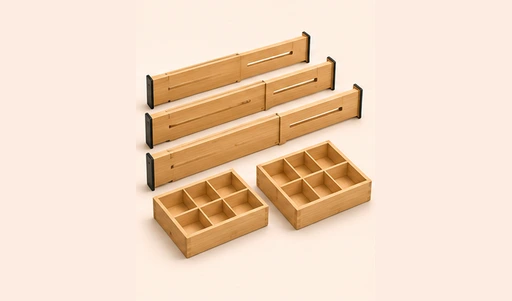
SpaceAid's bamboo dividers include inserts and labels, enabling custom sections instead of a fixed tray pattern.
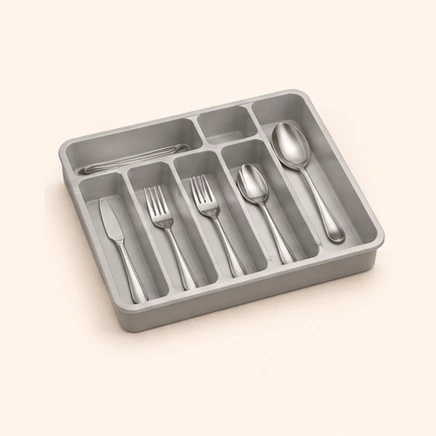
This Lifewit cutlery tray keeps everyday silverware grouped in dedicated compartments; check the tray dimensions.
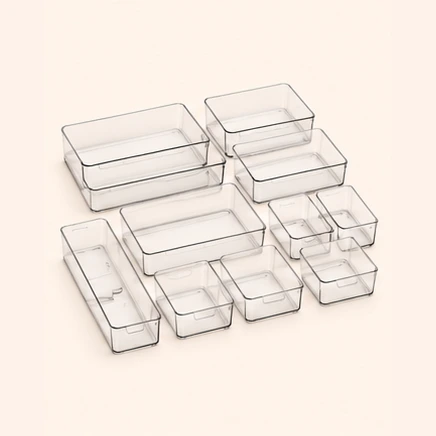
The 25-piece plastic tray set suits separating small tools across multiple drawers using individual containers.
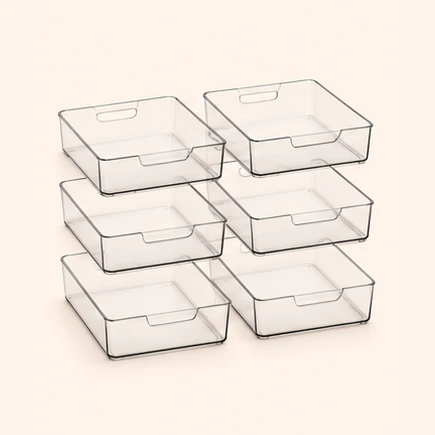
Six large clear plastic trays offer fewer, larger sorting areas for bulky utensils and kitchen accessories.
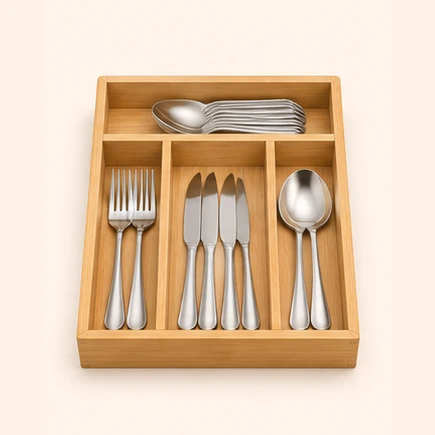
A bamboo silverware holder gives everyday cutlery a dedicated wooden storage layout; compare the compartment lengths.
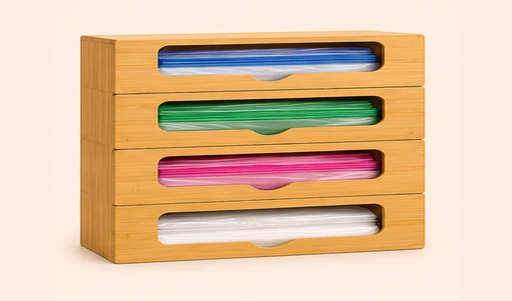
SpaceAid's bamboo bag organizer is designed for food-storage bags such as gallon, quart and sandwich sizes.
A kitchen drawer organizer helps keep flatware and cooking tools from sliding into a jumble. Fixed trays suit standard drawers, while modular bins allow a more flexible layout.
Compare compartment lengths with your longest utensils. Check tray height and leave enough space around the organizer to remove it for cleaning.
Sort utensils by length and frequency of use; check compartment sizes against your largest tools.
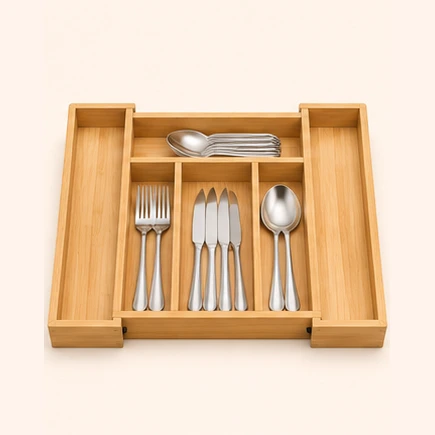
This adjustable bamboo cutlery tray expands to make use of available drawer width; measure both open and closed dimensions.
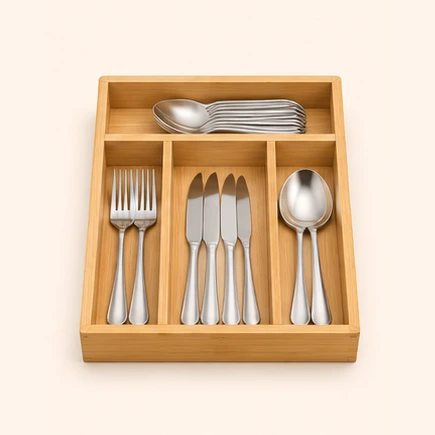
At 8.6 × 12.5 inches, Lifewit's bamboo silverware tray is worth considering for a relatively compact drawer.
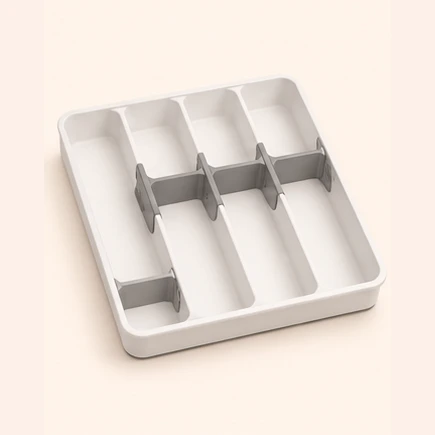
Aujen's adjustable utensil tray offers flexibility when a fixed-width cutlery holder does not fit the drawer neatly.
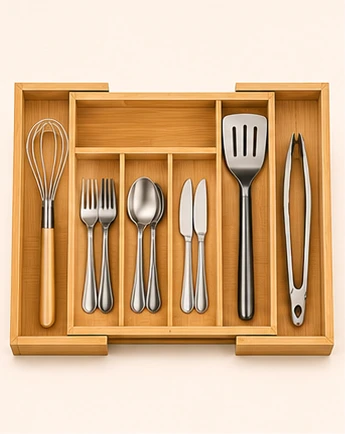
An expandable bamboo utensil holder offers wooden compartments for organizing different lengths of kitchen tools.
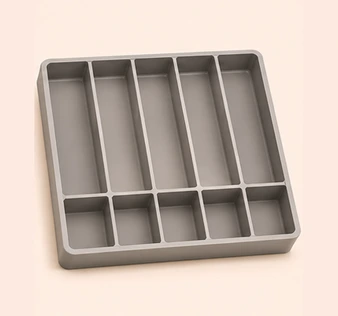
Nine slots distinguish this expandable organizer for households that want more separate cutlery categories.
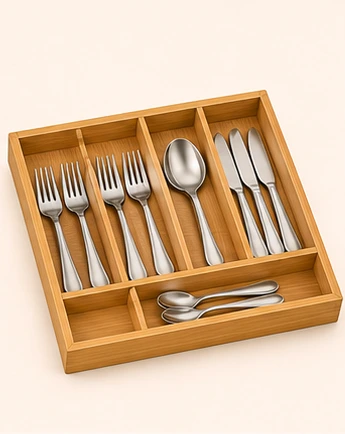
This bamboo flatware tray offers a wood-tone alternative for keeping cutlery grouped in a dedicated drawer.
An expandable utensil organizer can use more of a wide drawer without leaving awkward gaps. Adjustable sides let you accommodate different drawer widths.
Measure the narrowest usable width and check the organizer’s minimum and maximum dimensions. Make sure expanded compartments remain accessible and do not obstruct drawer hardware.
Check the minimum and maximum width of expandable trays and confirm the drawer closes over taller utensils.
Measure width and depth inside the drawer, including changes near the back. Close it slowly over your tallest utensil to test clearance.
Group cutlery, serving utensils, and long tools so a tray or divider solves a specific problem. Keep long tools where the drawer can open fully.
How to evaluate these options: compare internal drawer dimensions, compartment sizes, divider adjustment and closing clearance. The cards offer practical product-type suggestions, not hands-on test results. Confirm the exact listing, dimensions, installation instructions and current availability on Amazon before buying.
A tray gives cutlery its own compartments. Dividers work well when you need long, uninterrupted lanes for utensils.
Check fit Measure the clear drawer width, depth and closing height.
A bamboo tray groups utensils. A dedicated bag holder sorts bag sizes and makes them easier to pull out.
Check fit Measure the largest utensil or bag and leave room to grasp it.
A rigid insert maintains repeatable positions. Separate pieces can make better use of an irregular drawer.
Check fit Test the footprint with paper before committing to a full-width insert.
Measure the usable width, front-to-back depth and closing height inside the drawer.
Measure the narrowest usable width and check the height of utensil handles before closing the drawer.
It works well when side bays make usable space and the extended tray stays clear of the drawer sides.
Keep them in a clear long channel or use adjustable dividers rather than forcing them into a short tray.
Choose a snug fit or use a suitable nonslip liner that does not interfere with closing.
Use the nearest practical drawer to where you set the table or unload the dishwasher.
Check the divider’s height and wall shape, then close the drawer over the tallest item.
Pick the drawer you open most. Empty it onto a towel and separate daily tools, occasional tools and things that belong elsewhere. If the same tool is in more than one pile, keep the version you reach for most and give the rest a different home.
Keep prep tools near the surface where you chop, and serving pieces near the place you plate. Use the front of a full-extension drawer for the tools you pick up repeatedly. If the drawer only opens partway, keep anything needed daily out of its far back corners.
Record the usable inside width and depth, then check the vertical clearance between the drawer base and the opening above it. Test the tallest object in the drawer as you slowly close it. Leave space for your fingers beside tools that lie flat. Measure to the nearest eighth of an inch rather than using the cabinet’s nominal width.
Use folded cardboard or shallow boxes to try a few configurations. Cook three meals using the temporary layout. Notice what slides and what takes two hands to retrieve. If the temporary dividers solve the problem, you have a plan; if you don’t need a divider, skip it.
A drawer organizer should shorten the time between opening a drawer and finding the tool you need. It should not merely divide the drawer into attractive but unusably narrow compartments.
Measure the drawer box inside width at both front and back, inside depth, and clear height beneath any crossbar. Pull the drawer open and note the shortened space from hardware. Lay the longest utensil, scissors and serving pieces side by side before choosing dividers.
These are manufacturer-listed examples chosen to illustrate different form factors—not verified winners, current bestsellers, or products we have personally handled. Listings can change. Check the actual product page, dimensions, materials, capacity, and return conditions before purchase.
Maker page checked November 22, 2026: OXO lists it at 16.35" × 7.33" × 2.49" closed, expanding to 12.83" wide. Before you buy: Measure your drawer's inside width and depth.
Maker page checked November 22, 2026 and live. Before you buy: Manufacturer describes adjustable divisions for long tools; verify the drawer’s height clearance.
Maker page checked November 22, 2026: YouCopia lists it at 15.0–23.7" D × 7.1" W × 2.0" H. Before you buy: Verify fit, drawer travel and compatibility with the actual box.
Before purchasing, discard duplicates you never use and put a cardboard divider into the existing drawer for a week. This tests whether you really need adjustable compartments.
Keep knives safely stored with appropriate edge protection rather than mixed loose among utensils. A sliding or expanding insert must not foul drawer guides; check its own instructions.
Choose compartments by the tools you use daily, not by number of slots. One open long-tool section may prove more useful than many small compartments.