Buying guide
Entryway Bench with Storage: Benches, Wall Hooks, or Simple Catchalls?
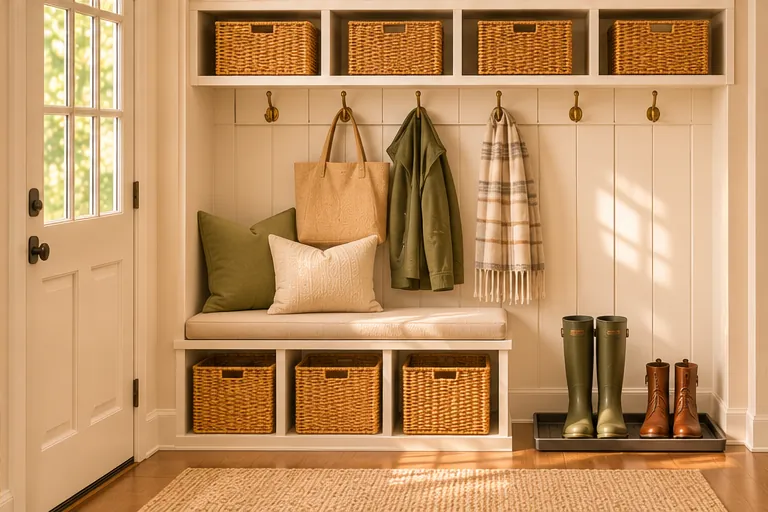
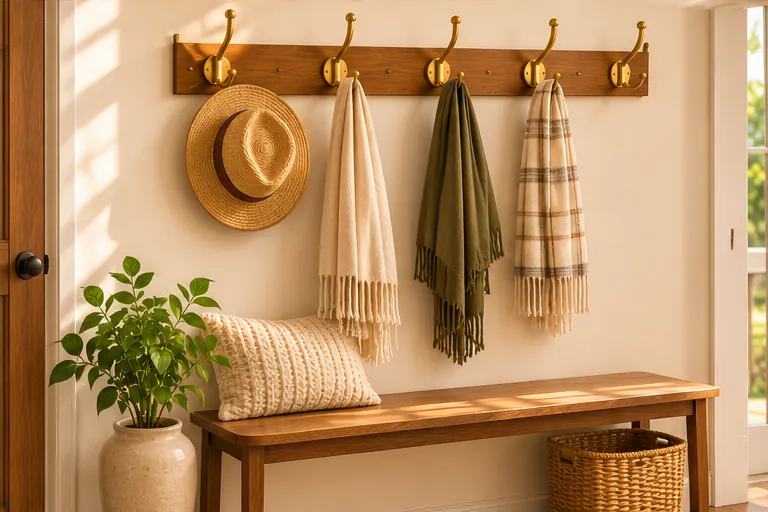
Plan entryway storage by doorway clearance, seating needs, shoe clutter, anchoring, and the people who use the entrance.
Room Guide / Entryway
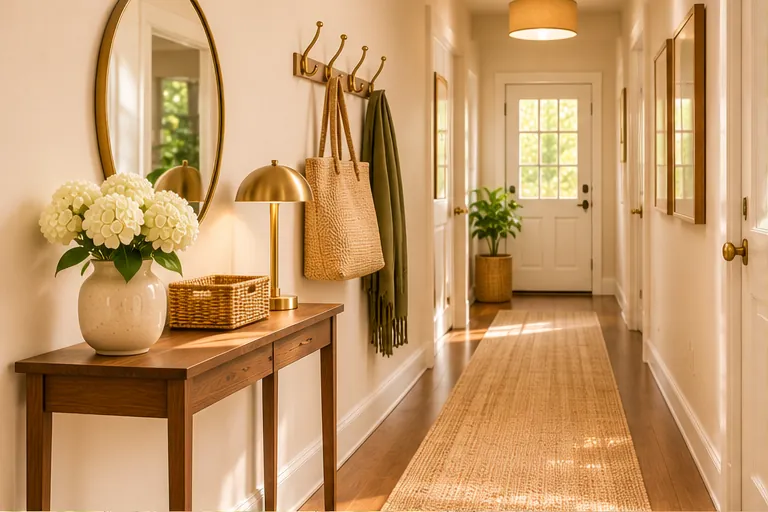
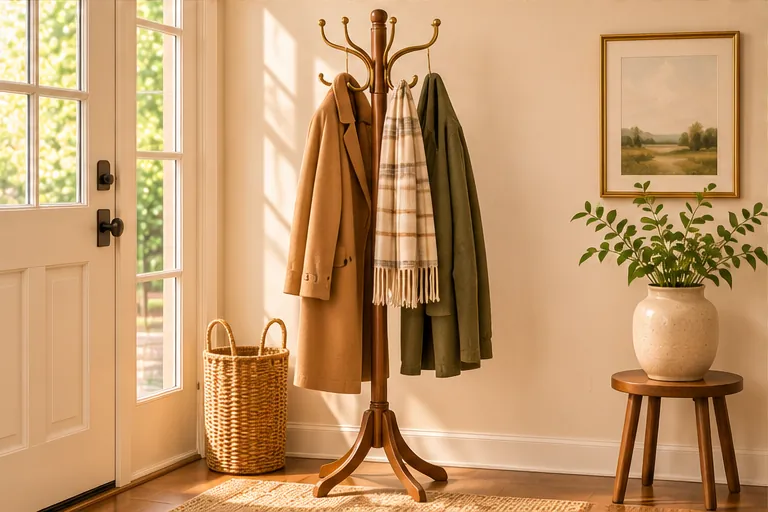
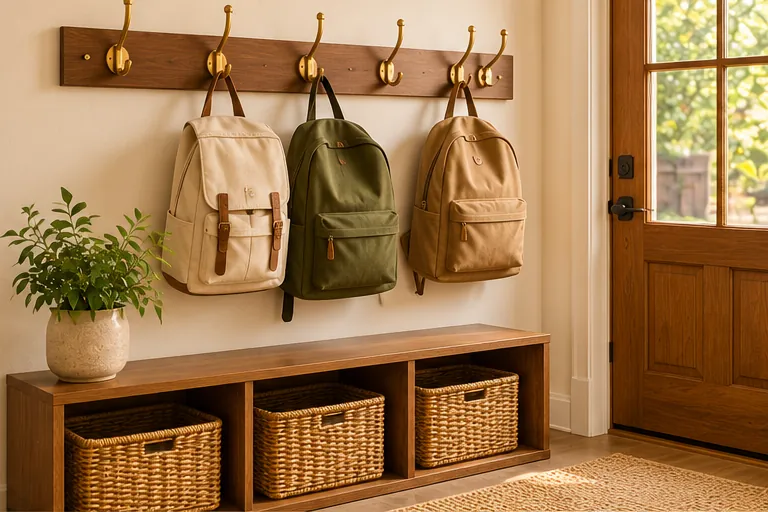
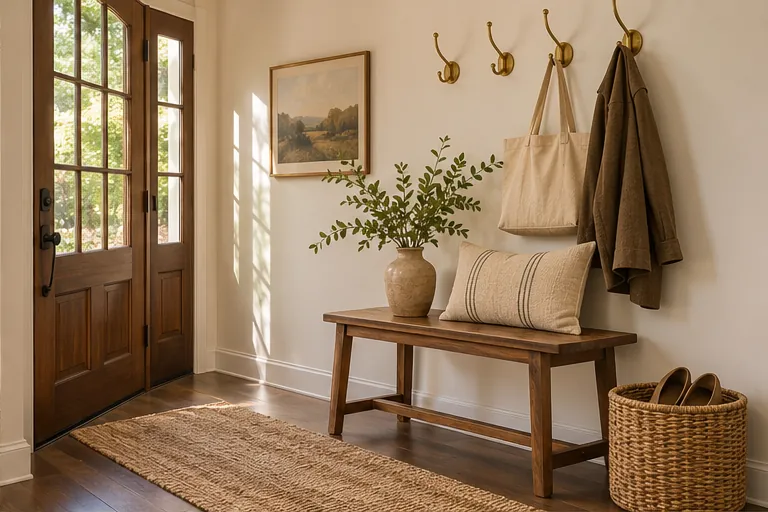
An entryway has to handle coats, bags, keys and wet shoes in the busiest minutes of the day, often in a narrow space. These guides compare benches, hooks and command centers and show you what to measure so the path stays clear.
Buying guide
Plan entryway storage by doorway clearance, seating needs, shoe clutter, anchoring, and the people who use the entrance.
Buying guide
Compare slim hallway shelves, hooks, shoe cabinets and benches by real walking clearance, door swings and household accessibility.
Comparison
Compare safe installation, floor space, overloaded hooks, coats and bags in a busy entry.
Shortlist
A practical shortlist for school and work bags, considering rated loads and repeated access.
Shortlist
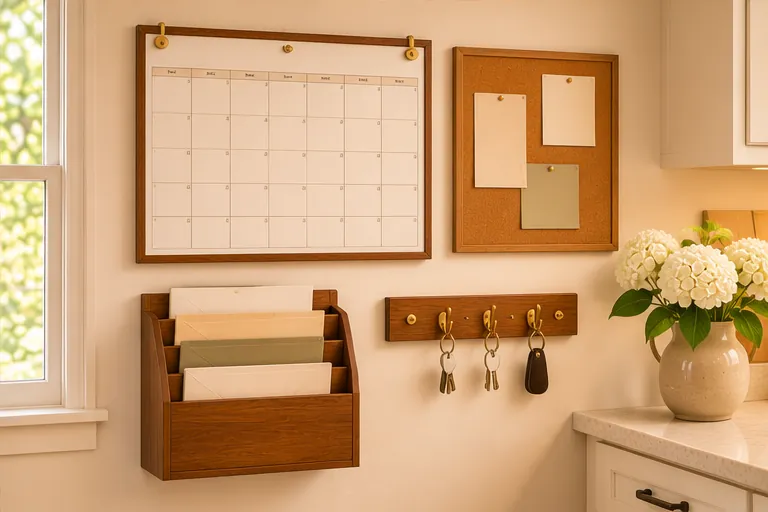
Plan a family command center without turning the wall into a second junk drawer.
Shortlist
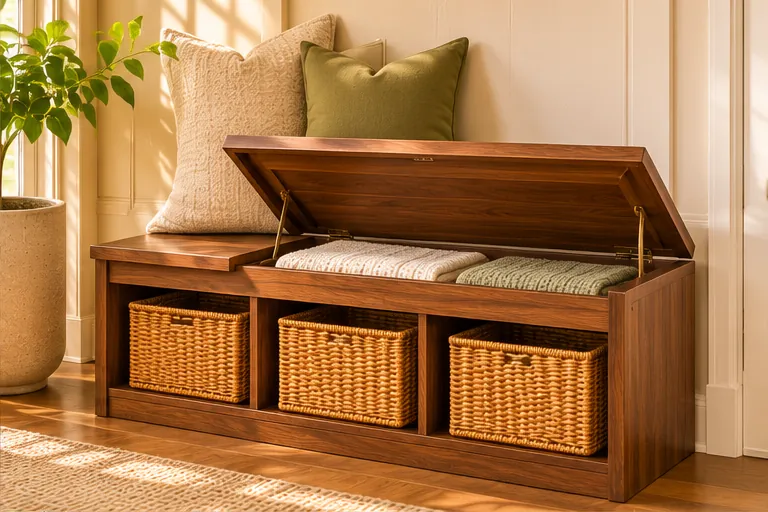
Find a practical bench style for shoes and outerwear while checking sit-load, stability and circulation.
Product research
Assess whether an identifiable wall hook product suits hats without deforming brims or creating clutter.
Measure first with our free room tools · Before-you-buy checklist
Shop this room
As an Amazon Associate I earn from qualifying purchases. Product illustrations are representative; check Amazon for actual photos, sizes and current details before you buy.
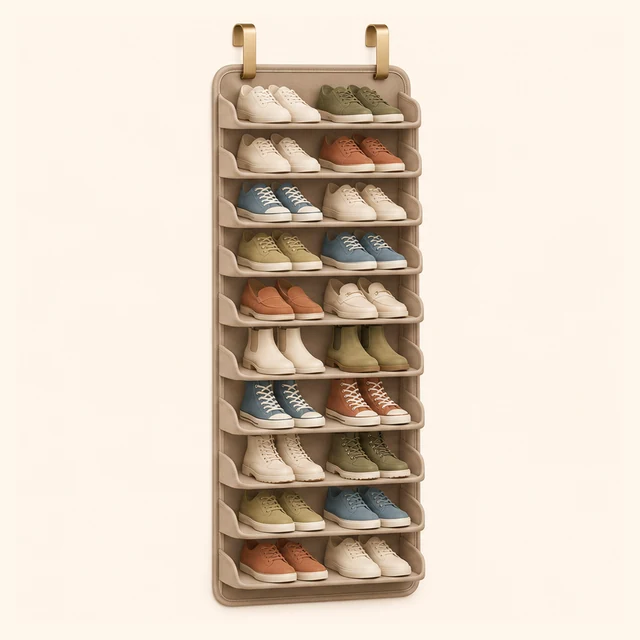
This ten-tier over-door rack is listed for 20–30 pairs; measure door height and clearance before loading it.
View on Amazon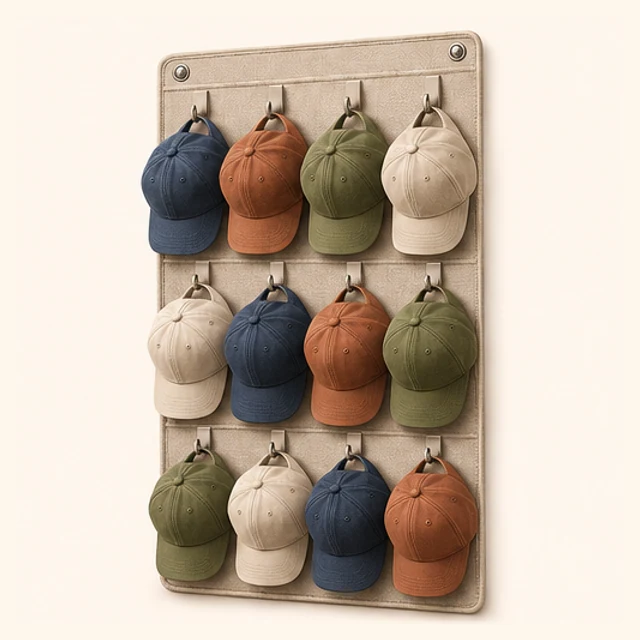
Best for: using wall space to hang caps by their clips instead of stacking them on a shelf.
View on Amazon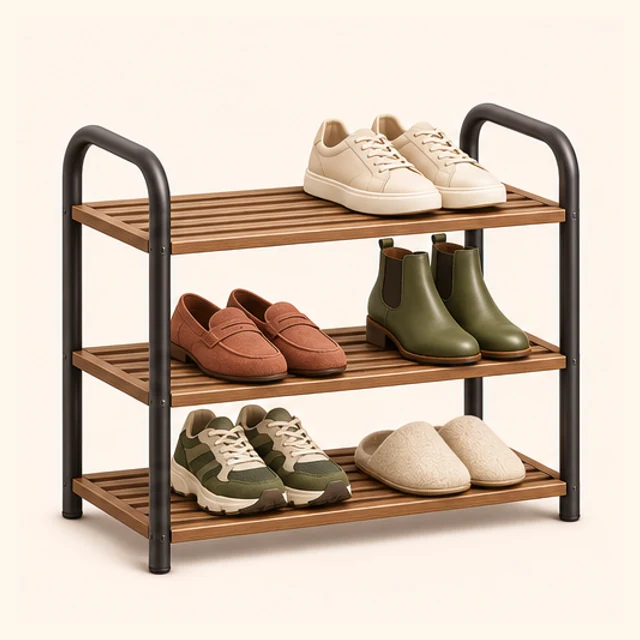
Kitsure's black three-tier nonwoven shoe rack spans 27.5 inches, grouping everyday footwear in one low unit.
View on Amazon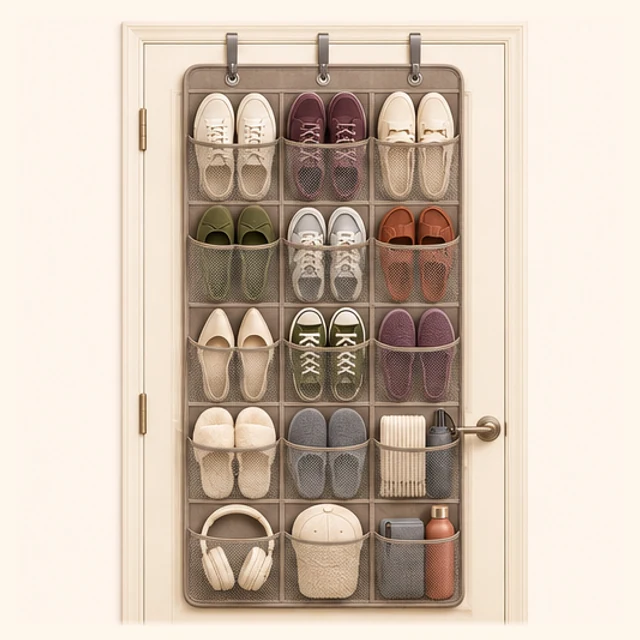
Amazon Basics' light-gray organizer features 24 medium mesh pockets, keeping individual shoes or accessories visible.
View on Amazon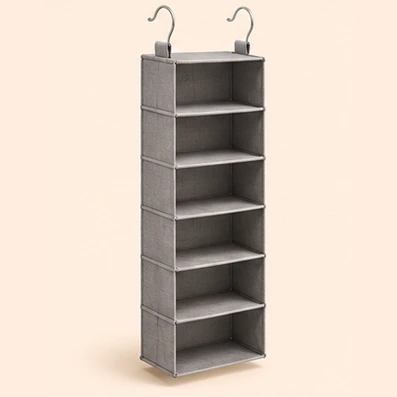
Six tiers and two hooks make this gray hanging organizer a candidate for storing folded items below a closet rod.
View on Amazon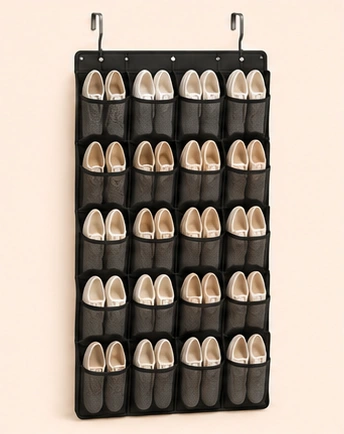
GORILLA GRIP's black 24-pocket organizer offers larger individual pockets for footwear and loose closet items.
View on AmazonBegin at the threshold with the door open. Record the wall width, the depth available beside the door, the floor clearance behind the swing and the location of switches, vents and outlets. Draw the footprint of any proposed bench or cabinet with removable tape. Walk through carrying groceries or a bag, then check that the same path remains comfortable when shoes are on the floor. A cabinet that fits the wall but narrows the route is not an improvement.
Sort the items that enter and leave the house every day into shoes, coats, bags, keys and incoming mail. Give each household member a defined drop-off zone rather than putting everything into one deep basket. Store only the shoes currently in rotation near the entrance; seasonal boots and occasion shoes can move to a closet. A shallow tray can hold keys, while hooks or a suitable shelf can keep frequently used bags within reach.
Choose a shoe rack when ventilation and quick access matter, or a closed cabinet when visual calm is more important. Measure the largest shoe pair, including boot height and protruding toes, against internal dimensions rather than the outer case. A bench should leave room for people to sit without blocking the door. Follow anchoring instructions for furniture and never treat a decorative shelf or cabinet as seating unless the manufacturer expressly permits it.
Before shopping, try a week with your current baskets and a temporary shoe zone. At the end of the week, count the items that repeatedly land outside their assigned space. Those items reveal whether the problem is capacity, reach or an inconvenient position. We can explain the fit and access trade-offs, but the exact load rating, hardware, finish durability and assembled dimensions must still be checked on the current product listing and instructions.
Further reading (official sources, checked November 22, 2026): CPSC — Anchor It! tip-over prevention · U.S. Access Board — Accessible Routes guidance
Practical answers about entryway storage, fit and everyday use.
Place a shallow shoe rack or closed cabinet outside the door's swing. Keep only frequently worn shoes near the entrance and relocate seasonal pairs.
Use the wall first: hooks, a narrow shelf and a slim bench with storage keep the floor clear.
Shallow enough to keep the walkway clear. Measure the path from the door and tape the bench outline on the floor.
A low rack or bench cubby near the door, with a tray for wet shoes.
At least one or two per person who uses the door every day, plus one for guests.
Give keys, mail and bags one spot each, and clear the area once a week.
Compare the existing product selections in Shoe Storage Ideas: Racks, Cabinets, or Under-Bed Bins?. Check the exact model dimensions and instructions before ordering.