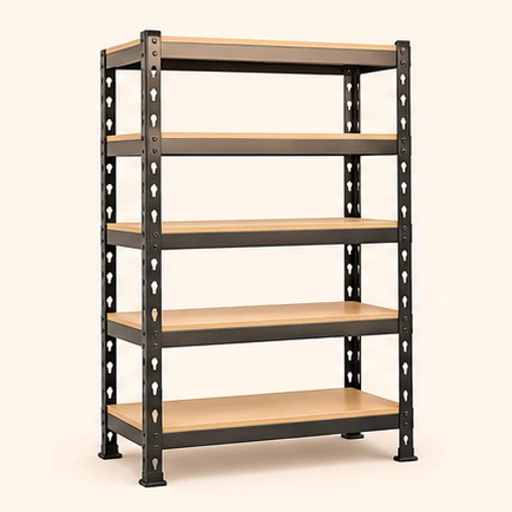
Storage Shelves - 5 Tier Shelf Organizer, Heavy Duty Garage Shelving Unit with Leveling Feet, Stable Metal…
A five-tier metal shelf with leveling feet offers a stationary pantry storage arrangement for bins and household supplies.
Measure the food and containers you actually use and preserve a path to reach the back. Compare shelf styles based on clearance, cleaning and flexibility.
As an Amazon Associate I earn from qualifying purchases. Product illustrations are representative. View Amazon for actual product photographs and specifications.
A five-tier metal shelf with leveling feet offers a stationary pantry storage arrangement for bins and household supplies.
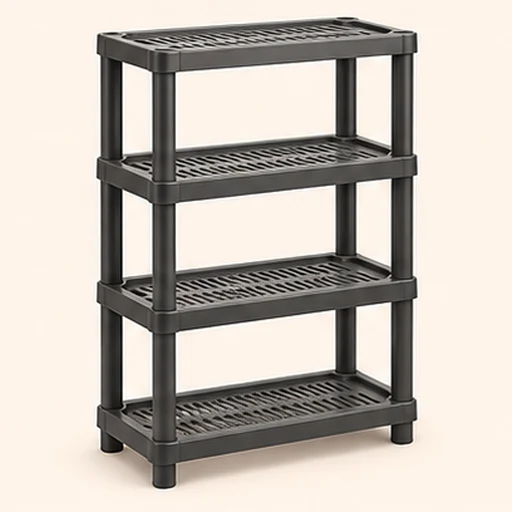
Plano's four-shelf plastic unit measures 48 × 23 × 14 inches, providing an alternative to metal shelving.
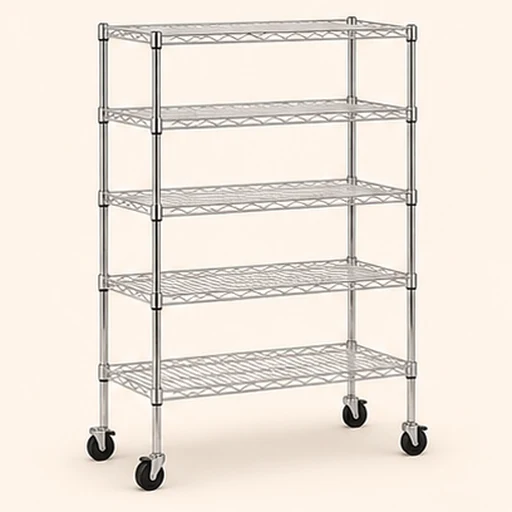
Amazon Basics' five adjustable wire shelves and four-inch casters allow you to move a compatible loaded storage unit as directed.
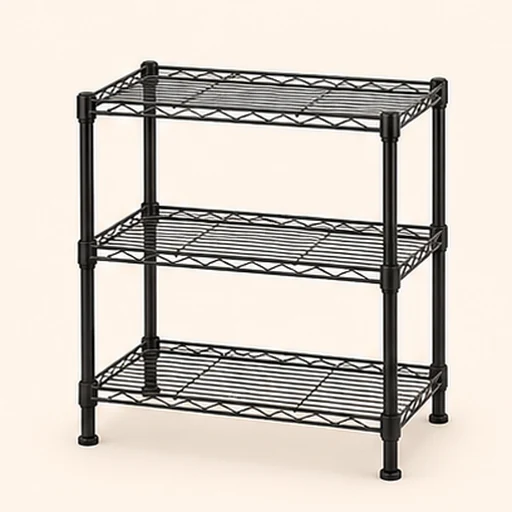
This compact three-tier black rack measures 18.1 × 12.4 × 30.4 inches and can fit a low pantry storage area.
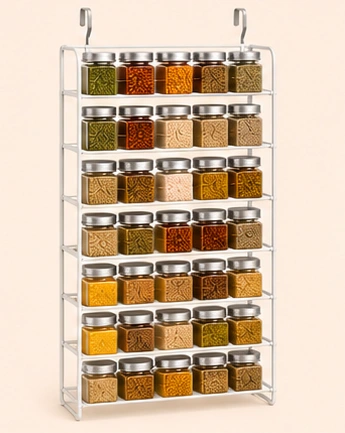
Moforoco's white nine-tier over-door spice rack creates additional jar storage without using floor shelving.
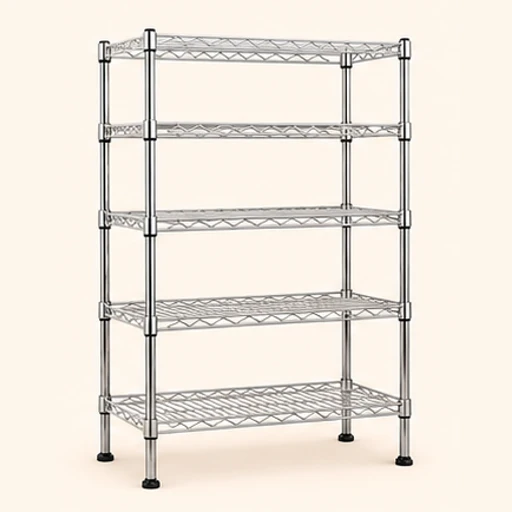
Adjustable standing wire shelves allow you to vary the spacing for pantry boxes and taller containers.
Pantry shelving ideas should account for tall cereal boxes, small jars and heavy canned goods. Adjustable shelf spacing can reduce wasted vertical space.
Measure the wall and available depth, and check the shelf unit’s stated load rating. Leave space to see and retrieve items at the back.
Measure the available floor footprint and any baseboard interference before selecting shelves.
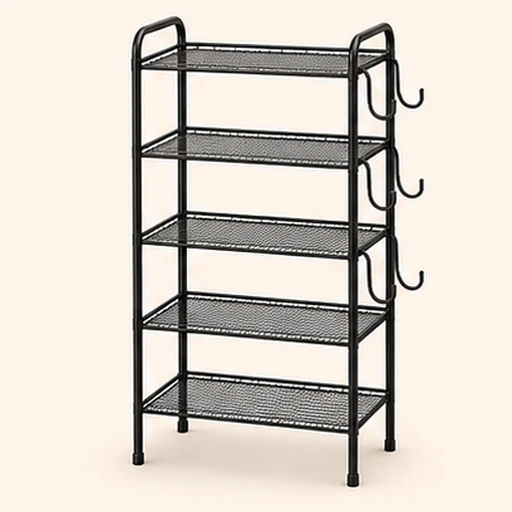
A slim five-tier black shelf with hooks measures 18.1 × 12.4 × 56.8 inches, useful where floor width is limited.
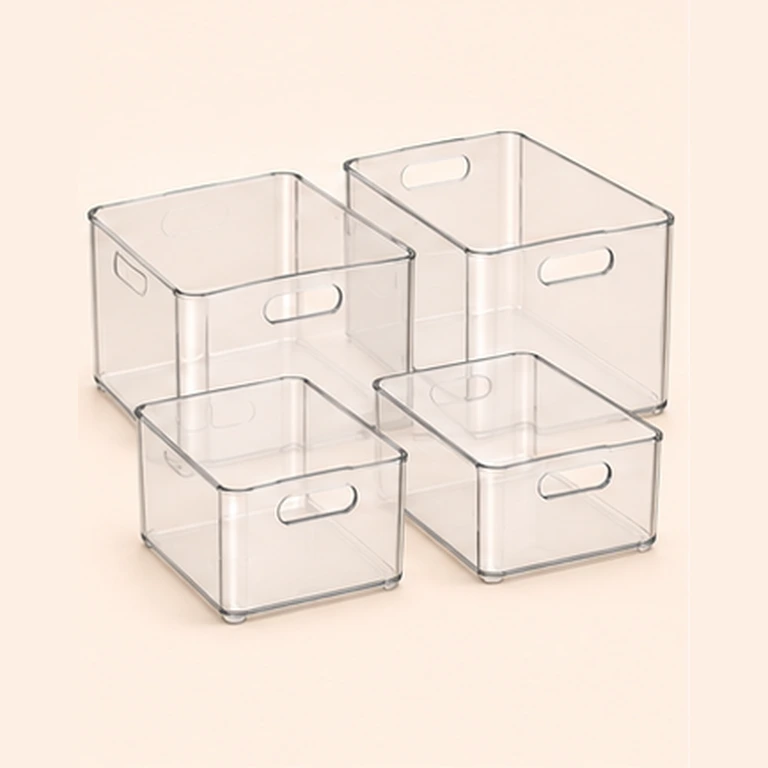
Tiawudi's twelve plastic bins create separate containers for organizing several categories of pantry supplies.
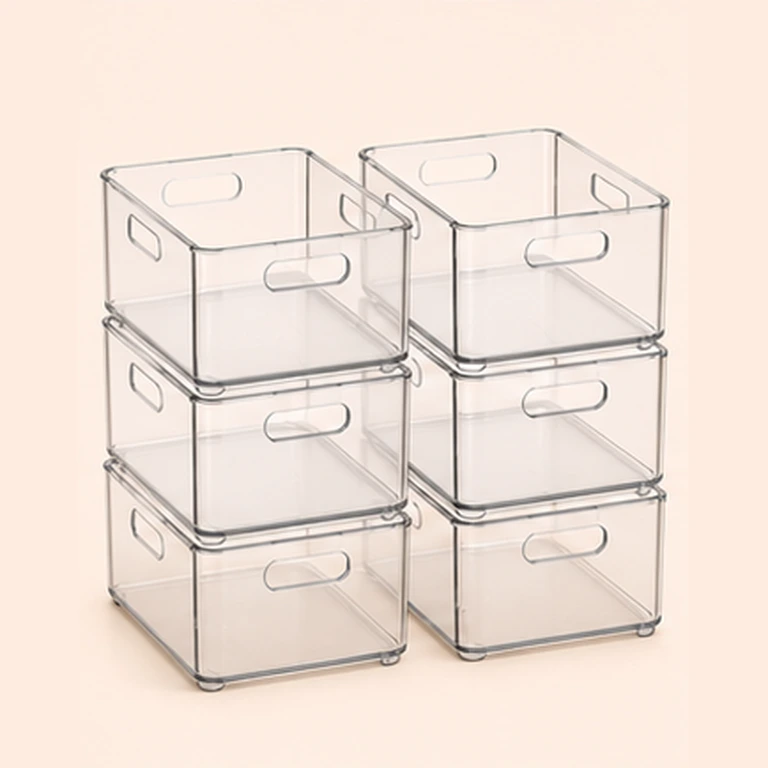
Six large YIHONG clear handled bins can be pulled forward for access to grouped goods on deep shelves.
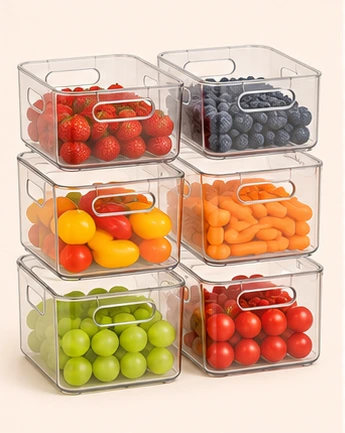
This six-pack of clear refrigerator-style bins also offers visible sorting for suitable packaged pantry goods.
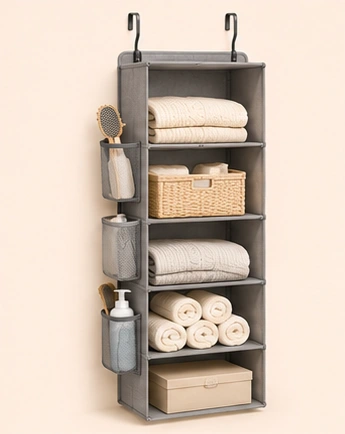
JARLINK's gray five-shelf door organizer offers extra compartments for small items when existing shelf space is limited.
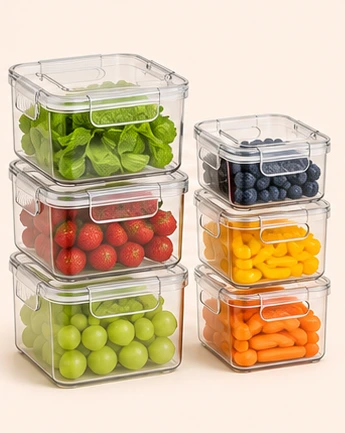
Six stackable clear refrigerator organizer bins with handles provide a way to create layered storage where shelf height permits.
A pantry shelf organizer can separate packets, cans and bottles into manageable groups. Use clear bins where visibility matters and open baskets for items you reach for often.
Match the organizer to the shelf depth and height. Avoid filling bins so tightly that you cannot lift them out or rotate older stock forward.
Check shelf spacing against cereal boxes, jars and appliances you intend to store.
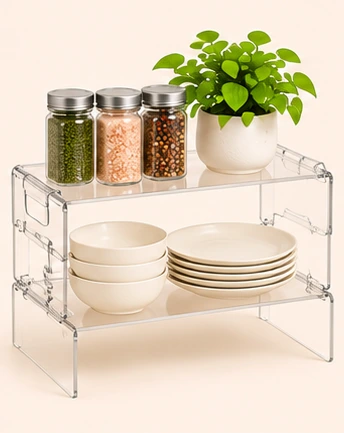
Two stackable clear cabinet risers add another usable level for small supplies or seasoning jars.
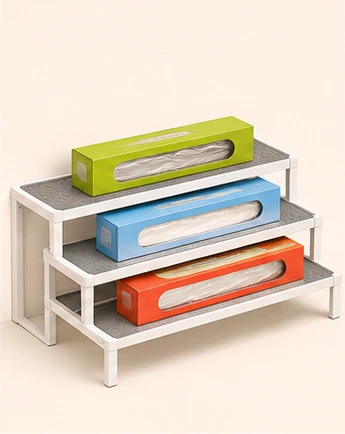
EVERIE's expandable three-tier shelf specifically separates foil and wrap boxes rather than functioning as a closed cabinet.
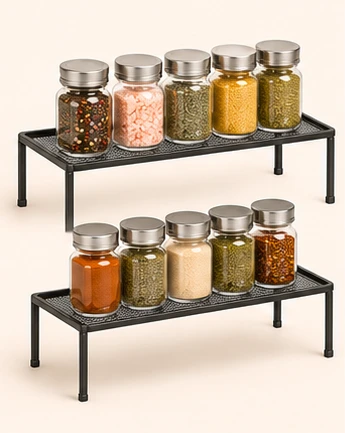
Two SONGMICS cabinet organizer shelves create extra levels for small jars or containers beneath existing shelves.
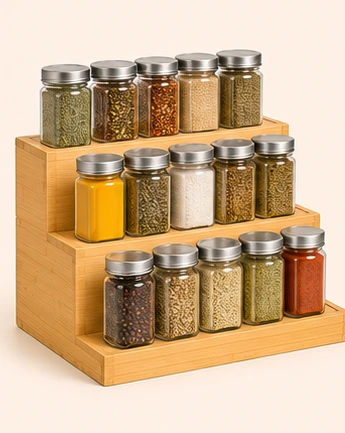
The three-tier expandable bamboo spice display raises rear jars into view and adapts to different cabinet widths.
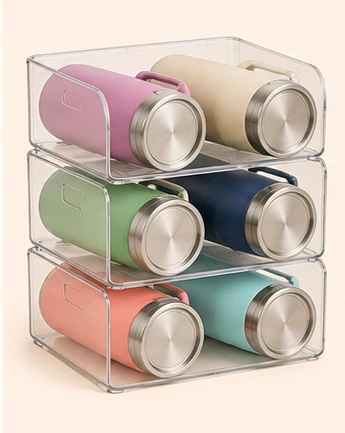
A stackable holder with larger compartments is intended for large tumblers and bottles; check individual cup diameters.
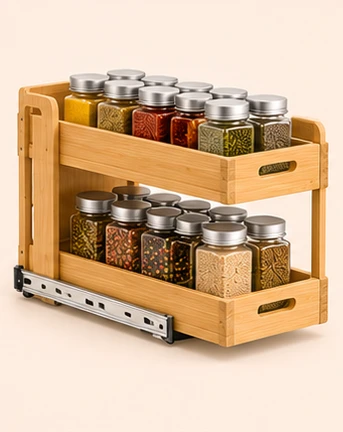
SpaceAid's bamboo pull-out spice rack brings rear seasoning jars forward instead of requiring you to reach past the front row.
Pantry shelf risers create a second level for smaller items where a shelf has spare height. Tiered racks can make spice jars or cans easier to see.
Measure both the space underneath and above the riser. Check stability and weight limits, particularly if you plan to store glass jars or canned goods.
Check the rated capacity of each shelf and place heavier packages on lower levels.
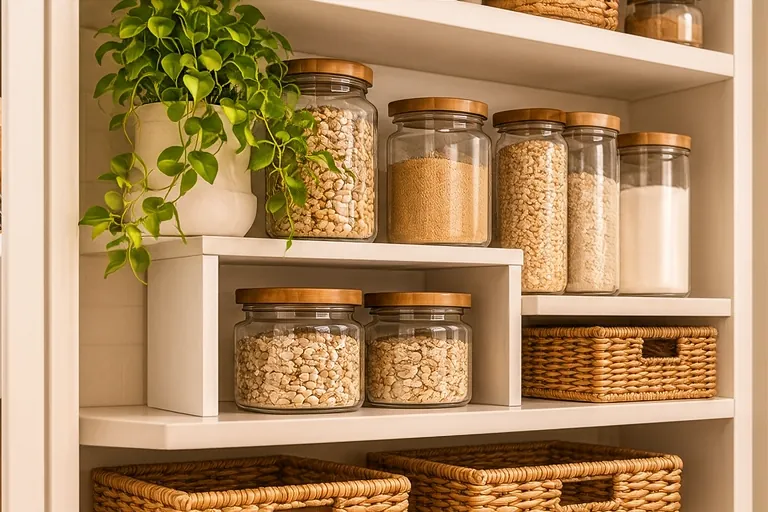
How to evaluate these options: compare shelf depth, vertical spacing, stated weight capacity and access to backstock. The cards offer practical product-type suggestions, not hands-on test results. Confirm the exact listing, dimensions, installation instructions and current availability on Amazon before buying.
Fixed shelves suit consistent item heights. Tracks are easier to rearrange when pantry contents change.
Check fit Check working shelf depth and the space above your tallest container.
A rack adds shelves where you have floor space. Risers add a tier to existing shelves.
Check fit Measure the footprint, shelf load limit and the height needed to lift items.
Can racks group repeat purchases. Pullout bins bring varied packages forward.
Check fit Check the tallest can, handle grip and front clearance.
Check the largest routine items and make sure the back row stays reachable.
Choose a visible shelf for staples you use every week.
Keep heavy or awkward items at a height you can lift safely.
Check base stability or use an appropriate flat liner within the shelf rating.
Check shelf height, riser footprint, and lift clearance above the top row.
Measure the tallest packages and allow extra space to lift them out without tipping nearby items.
Try a short riser or bin in the single spot that is hardest to use.
Before measuring a single bracket, sort your pantry by what you store: tall bottles, cereal boxes, cans, snacks, appliances, and items used only occasionally. Put the awkwardly shaped items on a counter. Measure their heights and leave enough room to lift them out comfortably.
Now look for genuinely wasted space. Is there a tall gap above short cans? Is the rear of a deep shelf impossible to reach? Is the whole pantry too dark or too full? Those are different problems and do not all require new shelving.
A no-spend test is to move infrequently used items higher, group similar packages in existing boxes, and remove expired food. Live with the layout for a week. If you still cannot see the back row or handle a heavy item safely, note the exact obstruction.
Fixed shelf: Simple and stable when properly installed, but difficult to adapt when storage needs change. It can be ideal when tall containers all share a predictable height.
Adjustable track or pin shelves: Offer flexibility for changing package heights. Their capacity depends on the complete system—shelf material, span, mounting, approved hardware, installation, and the manufacturer’s rated load. Do not infer a safe weight from appearance.
Freestanding rack: Useful where drilling is restricted or a pantry wall is irregular, but it consumes floor area and may require wall anchoring to reduce tip-over risk. The U.S. Consumer Product Safety Commission advises anchoring furniture such as bookcases and storage units.
Countertop or shelf riser: Best when the underlying shelf is already sound and you only need a second visible level for light items. Risers do not increase the structural load rating of the shelf underneath.
Use a tape measure at several points: walls are not always perfectly square, and baseboards may narrow a freestanding unit’s usable width. Record height to the ceiling, the door opening, the door swing, and any floor vents, lights, outlets, or plumbing.
Measure the depth of both the empty shelf and the deepest item. A deeper shelf is not always better: it may make the back row less accessible. For pull-out baskets or drawers, measure the full extension path. A handle, hinge, or trim can prevent the drawer from opening even when it fits inside the cabinet.
Example: A pantry opening is 30 inches wide, while a preassembled rack lists a 29.5-inch width. That does not prove it will pass through the door or sit flush against the back wall. Tape out the stated footprint on the floor, confirm baseboard clearance, and measure the narrowest part of the entry.
Do not guess whether a shelf can carry twenty cans or a stand mixer. Check the manufacturer’s published load instructions for the shelf and all brackets. Follow wall-anchor and fastener instructions for the specific wall material; where the substrate is uncertain, consult a qualified installer.
Put heavier items on lower, accessible shelves so they do not need to be lifted above shoulder height. Avoid placing heavy appliances on a flimsy riser or unstable stack. Keep walkways, doors, and needed access clear.
For older adults or anyone with limited mobility, the most attractive system may be the wrong choice if it forces frequent bending or overhead lifting. Adjust the storage plan around comfortable reach, not around symmetrical shelf spacing.
If the shelves are structurally sound and you simply need to see small items, try one removable riser or a shallow front-facing tray. If your household changes package sizes frequently, adjustable shelves are likely more adaptable than several permanently fixed tiers.
If you are renting, confirm installation rules before drilling or mounting tracks. A freestanding system can be more reversible, but anchoring and safe installation still matter. A tip-prone cabinet is not “renter-friendly” merely because it is removable.
Before ordering, use our shelf-fit tool and private measurements list . Record the product’s rated load and installation instructions; check the retailer’s current return rules with our pre-purchase checklist .
These public references informed general storage and safety guidance. We did not independently lab-test or review retail products.