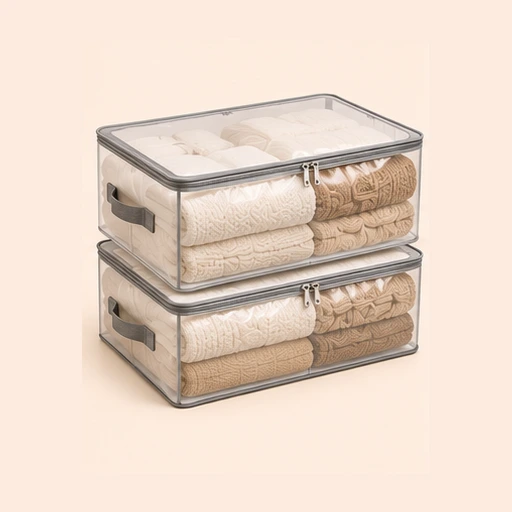
8 Pack Extra Large Under Bed Storage Bags with Lids, Clear
Eight extra-large clear under-bed bags with lids let you group textiles while keeping contents visible.
Measure floor-to-frame clearance and the path past center supports. Choose storage based on how often you need to pull it out.
As an Amazon Associate I earn from qualifying purchases. Product illustrations are representative. View Amazon for actual product photographs and specifications.
Eight extra-large clear under-bed bags with lids let you group textiles while keeping contents visible.
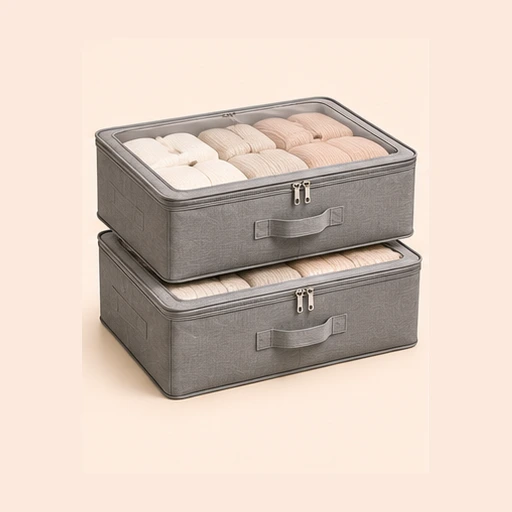
Budding Joy's four gray 95-liter containers offer separate large-capacity storage areas for bulky clothing or bedding.
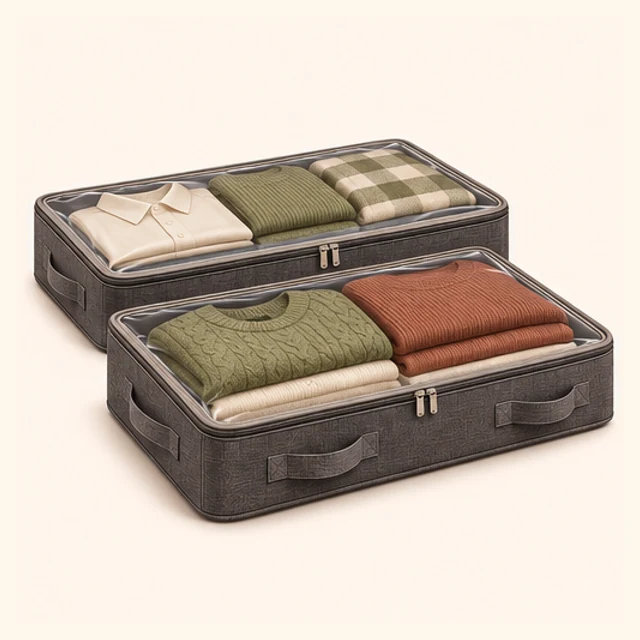
Amazon Basics' foldable fabric zippered bags are intended for clothes and blankets that can be stored below a bed.
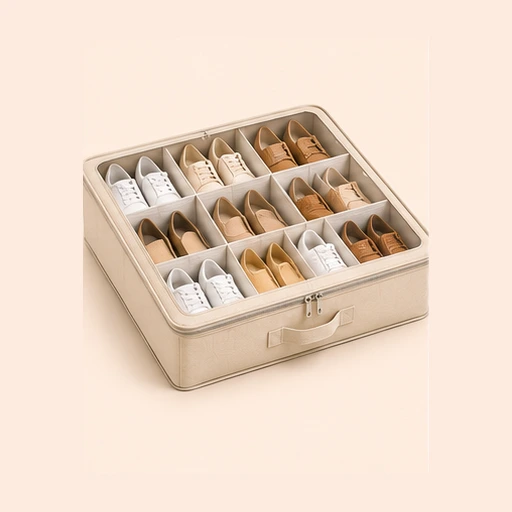
Lifewit's two-pack of fabric shoe organizers has a 4.3-inch profile and 12 listed shoe cells; verify the compartment count per unit.
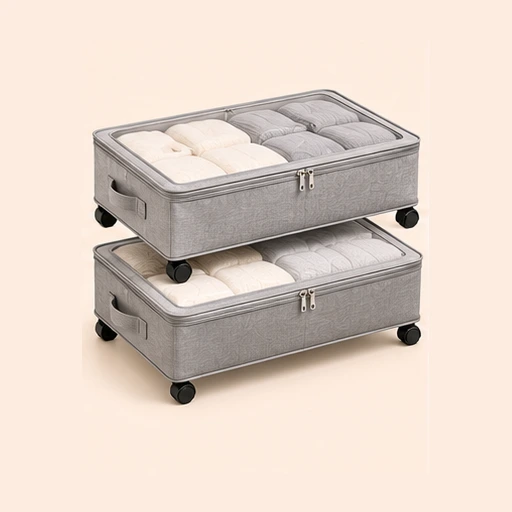
Two adjustable 80-liter Budding Joy containers with wheels allow bulky items to be pulled forward from underneath a bed.
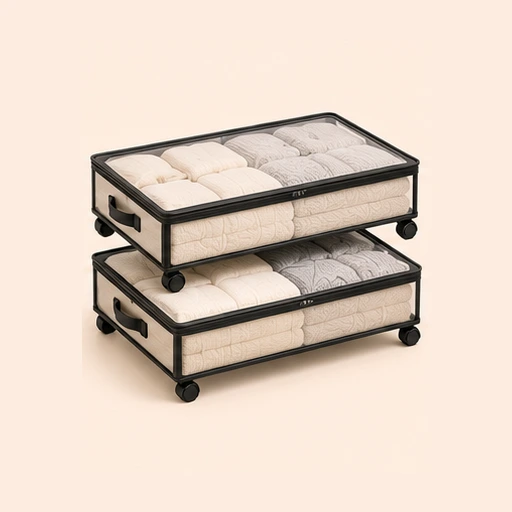
Tsinglax's two 66-liter wheeled containers measure 30 × 16 × 7.5 inches; check the bed's lowest clearance point.
Under bed storage can keep spare linens, seasonal clothing and other occasional-use items out of the closet. Measure the lowest clearance under the frame, including support rails.
Choose containers that fit through the available opening. Use lids or zippered bags when dust protection matters and leave room to pull the containers out.
Measure clearance from the floor to the lowest bed-frame obstruction, not just the mattress.
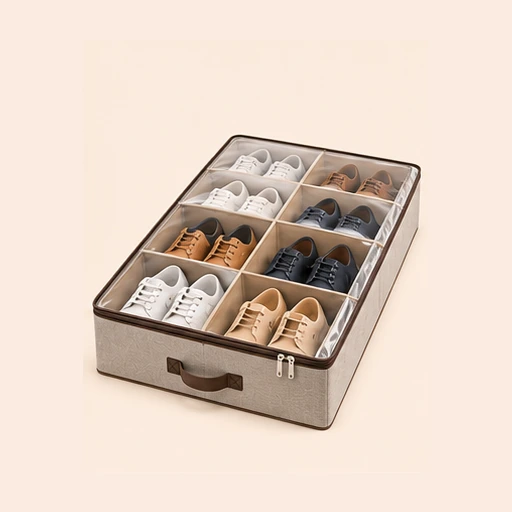
Onlyeasy's two-pack shoe organizer is listed to fit 12–24 pairs, depending on footwear size and configuration.
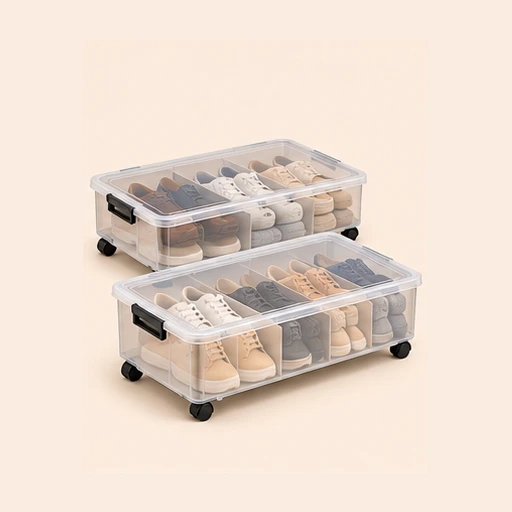
Two Yecaye wheeled containers are intended for under-bed shoe storage, bringing footwear forward without lifting the entire unit.
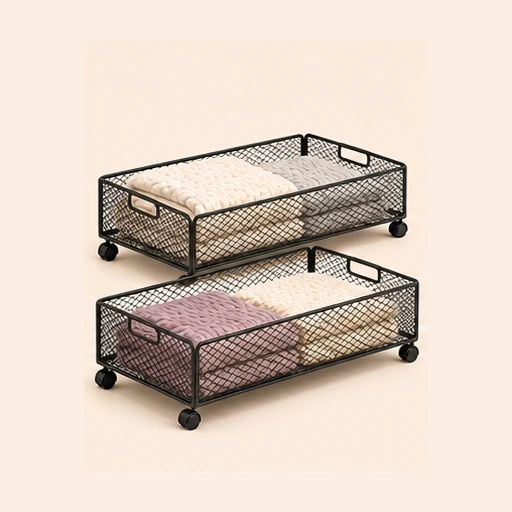
This patterned black two-pack uses metal wheeled containers rather than a conventional soft storage bag.
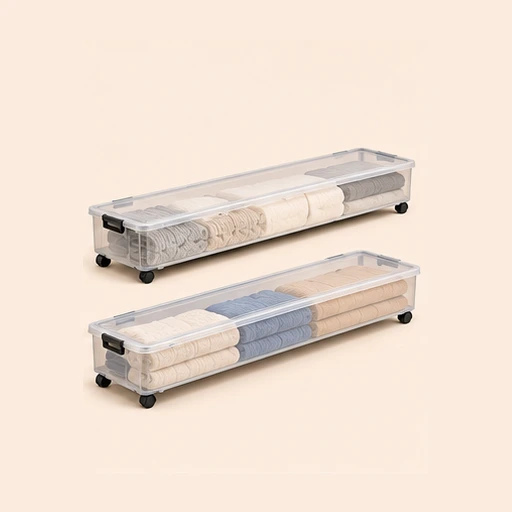
Two extra-long 36-inch wheeled containers suit long open spaces below a bed; account for room to pull them out.
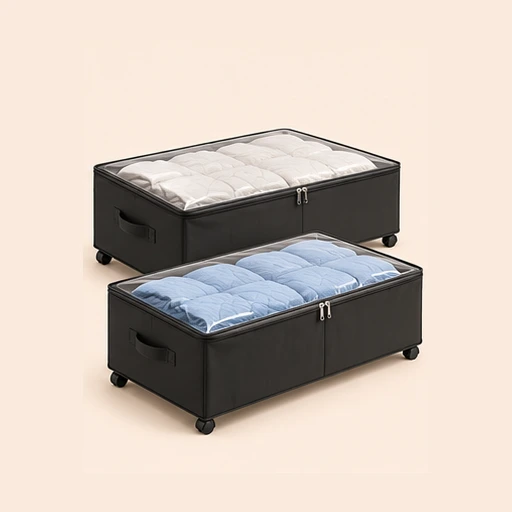
Ashwanth's black XXL two-pack offers a larger wheeled-storage option for beds with sufficient floor area underneath.
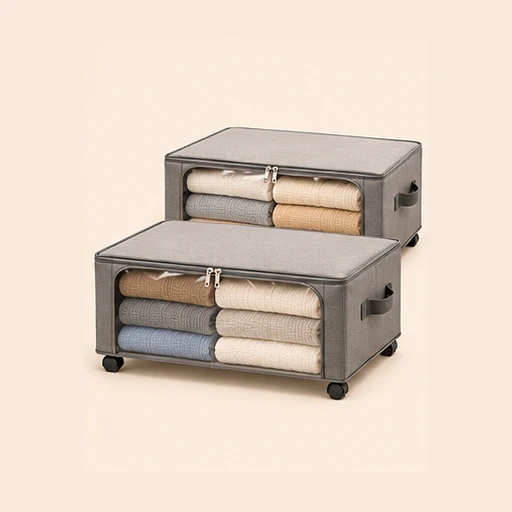
Two wheeled containers with clear windows keep stored belongings visible while allowing the containers to roll out.
Under bed storage with wheels can help retrieve containers from beneath a large bed. Check overall height including wheels and consider how the wheels move on your flooring.
Measure the room beside the bed for pulling out the full container. Follow the stated load limits and avoid storing items that could damage the floor or bed frame.
Check wheel height and the space needed to pull a rolling organizer fully out.
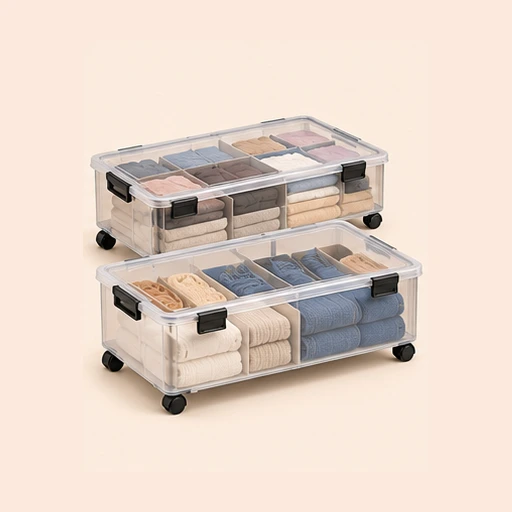
Yecaye's two wheeled containers with adjustable dividers and clear lids let you separate contents within each unit.
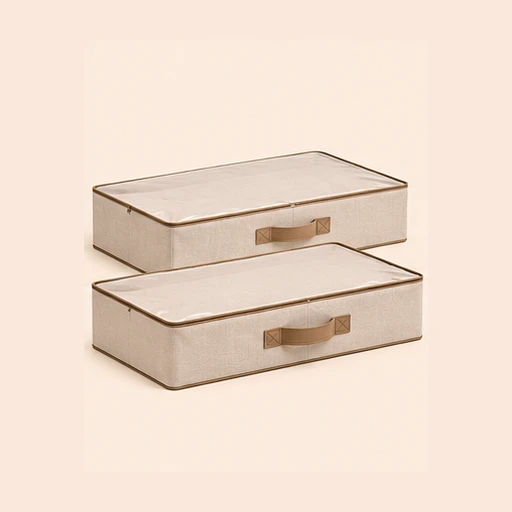
At 4.5 inches high, these low-profile containers feature reinforced handles and sturdy sides for a relatively shallow under-bed gap.
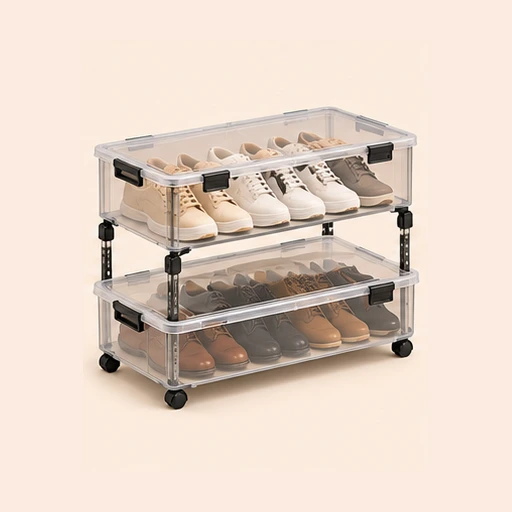
Kitstorack's height-adjustable two-pack with wheels offers flexibility for beds with different clearance heights.
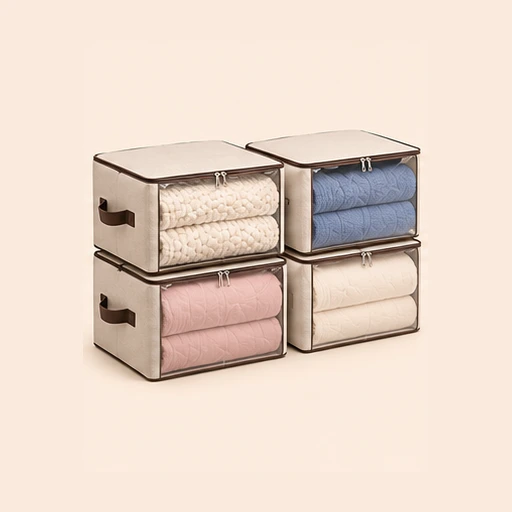
Four foldable under-bed bags organize seasonal clothes and bedding and can be folded away when empty.
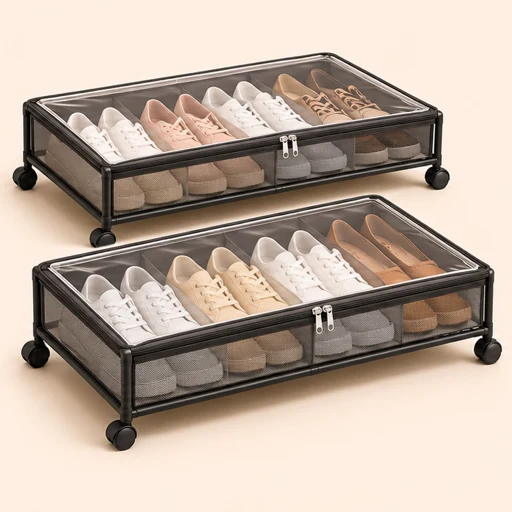
Yecaye's black two-pack of wheeled shoe storage units offers a coordinated way to group footwear below the bed.
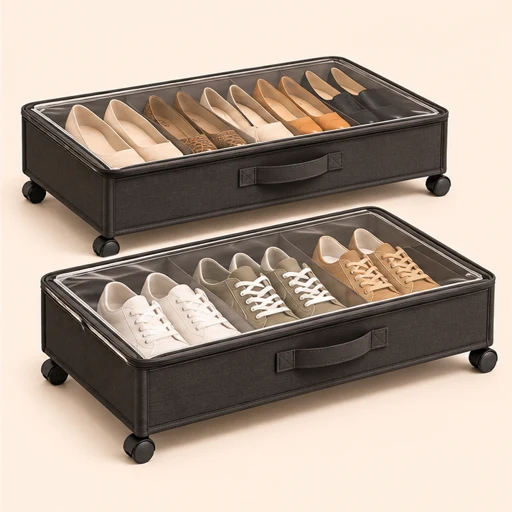
This pair of wheeled under-bed shoe organizers is intended to keep footwear accessible without using closet floor space.
Under bed shoe storage can separate occasional-use footwear from daily shoes. Compartmented containers help keep pairs together and reduce clutter in the closet.
Compare compartment dimensions with your largest shoes and check ventilation or dust protection as needed. Store clean, dry footwear and avoid crushing delicate pairs.
Measure your longest shoes and choose compartments that allow pairs to fit without crushing them.
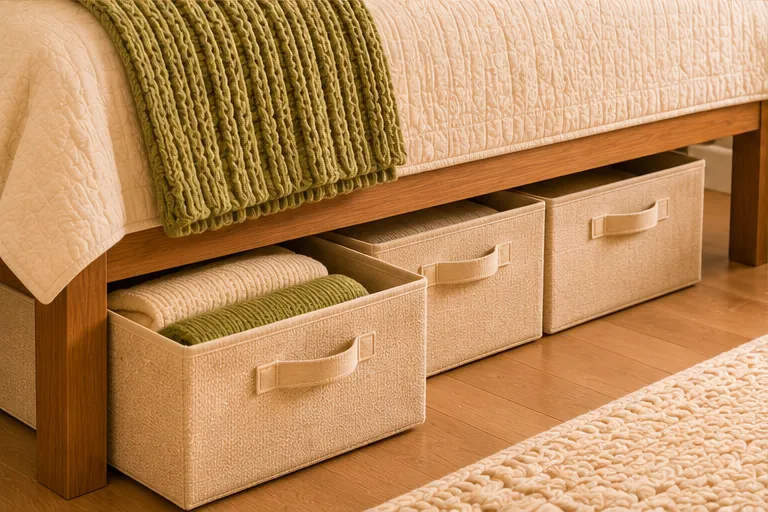
How to evaluate these options: compare minimum clearance, container height including wheels, access and dust protection. The cards offer practical product-type suggestions, not hands-on test results. Confirm the exact listing, dimensions, installation instructions and current availability on Amazon before buying.
A soft bag suits textiles in a shallow space. A rigid bin protects contents that should keep their shape.
Check fit Measure the lowest part of the frame and leave room for the handles or lid.
Wheels can make frequently used storage easier to pull out on a smooth floor. Fabric suits less frequent seasonal access.
Check fit Include wheels in the height and check how the container moves over rugs.
A vacuum bag compresses suitable textiles. A built-in drawer gives regular access to loose items.
Check fit Measure the packed bag or the drawer's full opening path.
Amazon Basics under-bed bags help move occasional-use bedding or clothing out of the closet into an unused low space.
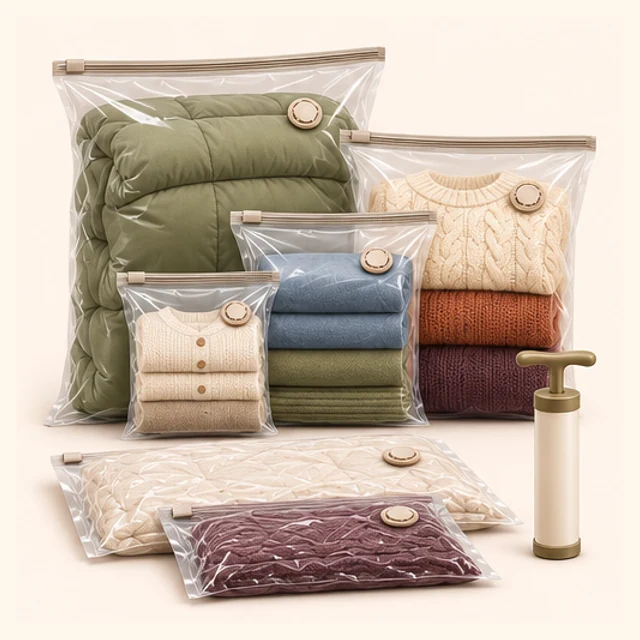
Cozy Essential vacuum bags with a pump compress suitable textiles for more compact storage beneath the bed.
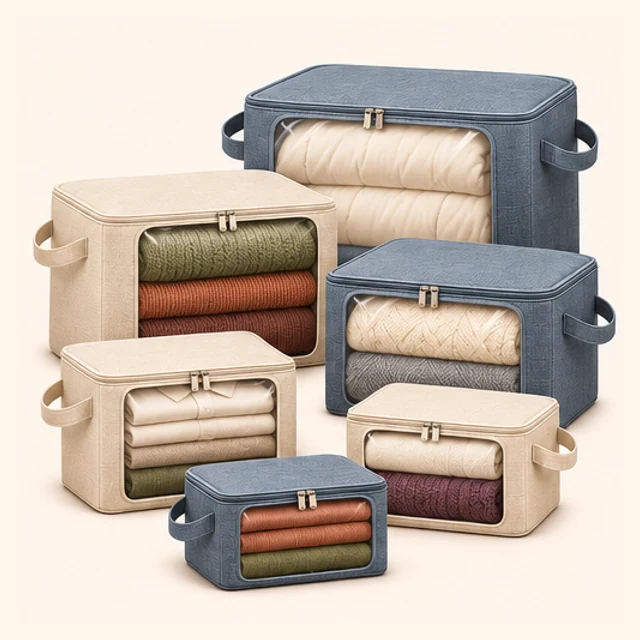
Lifewit clothes storage bags provide dedicated compartments for grouping seasonal garments or blankets before storing them.
Measure the lowest obstruction including rails, slats or supporting legs.
Check both wheel height and whether they roll on your floor covering.
Use labels facing outward and assign a bin to each season or category.
Measure packed height and leave room for the handles.
Measure at the lowest bed-frame obstruction and allow room to pull the container completely out.
Avoid storing damp textiles or items that need specific storage conditions.
Check bedside tables, rug edges and the standing space you need to open it.
Measure from the floor to the lowest bed-frame rail, central support, drawer track, or hanging fabric—not merely the nominal height of the bed. Repeat at the foot, sides, and center, because a support leg can obstruct one side even when the opening looks generous.
Measure the length and width of the path along which the container must slide out. A long box may fit under the bed but not clear a dresser, nightstand, rug edge, or a narrow wall-side aisle. Check access after making the bed, not only in an empty room.
For a trial, tape together a cardboard outline at the proposed container height and width. Slide it through the opening and turn it in the actual room. If it snags, reduce the dimensions before you buy rather than assuming the advertised size will be forgiving.
Under-bed space is best reserved for things you can retrieve without strain and do not need several times a day. Seasonal linens and lightweight off-season clothing can be candidates; frequently used shoes may create an inconvenient bending routine.
First try a free reset: remove objects that no longer belong, fold spare textiles more consistently, and consolidate empty packaging. A storage bag is not a substitute for deciding whether the contents are worth keeping.
If mobility, back discomfort, or balance is a concern, consider higher storage within easy reach instead. A low-profile bin is only useful when the person using it can access it comfortably and safely.
Rigid lidded bins help hold their shape and may stack inside a larger storage system, but the lid and handles add height. Inspect the lid closure and edge geometry; hard corners may snag a bed skirt or rug.
Zippered fabric bags can compress soft items and sometimes use less clearance. They may be harder to slide and keep square, however, and fabric alone does not establish protection from moisture or pests. Avoid storing items damp.
Wheeled bins and bed-frame drawers can make retrieval smoother on suitable floors. Wheels, tracks, and drawer fronts consume clearance, while thick carpet or uneven flooring can hinder movement. Confirm compatibility with the actual bed and floor before choosing.
Inspect the floor under the bed for condensation, leaks, pest evidence, or persistent dampness before packing it full. Moisture problems should be corrected at the source. The EPA emphasizes moisture control rather than merely hiding damp belongings inside storage.
For fabrics, use containers appropriate to the material and care instructions. Launder and thoroughly dry textiles before storage. Allow for regular access to vacuum or clean beneath the bed; an organizer that traps dust indefinitely is not a practical improvement.
Protect delicate contents against crushing, and avoid storing hazardous materials or heavy objects where they might be difficult to lift. Consider whether a sealed-looking bag actually provides the level of protection the product manufacturer claims.
Before purchase, list the measured clearance, the container’s full outside dimensions including wheels and handles, available pull-out distance, and contents. Test with cardboard first. If the bed has drawers, follow the bed manufacturer’s operating and weight limits.
Compare cost per accessible storage area, not the marketing claim about volume. A deep bin that only opens halfway may offer less useful storage than two smaller ones. Pay attention to return shipping on bulky bins, especially if fit is uncertain.
Keep your measurements in My Room Project and verify the sale listing with Before You Buy . A well-organized closet that already has space may be the better no-buy answer.