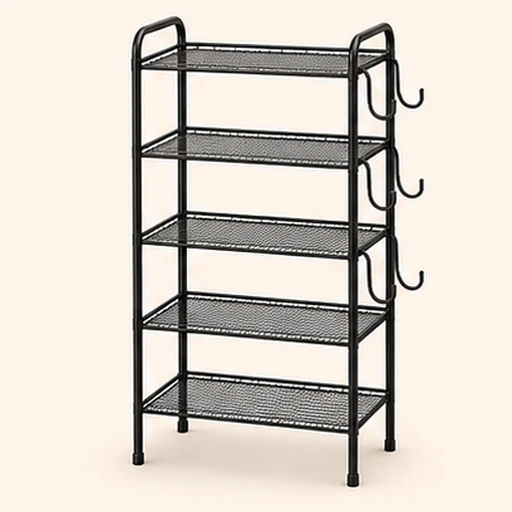
5-Tier Storage Shelves with Hooks, 18.1" x 12.4" x 56.8", Black
At 18.1 × 12.4 × 56.8 inches, this narrow five-tier black rack uses vertical space and adds hooks for accessories.
Map the car doors, walkways, garage door hardware and the equipment you use weekly. Match the shelf to the weight and shape of what it actually holds.
As an Amazon Associate I earn from qualifying purchases. Product illustrations are representative. View Amazon for actual product photographs and specifications.
At 18.1 × 12.4 × 56.8 inches, this narrow five-tier black rack uses vertical space and adds hooks for accessories.
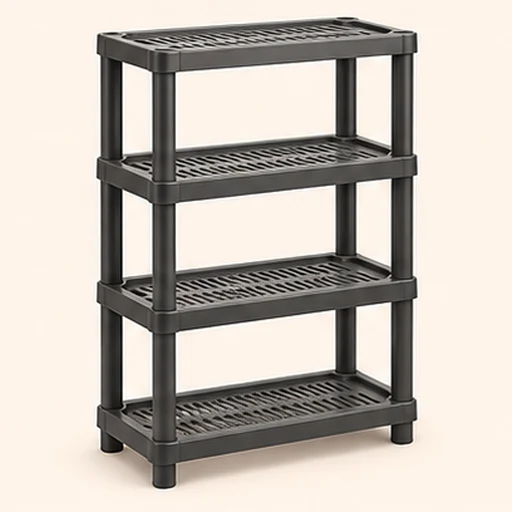
Plano's four-shelf plastic unit is listed at 48 × 23 × 14 inches; compare the manufacturer's load rating with your storage needs.
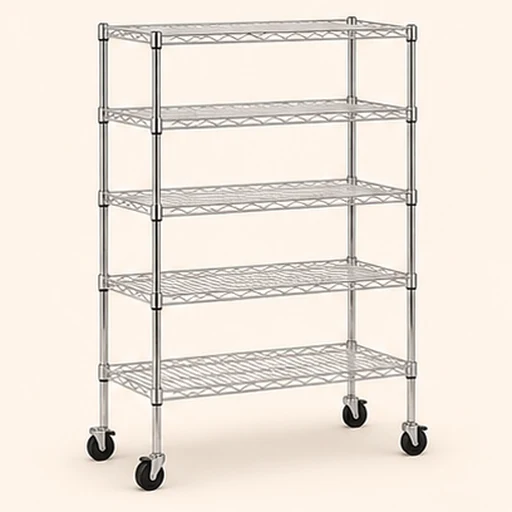
The Amazon Basics five-shelf wire rack has adjustable levels and four-inch casters for a movable storage setup.
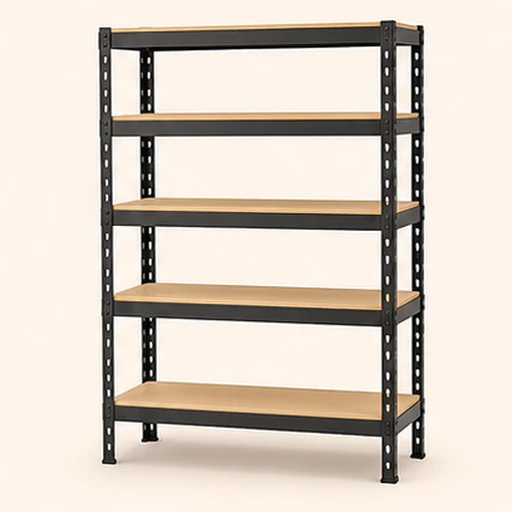
Five adjustable metal shelves let you change the spacing for different box heights; confirm the footprint and load rating.
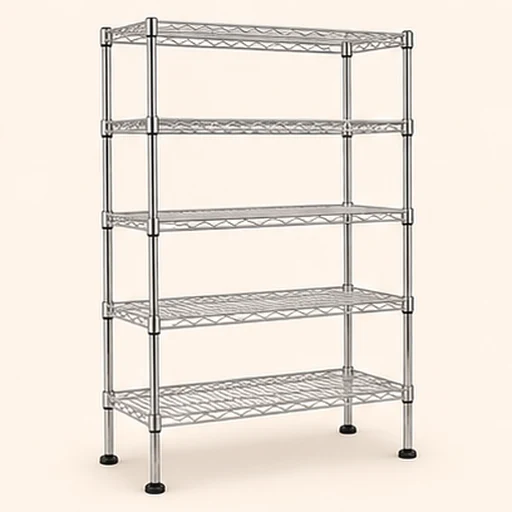
Leveling feet make this five-tier metal shelving a candidate for floors that are not perfectly even.
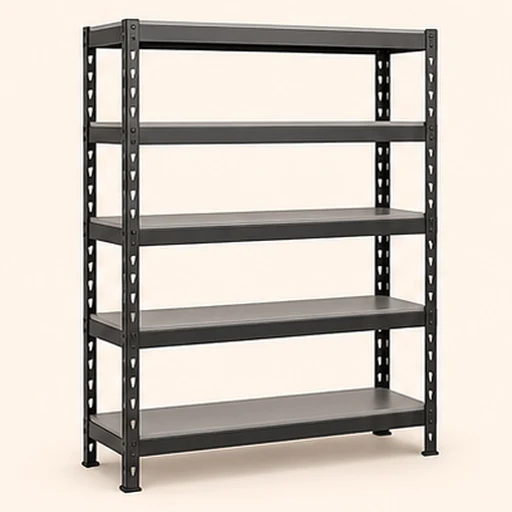
This tall adjustable five-tier metal unit offers flexible spacing for taller garage storage containers.
Garage shelving ideas should start with what needs to be stored: tools, seasonal decorations, sports gear or household supplies. Set aside a clear walkway and room for vehicles.
Measure the wall, floor and overhead clearance before selecting a shelf. Put heavy items low and keep frequently used equipment at a comfortable height.
Measure garage door travel and vehicle clearance before planning wall or overhead storage.
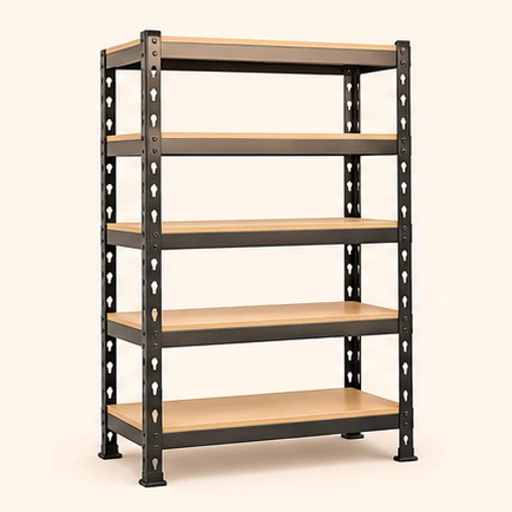
A five-tier metal rack with leveling feet is useful for creating a stationary storage zone; check shelf depth for totes.
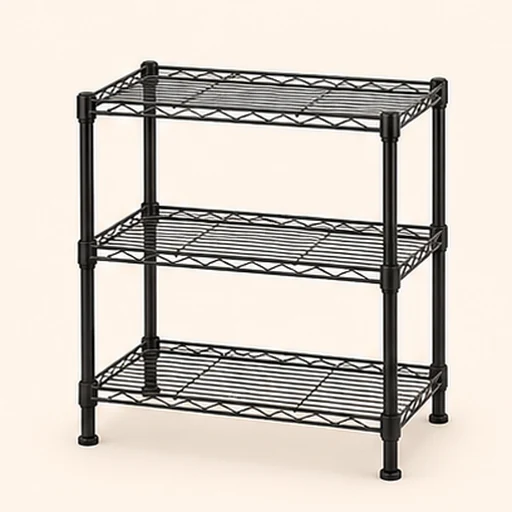
This compact black three-tier metal rack measures 18.1 × 12.4 × 30.4 inches and can fit below a work surface.
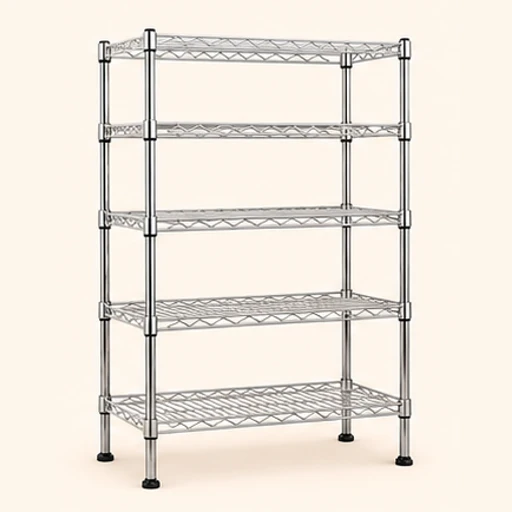
Adjustable wire shelves offer open storage for boxes and equipment; use suitable bins for small loose items.
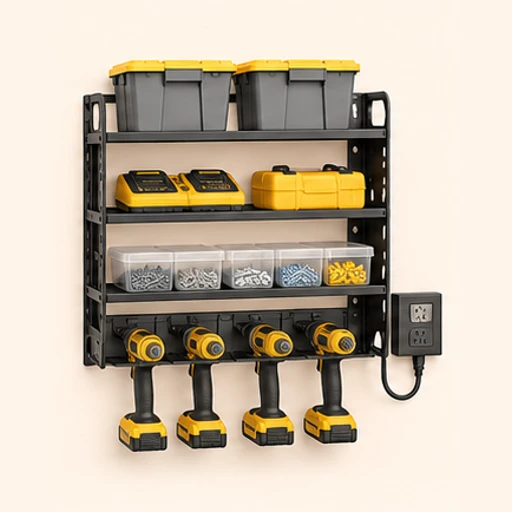
The wall-mounted four-layer power-tool rack includes a charging station, concentrating tool and charger storage above the workbench.
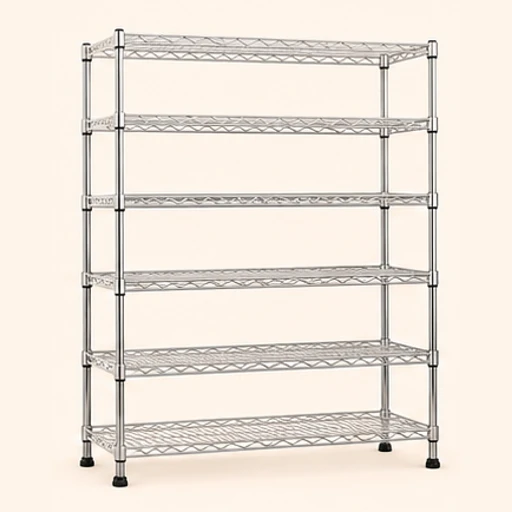
REIBII's 55.5-inch-wide adjustable five-tier wire unit is a broad option for multiple bins side by side.
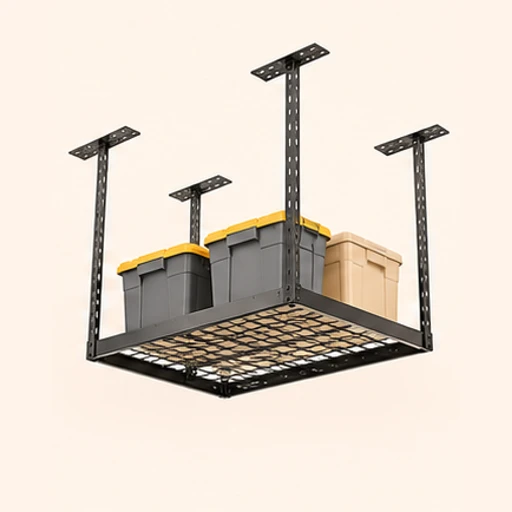
FLEXIMOUNTS' black 4 × 8 overhead rack uses ceiling space; verify joist locations, clearance and installation requirements.
Garage storage shelves work better when shelf depth and spacing suit the containers you already own. Adjustable shelves let you change the layout as your storage needs evolve.
Check the stated load capacity per shelf and for the entire unit. Keep bulky bins away from doors and leave enough room to remove them.
Check shelf depth and the weight of your loaded bins; follow the manufacturer’s assembly instructions.
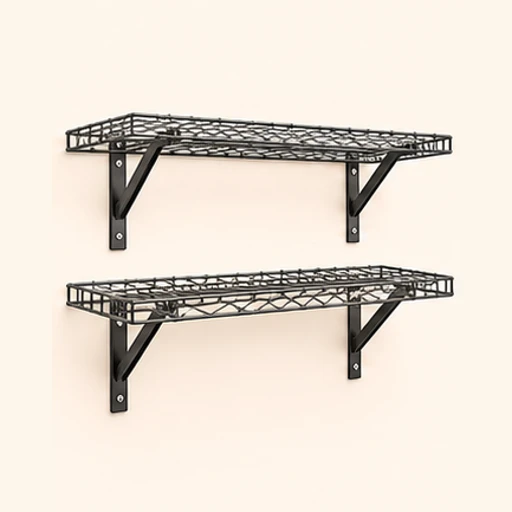
The two 24 × 72-inch wall-mounted FLEXIMOUNTS shelves create elevated storage without occupying floor space.
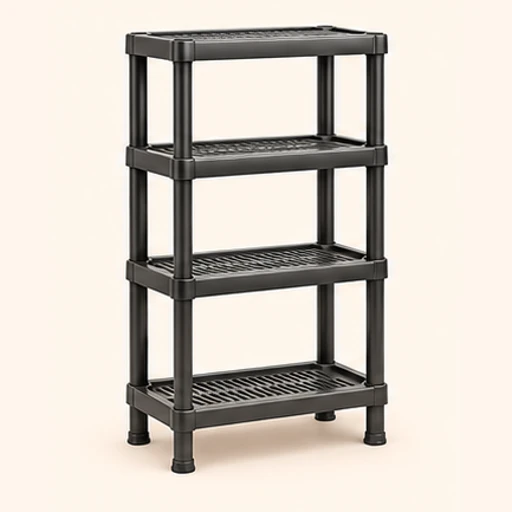
IRIS USA's black plastic shelving measures 64 × 24 × 12 inches, providing a shallow footprint along a wall.

A 48-inch wall-mounted garage tool rack offers hanging storage for long-handled tools; verify the stated load rating and wall support.
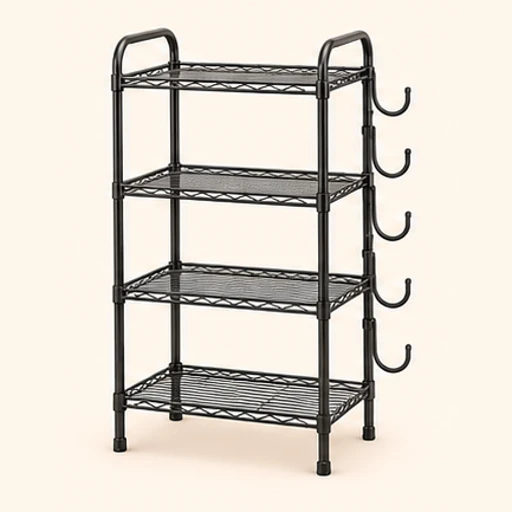
Four tiers and six hooks combine shelf space and hanging storage in a black 33.2 × 12.7 × 57.3-inch unit.
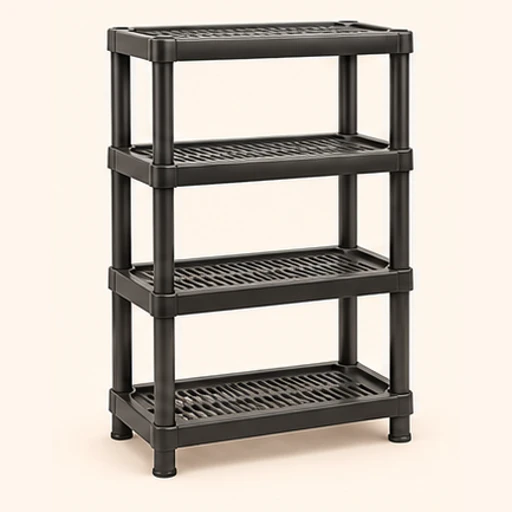
CENTREX's black four-tier plastic shelving is an alternative to metal wire racks for utility storage.
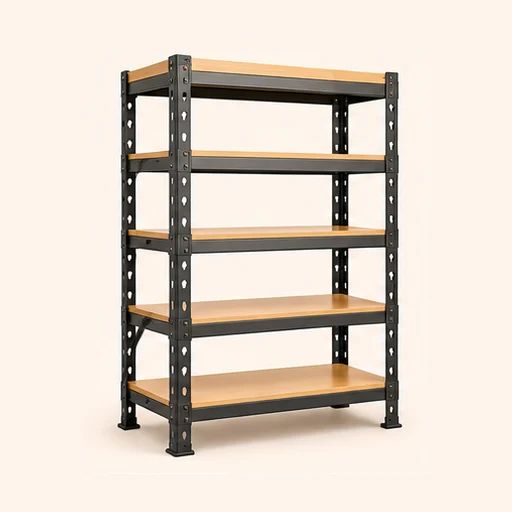
REIBII's 36 × 16 × 72-inch garage rack is a tall, relatively narrow option for basement or garage bins.
Heavy duty garage shelving is useful for dense toolboxes and larger storage totes. Compare frame construction, shelf supports and the manufacturer’s load ratings.
Follow the assembly and anchoring instructions, especially on uneven floors. Distribute loads evenly and avoid stacking heavy equipment above shoulder height.
Verify the mounting surface and rated load before using heavy-duty or overhead racks.
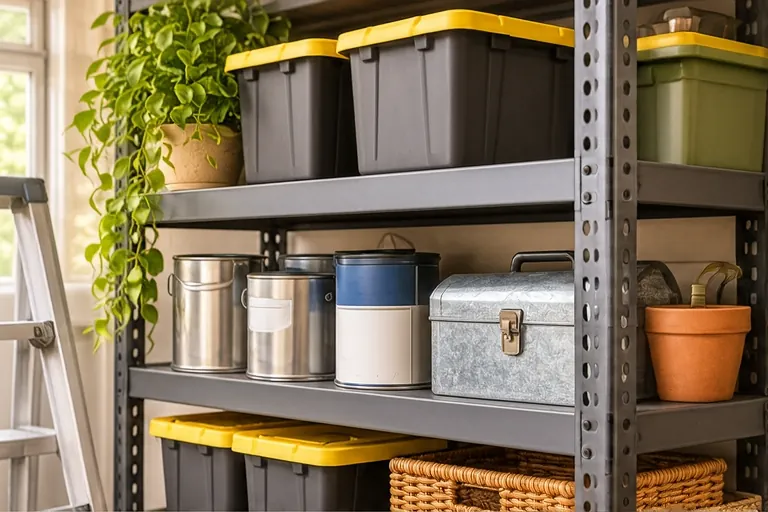
How to evaluate these options: compare shelf dimensions, stated load limits, anchoring requirements and floor clearance. The cards offer practical product-type suggestions, not hands-on test results. Confirm the exact listing, dimensions, installation instructions and current availability on Amazon before buying.
Open steel shelving makes bulky bins easy to see and lift. A cabinet keeps items protected from dust.
Check fit Check the shelf load limits, cabinet door swing and required anchoring.
A rail suits tools you want to hang at different heights. A rack groups long handles in one footprint.
Check fit Check wall mounting, handles and walking clearance.
Totes protect rarely used items. More shelf levels make frequently used contents easier to reach.
Check fit Label totes on the aisle side and reserve low shelves for items that are harder to lift.
Check per-shelf and total-unit ratings and follow the manufacturer’s loading instructions.
Choose freestanding shelves for bulk items and a suitable rail for long tools.
Check the manufacturer’s load rating for each shelf and distribute heavy items low; anchor as directed.
Measure your largest tote and open the car doors before choosing depth.
Give equipment, panels and shutoffs their required access and clearance.
Store heavy items low if the unit is rated and configured for that load.
Follow the unit’s anchoring instructions and check the wall and floor conditions.
Safely choose a garage storage rack based on the load it must carry, the floor it rests on and whether it blocks the vehicle.
A rack photographed with empty plastic bins reveals little about performance with heavy paint tins or a loaded cooler.
Map wall length, garage-door travel, overhead clearance and the minimum walking route between parked car and household door.
Sort stored items into heavy tools, bins, chemicals and lightweight seasonal gear; estimate real loads before selecting a rack.
These are distinct decision paths, not a ranked top-three list. Compare the exact model, dimensions and installation requirements before ordering an alternative.
Use painter’s tape to map shelf footprints and remove unused contents before buying hardware. Put dense objects low on existing suitable shelving.
Confirm the exact rack manual and its capacity per shelf versus total capacity. Check floor level and anchoring; keep incompatible chemicals separated and protect children from access.