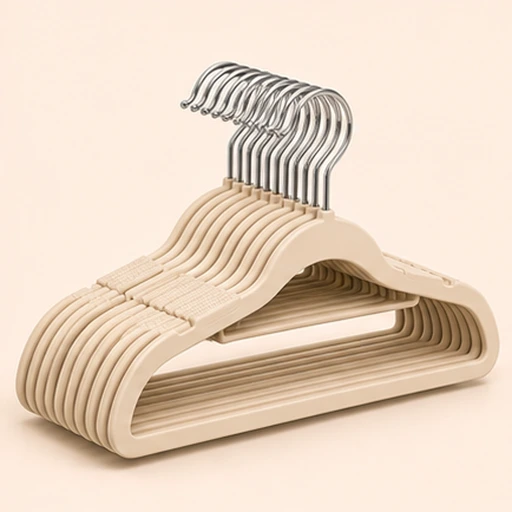
Utopia Home Plastic Hangers 20 Pack
Utopia Home's 20-pack of plastic hangers provides a coordinated everyday set for a closet rail.
Check rod strength, usable hanging height and the door path. Choose a hanging system for items you want to reach without adding floor furniture.
As an Amazon Associate I earn from qualifying purchases. Product illustrations are representative. View Amazon for actual product photographs and specifications.
Utopia Home's 20-pack of plastic hangers provides a coordinated everyday set for a closet rail.
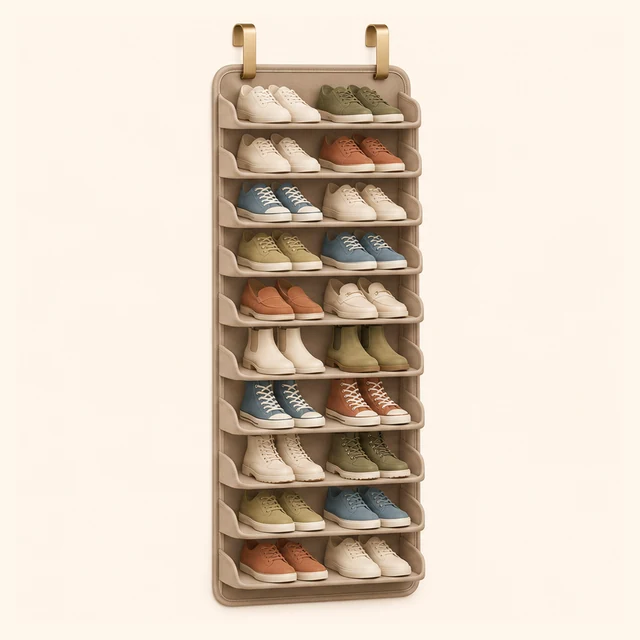
This ten-tier over-door rack is listed for 20–30 pairs; measure door height and clearance before loading it.
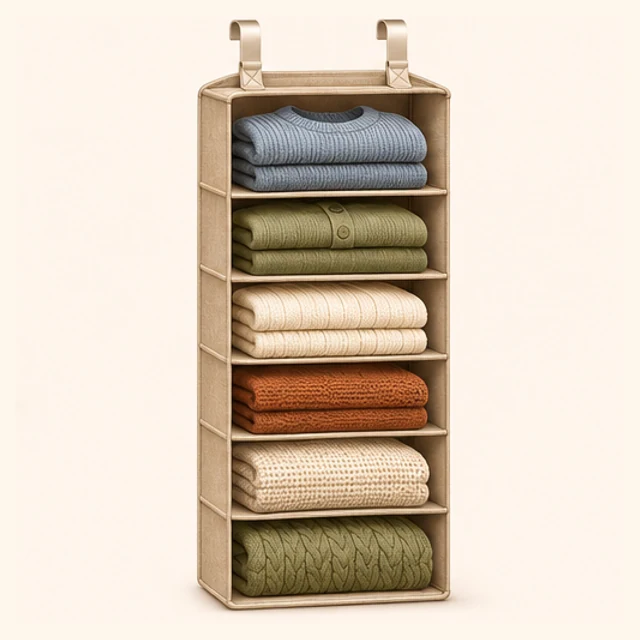
Six shelves and thirteen mesh pockets combine open compartments with visible small-item storage behind the door.
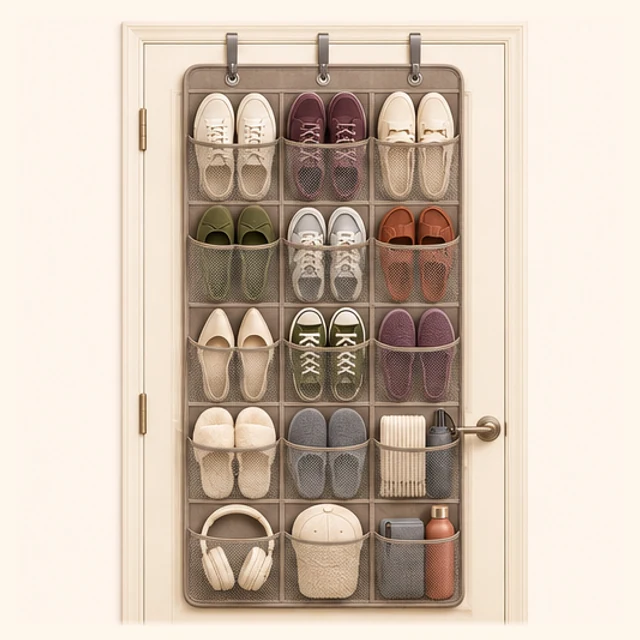
Amazon Basics' light-gray organizer features 24 medium mesh pockets, keeping individual shoes or accessories visible.
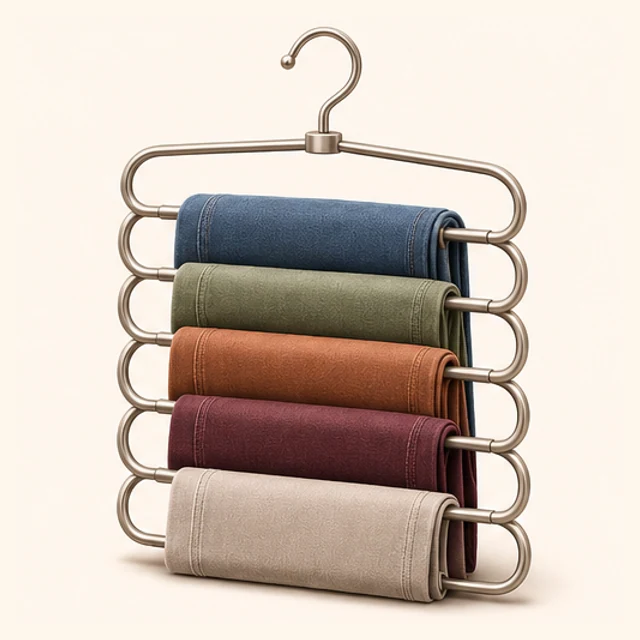
Two metal legging hangers with clips are listed to hold up to 20 leggings, grouping pairs in a small rod section.
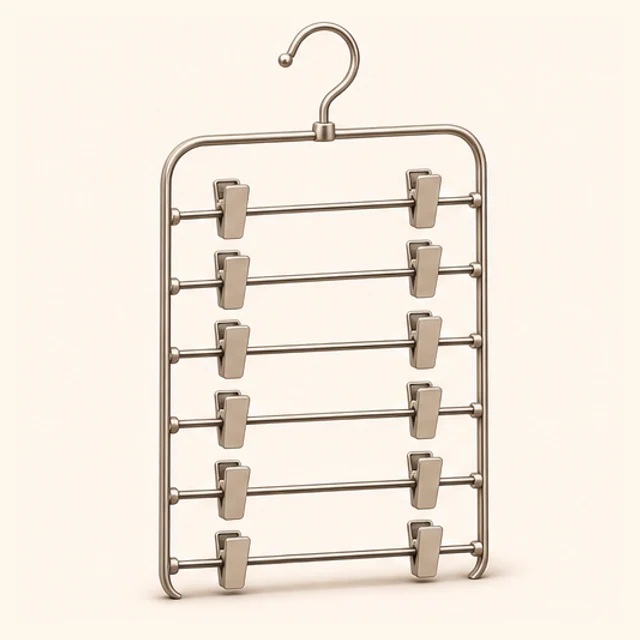
Six-tier skirt and pants clip hangers with swivel hooks make use of vertical space beneath the rod.
A hanging closet organizer adds storage to a rail without installing permanent shelves. Use compartments for folded tops, accessories or lightweight bags.
Measure the available rod length and hanging drop. Check the stated weight limit and leave enough room for clothing on either side.
Check the closet rod and mounting hardware capacity before adding a loaded hanging organizer.
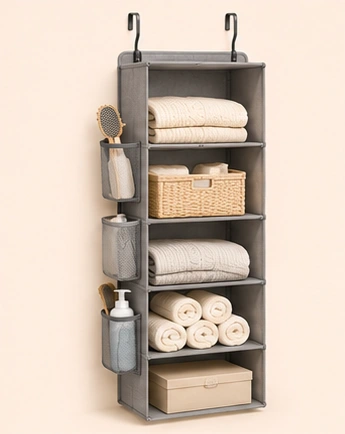
JARLINK's gray five-shelf over-door organizer creates a compact set of compartments for bedroom or pantry accessories.
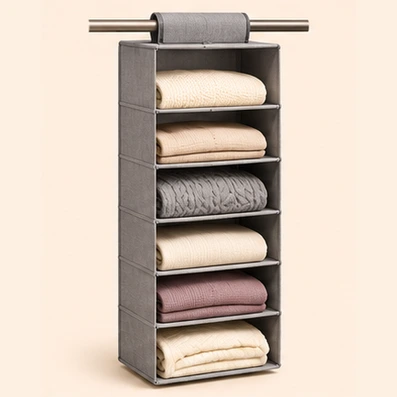
YOUDENOVA's six gray hanging shelves provide vertical cubbies for folded clothing without adding a freestanding unit.
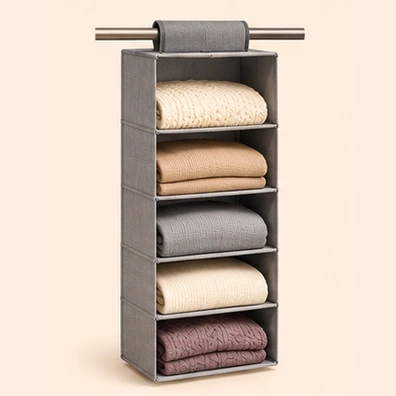
BOOMIBOO's five-shelf gray hanging unit is an option when you need fewer levels beneath the rail.
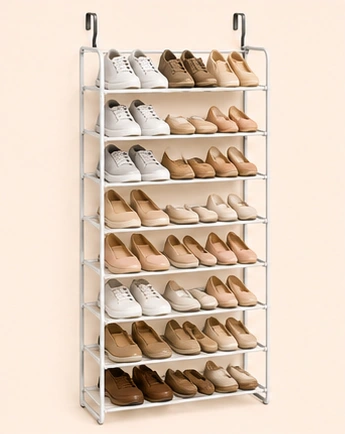
This ten-tier shoe rack is listed for 30–40 pairs, making capacity and door swing important considerations.
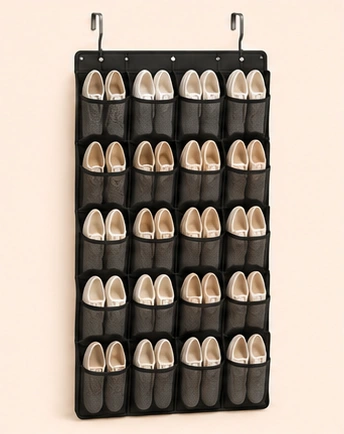
GORILLA GRIP's black 24-pocket organizer offers larger individual pockets for footwear and loose closet items.
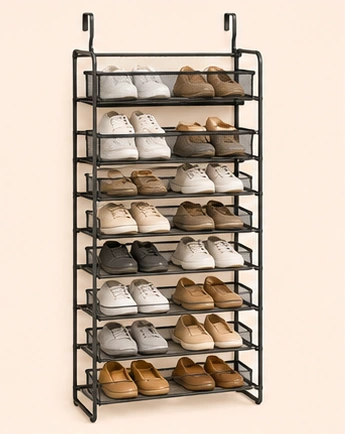
Whitmor's 12-tier metal-and-mesh over-door unit is listed for 36 pairs, providing a tall shoe-storage arrangement.
A hanging shoe organizer can free up floor space and make shoes easier to find. Choose between a rail-mounted organizer and a door-mounted pocket system.
Measure pocket sizes against your shoes and check that the door can close freely. Keep heavier footwear on a suitable lower shelf if the organizer is not designed for it.
Measure the door gap and hook thickness before choosing an over-door shoe organizer.
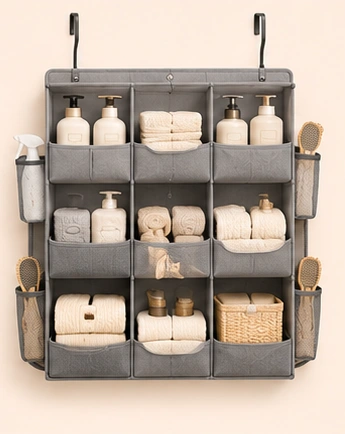
Twelve compartments and fourteen mesh pockets give this extra-large hanging organizer distinct areas for different accessories.
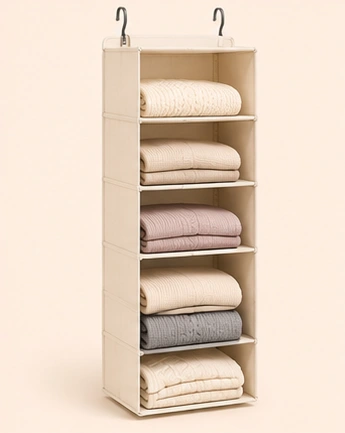
HOMELUX THEORY's ivory six-tier fabric organizer provides a lighter neutral look for behind-door storage.
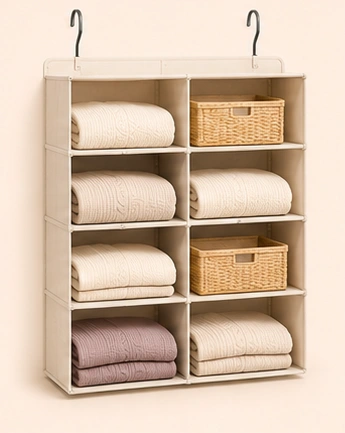
Five tiers and ten wide compartments offer a combination of vertical storage and separate sorting areas.
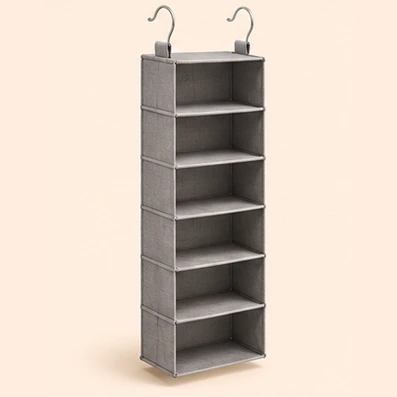
Two hooks support this gray six-tier hanging organizer; check rod compatibility and available drop length.
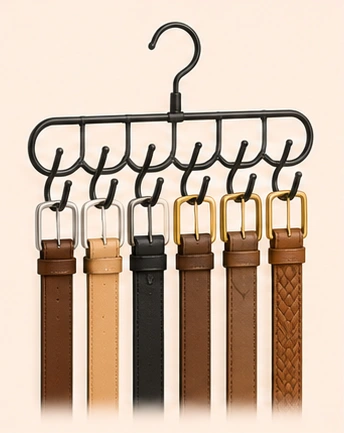
The belt hanger is listed for up to 42 belts, grouping accessories together rather than placing them on clothing hangers.
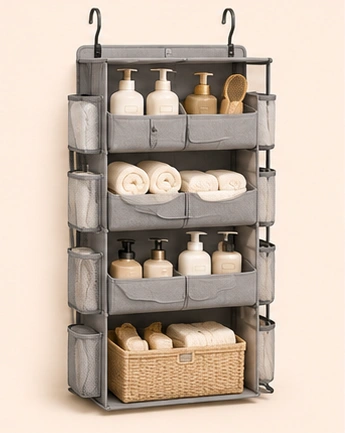
Five levels with ten front and ten mesh pockets help separate small items by category without using drawer space.
Hanging closet shelves are useful when folded clothing competes with hanging garments. Separate sweaters, jeans and accessories into compartments that suit their size.
Check whether the organizer attaches securely to your existing rod. Avoid overloading fabric shelves and keep long garments clear of the unit.
Keep heavier items near the bottom of fabric shelves and follow the manufacturer’s load limits.
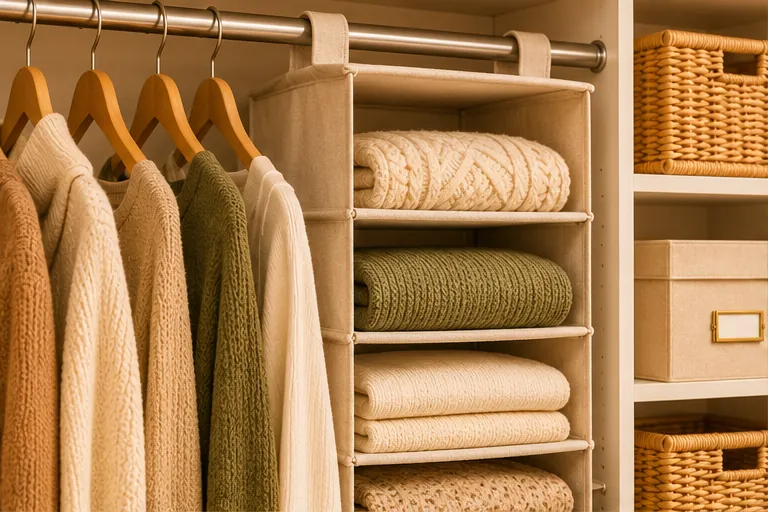
How to evaluate these options: compare rod or door attachment, hanging length, pocket size and supported weight. The cards offer practical product-type suggestions, not hands-on test results. Confirm the exact listing, dimensions, installation instructions and current availability on Amazon before buying.
Velvet helps keep slippery garments on the hanger. Smooth plastic is easy to use for everyday shirts.
Check fit Check the shoulder width and how many hangers fit without crowding.
Clip tiers grip skirts or leggings. Bars let you fold trousers over them.
Check fit Measure the drop of the longest garment and check the way the hanger opens.
Pockets suit pairs that fit the openings. Cubbies suit folded clothes and bulkier items within the load rating.
Check fit Check door or rod clearance with the organizer filled.
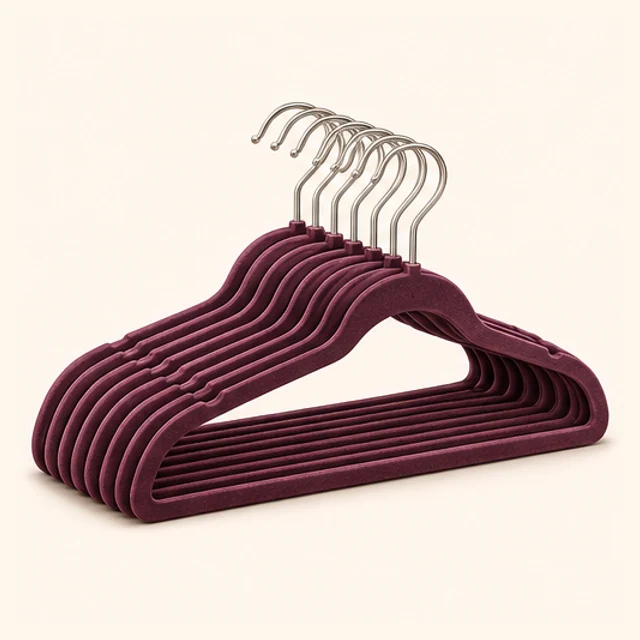
Slim velvet hangers suit closely spaced shirts and jackets where reducing hanger thickness matters.
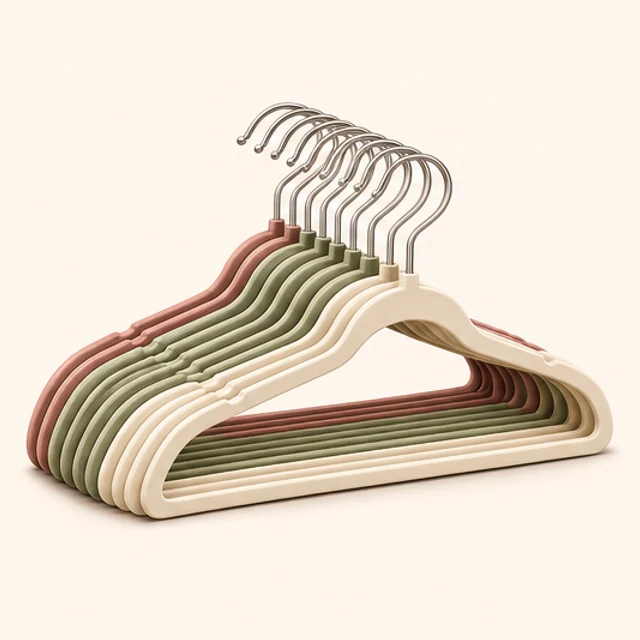
These Utopia plastic hangers are a straightforward option for creating a uniform everyday clothing rail.
Clip-style legging hangers help group workout clothing vertically, avoiding a separate full-size hanger for each pair.
Six-tier clip hangers use the space below one hook to arrange skirts or trousers at different levels.
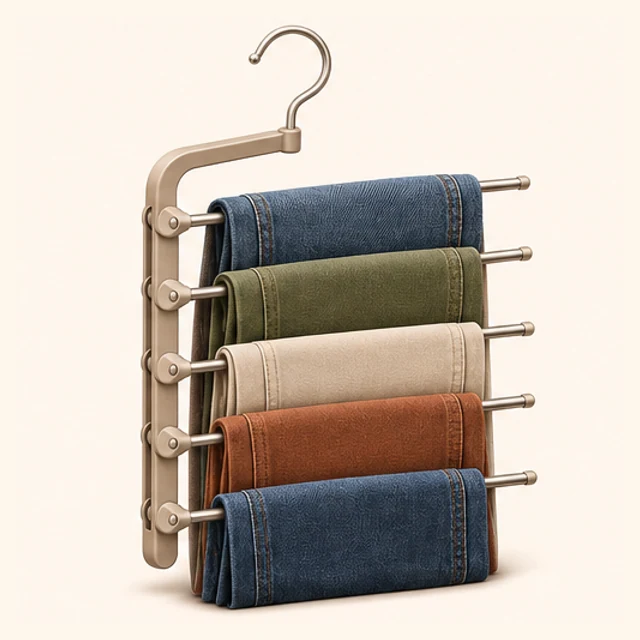
Space-saving pants hangers group trousers over bars; measure the hanging drop before using a low closet rail.
Amazon Basics mesh-pocket shoe storage is useful for keeping flats and small accessories visible behind a door.
Check the rod and organizer load limits and how the straps attach.
Use the shelves for light folded garments that can slide in and out.
Check the combined weight of the organizer and contents against the mounting system’s stated limit.
Use it below a bank of short garments when both rows clear the floor.
Use the widest and longest pair to check pocket fit.
They help when hanger thickness is the constraint. Edit crowded clothes first.
Measure the loaded depth with doors and drawers open.
Separate handbags used weekly from those stored seasonally. Keep high-use bags at an accessible level and avoid cramming everything into one hanging product.
Take the usable rail-to-floor height, closet depth and space between garments. An organizer can fit the rail but block a drawer or interfere with hangers.
Small pockets can bend stiff leather, flatten handles or abrade hardware. Store structured bags upright with acid-free or clean soft filling when appropriate.
Do not assume fabric organizers can hold several heavy handbags safely. Check the manufacturer’s permitted load and the closet rail’s capacity.
Use existing hangers, boxes or shelf dividers for a week before buying. Shop only once you know which bag dimensions and access habits the organizer must support.
Measure your largest handbag across its widest point and compare that measurement with the usable pocket or compartment opening. Open shelves make bags easy to retrieve, while individual pockets can help separate smaller bags. Check how the organizer attaches to the rod and whether the rod can support the combined weight. Allow enough vertical clearance beneath the organizer and keep delicate straps from being crushed. Choose breathable storage appropriate to the bag material and follow any care instructions.
Fabric shelf towers hook or strap over the rod and drop a column of soft cubbies. They suit sweaters, T-shirts, towels and accessories. Many are made from polyester or canvas and are sold for lighter storage.
Double-hang rod extenders hang a second rod below the first, turning one long-hang zone into two short-hang zones for shirts, folded trousers and skirts. Some clip onto wire shelving or rods and adjust in height.
Over-rod pockets and drawers add small-item storage for scarves, belts or shoes. Drawer inserts can make fabric towers more useful, but they add weight.
Published limits vary widely, and some fabric organizers list limits as low as about 8 pounds for the whole unit. Six or ten shelves does not mean six or ten shelves of jeans. Stiffer top boards and wider hook-and-loop straps help, but the closet rod and its brackets are still carrying the load.
Weigh a typical stack of what you plan to store on a bathroom scale. If it exceeds the listed limit, choose a stronger format such as a freestanding shelf unit, or plan lighter contents.
Measure from the top of the rod to the floor and subtract an inch or two so the organizer does not rest on the floor. A standard single rod sits around 66 inches high; a tall fabric tower may not leave room for shoes below.
For a double-hang extender, clothes on the upper rod must clear the lower rod. Shirts usually need a short-hang zone of roughly 38 to 40 inches. Check whether the extender adjusts, and that your longest shirt clears it.
Measure the rod diameter and the gap above it: straps and hooks need space between the rod and the shelf. Confirm the rod is solidly fastened and not already bowing.
Fabric cubbies are deep and soft, so items at the back disappear and stacks topple. Store one category per cubby and keep stacks below the opening. Label the front edge if several people share the closet.
Breathable fabric helps, but a closet against a cold or damp wall can still hold moisture. Keep clothes clean and dry before storing them, and leave some air space around the organizer.
Count how much rod space you really use: guidance suggests about 1 inch per shirt, about 1 1/4 inches for trousers and skirts, and 2 to 3 inches for jackets and suits. If the rod is full of items you rarely wear, editing may free more space than an organizer.
If you do buy, note the closet height, rod height and rod width in My Room Project . For more permanent options, see our guides to closet shelves and small closet organization ideas .