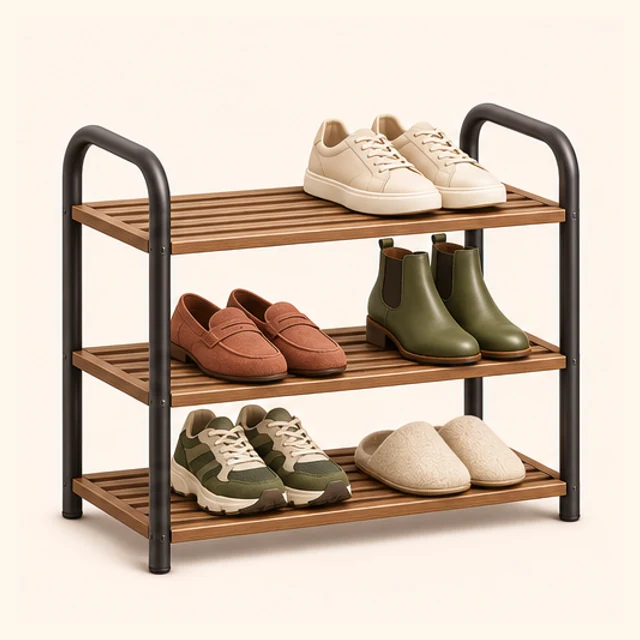
Kitsure Shoe Rack - Non-Woven Shoe Rack Shelf, 27.5" Wide - 3 Tier, Black
Kitsure's black three-tier nonwoven shoe rack spans 27.5 inches, grouping everyday footwear in one low unit.
Inventory folded clothing before changing the shelf layout. Measure shelf thickness, depth and space above each pile before comparing organizers.
As an Amazon Associate I earn from qualifying purchases. Product illustrations are representative. View Amazon for actual product photographs and specifications.
Kitsure's black three-tier nonwoven shoe rack spans 27.5 inches, grouping everyday footwear in one low unit.
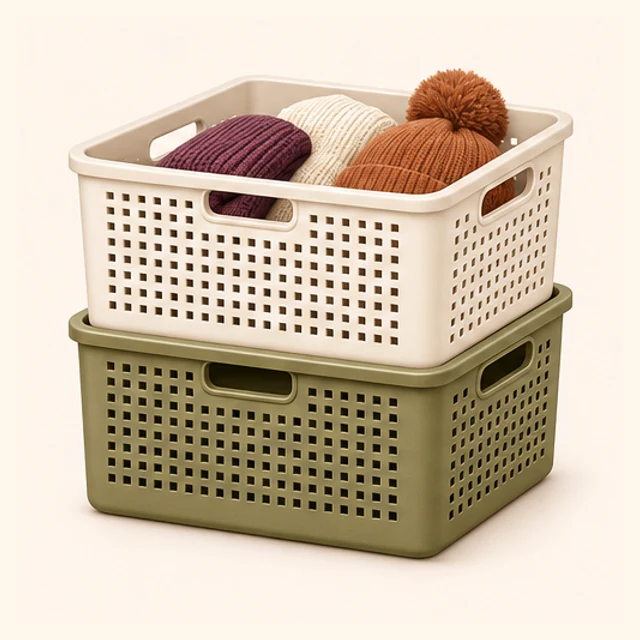
Five stackable baskets let you build accessible sorting zones for folded garments or loose closet accessories.
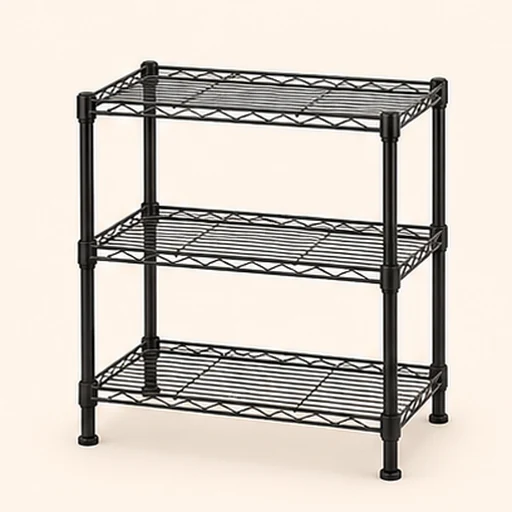
A black metal shelf measuring 18.1 × 12.4 × 30.4 inches fits low storage needs beneath hanging clothes.
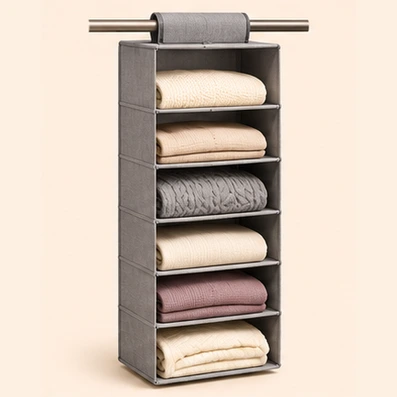
YOUDENOVA's gray six-shelf hanging organizer turns a section of closet rod into vertical compartments for folded clothing.
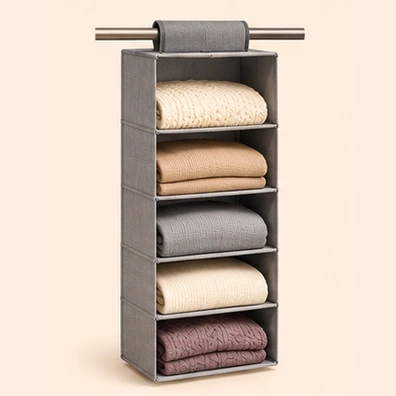
BOOMIBOO's five gray hanging shelves offer an alternative when a six-level organizer is too long for the available space.
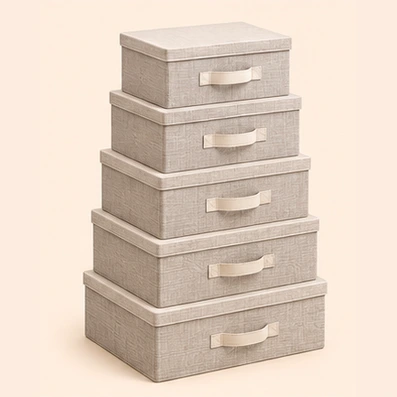
These five stackable storage boxes provide separate compartments for keeping closet items grouped by type.
Closet shelving ideas can turn unused vertical space into storage for folded clothes, handbags and spare linens. Measure shelf depth and the gap above the hanging rail.
Arrange everyday items within reach and reserve higher shelves for lighter seasonal storage. Allow room to lift bins without disturbing the shelf above.
Measure shelf depth, height between shelves and the clearance needed to lift storage boxes.
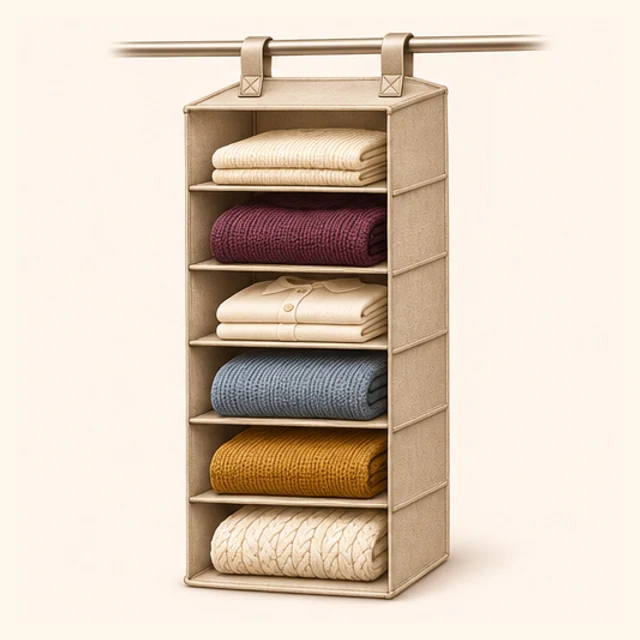
The reinforced five-pack is listed at 16.73 inches; verify the full dimensions before stacking it on an existing shelf.
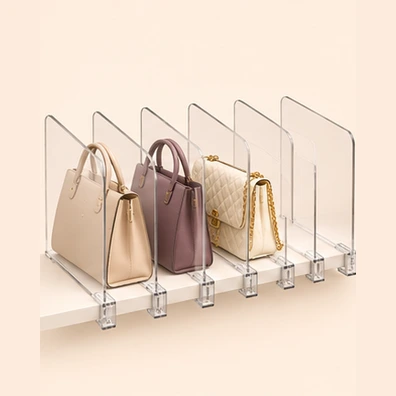
HBlife's six clear dividers provide upright separation for purses without hiding their colors or shapes.
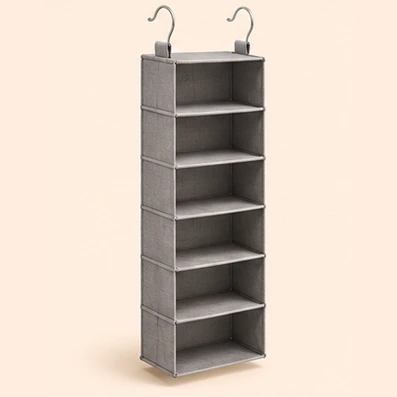
Six tiers and two hooks make this gray hanging organizer a candidate for storing folded items below a closet rod.
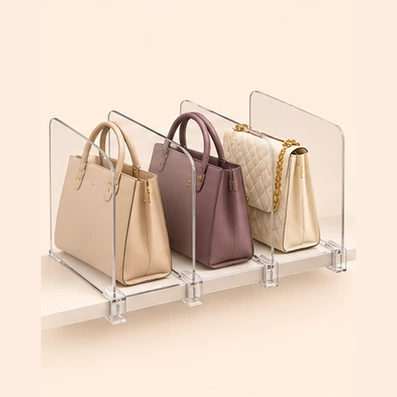
SPACEKEEPER's adjustable acrylic separators allow different widths for handbags; check shelf depth and divider mounting.
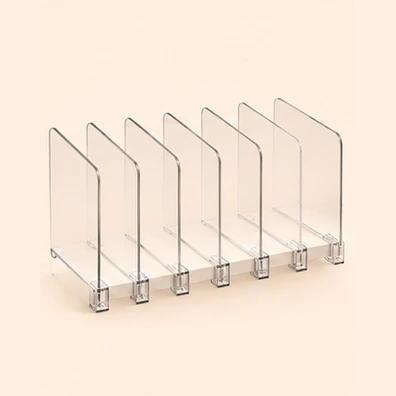
Eight transparent acrylic shelf dividers create individual zones for folded clothing or handbags on an existing shelf.
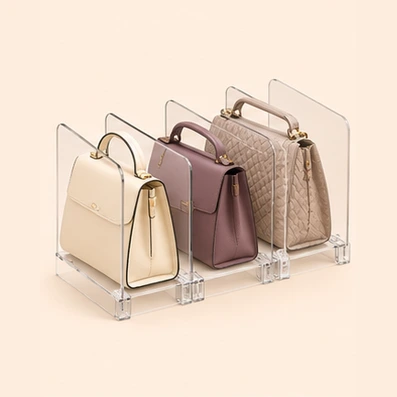
Lifewit's adjustable clear handbag dividers let you space compartments for bags of different widths.
Closet shelf dividers help separate sweaters, jeans and handbags so one stack does not spill into the next. Match the divider attachment to your shelf thickness and material.
Leave enough width between dividers for the items you actually fold. Avoid compressing soft bags or stacking clothing so high that it becomes difficult to remove.
Check whether clip-on dividers fit your shelf material and thickness without forcing the clips.
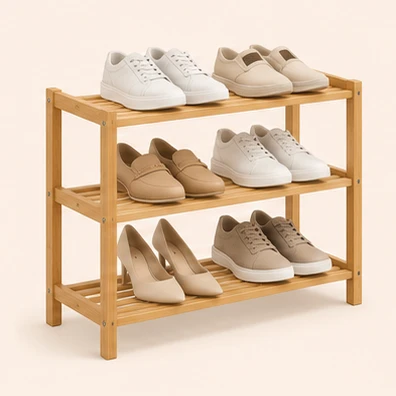
A freestanding three-tier bamboo rack adds warm wood styling to the closet floor or entryway shoe area.
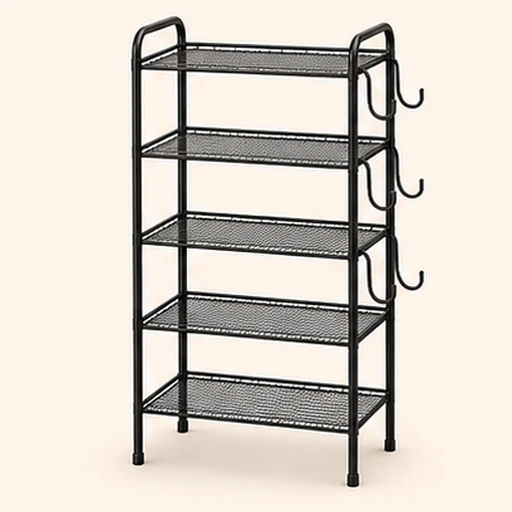
This slim black five-tier shelf includes hooks and measures 18.1 × 12.4 × 56.8 inches for tall, narrow spaces.
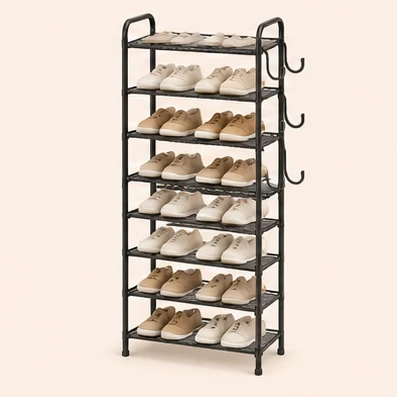
VTRIN's ten-tier metal shoe tower includes two hooks and suits a closet with more vertical than floor space.
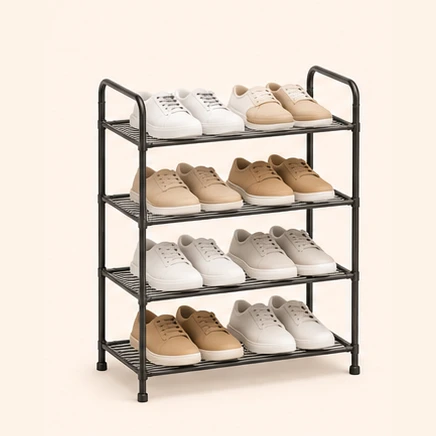
The expandable metal shoe rack can be adjusted to suit the width of an available closet floor section.
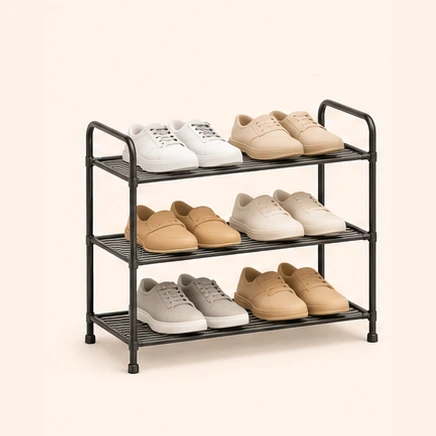
This long, stackable three-tier metal rack is an option when there is room for several pairs across each level.
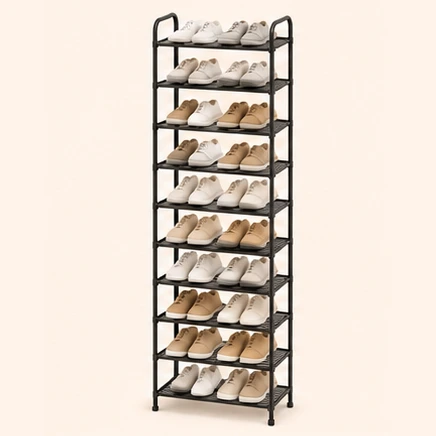
FIDUCIAL HOME's ten-tier rack is listed for 20 pairs, offering a vertical alternative to spreading shoes along the floor.
A closet shelf organizer can add compartments without replacing the existing shelves. Use trays for small accessories and open bins for folded clothing or bags.
Check the organizer’s footprint against the shelf and door clearance. Choose a layout that allows you to retrieve one item without moving several others.
Choose shoe racks or shelf organizers with enough clearance for taller footwear and easy access.
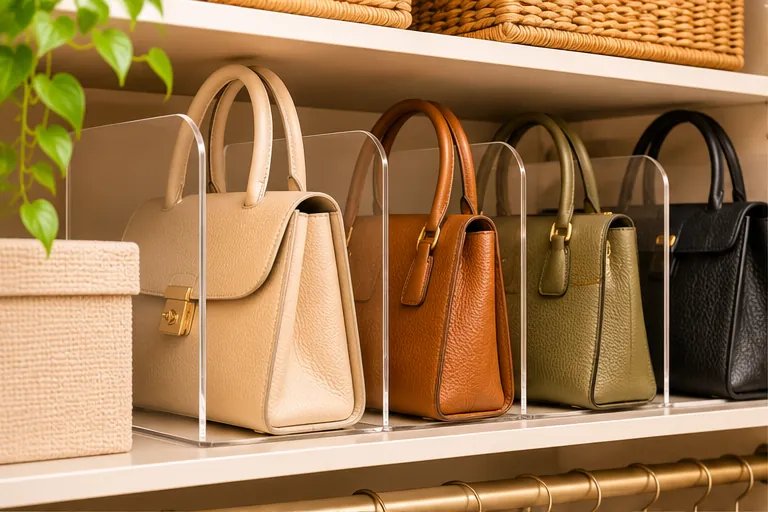
How to evaluate these options: compare shelf thickness, divider attachment, usable depth and clearance for folded items. The cards offer practical product-type suggestions, not hands-on test results. Confirm the exact listing, dimensions, installation instructions and current availability on Amazon before buying.
Fixed shelves suit predictable stacks. Adjustable shelving adapts when storage needs change.
Check fit Measure usable depth and the clearance to lift out your tallest item.
Dividers keep similar folded stacks upright. Baskets contain loose items and accessories.
Check fit Check compatible shelf thickness for dividers and leave room to grab basket handles.
Risers separate short stacks while keeping existing shelves. Another shelf makes sense if you need a full-width level.
Check fit Confirm load ratings and check how easily you can lift items off the upper level.
Reinforced stackable organizers help separate folded clothing into accessible groups rather than one tall pile.
Stackable closet baskets are useful for items that need quick access without opening a closed storage box.
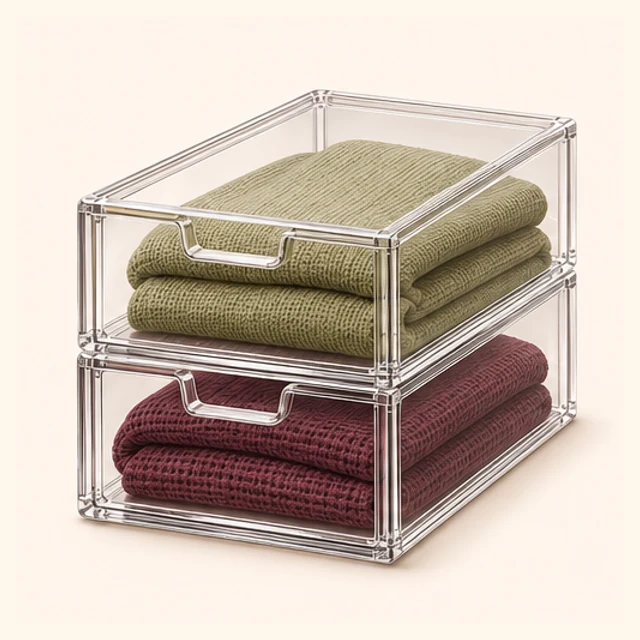
Vtopmart's large clear drawers allow you to see stored accessories and pull them forward from a deep shelf.
Measure the folded items you use most and leave enough room to grasp them.
Measure the tallest stack or box plus hand clearance above it.
Measure the thickness of your shelf before choosing clip-on dividers; leave space to remove stacks without snagging.
Choose one made for the wire profile or use bins instead.
Use a low shelf with a suitable rating and avoid overreaching.
It helps when storage needs change with seasons or different wardrobes.
Try dividing one cluttered stack with a bin or divider before buying a system.
Slide-on dividers often need a flat, uniform shelf edge. Wire shelves, thick laminated boards and decorative lips may need different fittings.
Check thickness, depth and available height. Allow enough room for the stored item and for lifting it out without scraping the shelf above.
A handbag should stand without deforming. A divider may organize the shelf but cannot replace bag stuffing or a stable base for a soft-sided purse.
Count compartments using the actual bag widths, not the product photo. Reserve space for handles and straps, which can snag on clear edges.
The Container Store lists a Clear Shelf Divider for shelf separation. That listing is a source for the product category, not evidence that the divider fits every shelf or is an adjustable handbag-specific model.
A clip-on divider must fit the actual shelf thickness and edge profile. A freestanding divider may work where a clip cannot grip, but needs enough base area to remain stable. For handbags, measure the widest bag and allow room for straps without squeezing the sides. For folded sweaters, choose a spacing that keeps stacks manageable. Check whether the design is intended for solid or wire shelving, and avoid forcing an incompatible clip onto a finished shelf.
Sort what you plan to shelve into three groups: folded clothes you use weekly, bulky items such as bedding or bags, and seasonal storage. Each group wants a different depth and height. A shelf that is perfect for sweaters can be too shallow for a duvet and too high for everyday T-shirts.
Common guidance puts closet shelf depth at 12 to 16 inches, with about 12 inches suiting folded clothes and deeper shelves suiting linens and bulky items. A typical reach-in closet is about 24 inches deep so hangers clear the back wall, which means a 12- to 16-inch shelf leaves room in front for your hands and the door.
The usual single-rod height is about 66 inches from the floor, and a shelf above a rod needs at least 2 inches of clearance so hangers can come on and off. In a double-hang closet, rods are commonly set near 40 to 42 inches and 80 to 84 inches. These are starting points, not rules: measure from the floor to the underside of the shelf, and check that the shortest regular user can reach the front edge without a stool.
Anything above about 80 inches is effectively seasonal storage for most adults. Put the things you need every week between waist and shoulder height. If children use the closet, lower rods and shelves are worth more than extra capacity up high.
Ventilated wire is inexpensive, adjustable and lets air move, but folded clothes can mark or tip through the gaps and light-duty wire can bow under heavy loads. A shelf liner helps small items.
Melamine or laminate gives a smooth, wipeable surface. Quality varies: home-improvement guidance favors thick, thermally fused 3/4-inch boards. The particleboard or MDF core is prone to sagging across long spans, so it needs closer supports than solid wood or plywood.
Solid wood or plywood is stiffer and can be painted or sealed, but costs more and needs finishing. In a damp closet, any material benefits from airflow; a sealed box of linens against a cold exterior wall can trap moisture.
Sag is mostly a support problem. Long spans of particleboard-based shelving are the usual offenders, especially when loaded with books, bins or stacked jeans. Add a center bracket or a cleat along the back wall on wide shelves, and follow the manufacturer's maximum span and load figures rather than guessing.
Fasten brackets and standards into wall studs where the instructions call for it, and use anchors rated for the load where studs are not available. A tall freestanding closet tower is a different case: anchor it to the wall to prevent tip-over, as the CPSC's Anchor It guidance recommends for heavy furniture.
Mark the planned shelf heights on the wall with painter's tape and stand in front of the closet with an armful of what will go there. Check that you can see the back of each shelf, that the door swings clear, and that hangers move freely below.
Measure the closet's width at the opening and inside, because the opening is often narrower. Record those numbers in My Room Project , and if the closet is small, our small closet organization ideas compare rods, shelves and modular kits.