How to Organize a Small Closet
Plan hanging space, organize folded clothing, and make better use of a small closet without starting with a shopping list.
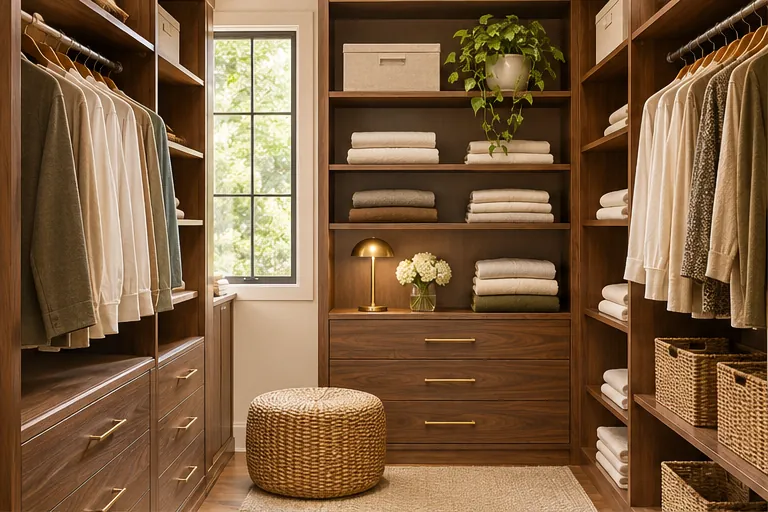
Make room on the rail
A coordinated hanging system creates visual calm and helps make the most of a crowded rod.
Count what must hang and what can fold
Take a quick wardrobe inventory: long coats or dresses, shorter shirts and jackets, folded knitwear, shoes, and accessories. A system that doubles hanging rods is not helpful if most of the wardrobe is long clothing or if it replaces all available folded storage.
Make a temporary division using the existing rod: short-hang clothes on one side, long-hang on the other, and folded items in a low box. Use this for several days. The daily inconvenience it reveals is more useful than an idealized closet photo.
Before buying a modular kit, decide whether you actually need more hanging length, more visible folded storage, or simply fewer hard-to-reach items. If the closet is overflowing with things you no longer wear, an organizer cannot solve that without first reducing the volume.
Measure usable closet depth and the door opening
Measure the inside width at the front and back, the usable depth from the wall to the closed door, and height from floor to any ceiling obstruction. Include baseboards, door tracks, electrical fixtures, and the width lost to closet returns.
Ordinary front-facing clothes hanging often works best in closets with roughly 24 inches of interior depth; this is a planning reference, not a universal minimum. Bulky garments, wide hangers, bifold doors, and different rod offsets may demand more room. A shallow closet may need front-to-back hanging or a different storage plan.
For a tower with drawers, measure the full *open* drawer path with the closet doors in their everyday position. Sliding doors can block part of a wide installation even if the system physically fits behind them.
Bring order to shelves & drawers
Give folded clothing and smaller accessories a clear, accessible home.
Three ways to divide a small closet
Additional hanging rod: Best if you mostly own shorter pieces and your existing rod is overloaded. Check ceiling height and the longest clothes before installing a second tier; a lower rod that interferes with shoes can make the room less useful.
Shelves or open cubbies: Best for folded clothes, bags, and bins you can identify at a glance. Keep the depth modest enough that nothing disappears behind the front row. Soft knitwear is usually happier folded than stretched on a hanger.
Modular combination system: Best when the closet serves several functions and the modules can adjust as needs change. Check the exact usable dimensions, manufacturer load ratings, compatible components, anchoring requirements, and whether replacement parts remain available.
Make shelves easier to maintain
Measure the inside of each shelf and drawer before choosing dividers or baskets. Allow room for handles and lids, and make sure a basket can slide out without catching the shelf above. Group similar items together: everyday T-shirts in one basket, gym clothes in another, and accessories in a shallow tray.
Fold garments to match the storage space rather than forcing an oversized pile into a small bin. Use shelf dividers to keep stacks upright and leave a little open space to put freshly washed clothes away. Put heavier baskets on lower shelves and keep frequently used items within easy reach.
Make every inch work
Move shoes off the floor and occasional-use clothing out of everyday storage.
Safety and installation are not optional
Free-standing wardrobes, tall towers, dressers, and similar storage can be dangerous if they tip. Follow the actual manufacturer’s anchoring instructions and current safety guidance. The CPSC recommends anchoring furniture including bookcases and dressers to prevent tip-over injuries.
A rod is only as trustworthy as its installed supports, wall structure, fasteners, and rated capacity. Do not rely on a generic number of garments as a substitute for that information.
Renters should seek landlord permission where required. A tension-mounted or adhesive accessory is not automatically suitable for heavy storage; respect its stated limits and the surface requirements.
What is worth buying and what should wait
A shelf divider can solve a pile of sweaters that falls over. A second rod can solve unused headroom over shorter clothing. A modular tower can make sense if your inventory requires both hanging and folded storage. But buying a large closet kit before measuring door interference is a very expensive guess.
Use painter’s tape to mark the planned module width on the wall and a cardboard footprint on the floor. Open and close the closet doors. Can you remove the longest coat? Can you pull out every drawer? Can you still reach a shelf without a stool?
Save the measurements in My Room Project, and use our Before You Buy checklist for boxed dimensions, delivery access, mounting requirements, and retailer return terms.
Build a practical shoe and seasonal storage routine
Keep the shoes you wear most often at the front of the closet. Measure the tallest pair, including boots, before choosing a rack; check the depth with the closet door closed. Allow damp shoes to dry before putting them into enclosed storage.
Products to compare
As an Amazon Associate I earn from qualifying purchases. These are related options from our buyer-guide research, not hands-on tested rankings. Check current listing details, fit and availability before ordering.
- Slim velvet hangers — Best for Crowded shirt and jacket rails where thin, grippy hangers help save rod space. View on Amazon (paid link).
- Vtopmart large clear drawers — Best for Keeping folded accessories visible on shelves deep enough for pullout drawers. View on Amazon (paid link).
- Six-shelf over-door organizer — Best for Freeing shelf space for larger items by moving accessories to a door that still closes freely. View on Amazon (paid link).
See the complete buyer guide for more options and fit checks.