Practical How-To / Small laundry room organization
Small Laundry Room Ideas: Organize Laundry Without Adding Storage
A small laundry room works best when clothes have a clear route from dirty to clean. Start with a simple workflow, not another cabinet.
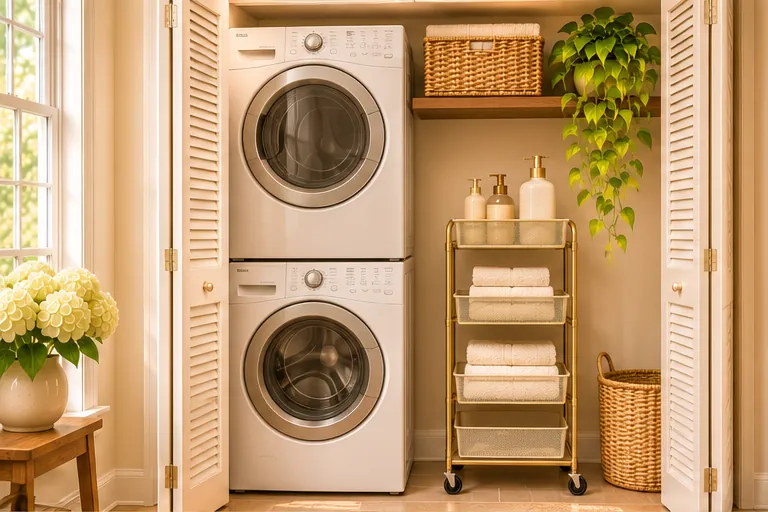
1. Follow one load from start to finish
Before rearranging the room, follow one ordinary load from its hamper to the machine, drying spot, folding surface and final destination. Write down where you pause, drop clothes or have to step around a basket. These repeated interruptions are the real organizing problem. A system that looks impressive but requires carrying wet clothing around three obstacles will not stay organized.
Measure the walking route with appliance doors open and closed. Check whether the open washer or dryer door blocks the only exit, a nearby cabinet or the place you normally stand. Do not obstruct appliance ventilation, service access, plumbing, electrical panels or manufacturer-required clearances. Check appliance manuals rather than assuming that a photograph demonstrates a safe installation.
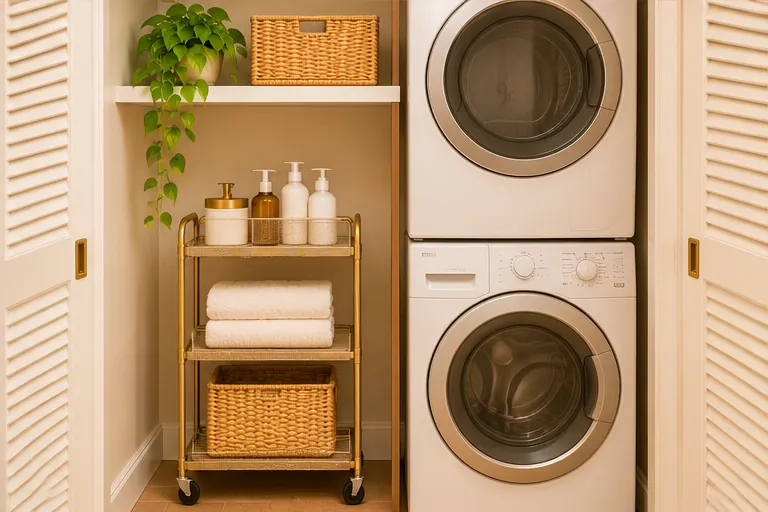
2. Separate dirty, wet and clean zones
Give each stage a temporary home using what you already own: a hamper for dirty garments, a clear safe transfer spot for wet items, and an available table or countertop for folding. Avoid placing clean fabric on a surface used to store detergent or shoes. If floor space is narrow, test a basket placed in an adjacent room instead of permanently blocking the aisle.
Label existing baskets by action rather than by decorative category: wash next, hang dry, mend, or return to bedroom. When two people share the machines, agree on one rule for items left behind. Keep the daily zone simple enough that another household member can use it without instructions.
3. Audit detergents and moisture
Read product instructions and keep laundry chemicals in their original labeled containers, secured away from children and pets. Do not pour cleaners into drink bottles or combine products. Avoid putting containers on an appliance where vibration could knock them down. For dryer lint, follow the appliance manual and clean the lint filter as directed. If clothing needs air drying, choose a place where dripping water will not damage flooring or increase persistent humidity.
Look for condensation, damp walls or musty smells before adding enclosed cabinets. Address water leaks or a dryer exhaust problem instead of covering them with bins. If a wall-mounted drying rack seems necessary, verify the wall material, bracket instructions and rated load. Do not use a tension rod as a substitute for rated support.
4. Run a no-buy trial
Set up a seven-load experiment using your current shelves and containers. After every load, return the empty basket, remove lint, wipe the folding area and clear the path. Mark the exact point of friction: detergent unreachable, no folding area, wet garments waiting, or no destination for clean clothes.
Only then write a shopping specification if needed: maximum height, depth with doors open, accessible reach, rated load, attachment requirements and full purchase or installation cost. For choosing physical cabinets or shelves, see our laundry storage buyer guide; this project is about how the work flows.
5. Keep a 10-minute weekly reset
Pick a repeatable time to clear stray items, inspect moisture, return supplies to secure storage and check that vents and exits remain unobstructed. An overcrowded laundry zone should have fewer stages, not more labeled containers. Keep a simple reminder near the hamper if that helps everyone use the same routine.
Use My Room Project to save the room's measured problem and your no-buy trial results. If a product remains necessary, use our pre-purchase checklist to check size, assembly, mounting and the seller's current return terms.
Products to compare
As an Amazon Associate I earn from qualifying purchases. These are related options from our buyer-guide research, not hands-on tested rankings. Check current listing details, fit and availability before ordering.
- SAMMART 42L (11 gallon) Collapsible Plastic Laundry Basket - Foldable Pop Up Storage Container/Organizer -… — SAMMART's 42-liter collapsible plastic basket folds down when not in use, reducing storage space between loads. View on Amazon (paid link).
- efluky Slim Laundry Basket, Narrow Laundry Hamper with Handles — The narrow efluky hamper with handles is an option for a slim gap where a standard basket takes too much floor space. View on Amazon (paid link).
- Slim 3 Tier Rolling Storage Cart, Metal Narrow Laundry Cart with Wheels — The narrow three-tier metal rolling cart offers mobile shelf space for supplies beside laundry appliances. View on Amazon (paid link).
See the complete buyer guide for more options and fit checks.
Frequently asked questions
Practical answers about small laundry room ideas, fit and everyday use.
Where can I store hampers in a narrow laundry room?
Choose a location outside appliance-door swings and the walking route. Measure a slim hamper with its lid or drawer open before buying.
What are small laundry room storage solutions?
Use vertical space: a shelf above the machines, a slim rolling cart beside them and hooks on the door. Keep the floor clear for safe access.
Can I store detergent above the washer?
Only if it is secure, out of children’s reach and does not conflict with appliance instructions; avoid unstable or vibration-prone locations.
What if there is no folding counter?
Try an existing clean surface in the next room before adding furniture that blocks appliance access.
How do I keep a narrow laundry space clear?
Give baskets an assigned place outside the walking path and reset after every load.
Where should a drying rack go in a small laundry room?
Pick a location that does not block appliance doors, ventilation, electrical equipment or the exit; fold it away when the floor is needed.
How can I stop clean clothes from collecting on a washer?
Give clean loads an immediate destination and use a timed fold-and-put-away step instead of treating the appliance lid as a shelf.
Sources and further reading
These sources provide general safety and consumer guidance, not verification of a specific product.
Independent educational guidance, not a hands-on product test. Always confirm manufacturer directions, local housing rules and retailer terms. Affiliate disclosure.