Educational Comparison / Small Entryway
Entryway Hooks vs. Freestanding Coat Stand for a Small Entryway
Compare safe installation, floor space, overloaded hooks, coats and bags in a busy entry.

Shop this guide
Products to compare
As an Amazon Associate I earn from qualifying purchases. Picked from Amazon listing details; we have not tested these in person. Illustrations are AI-generated and representative; check Amazon for actual photos, sizes and current details before you buy.
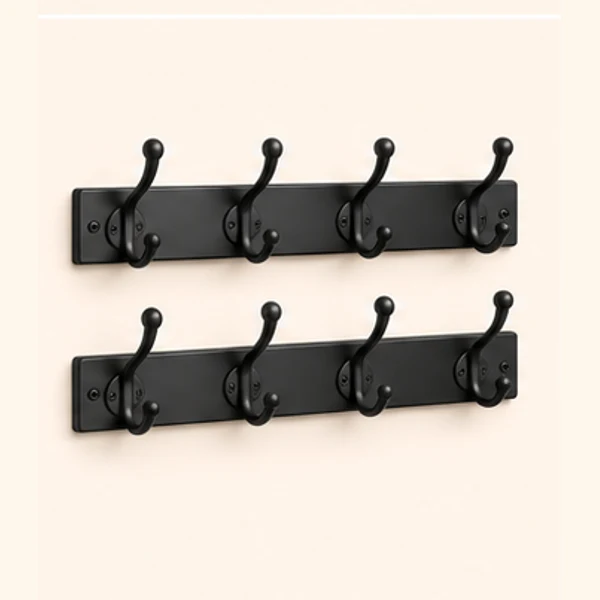
Black wall-mounted coat racks
Measure wall space and door swing.
View on Amazon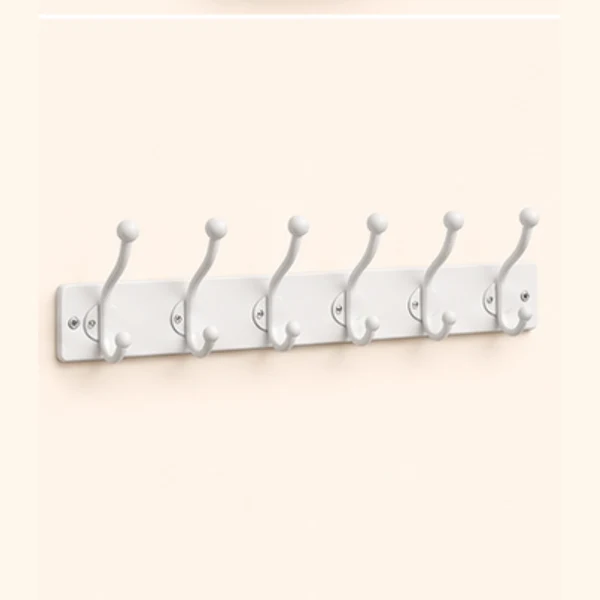
White six-hook rail
Check mounting and coat spacing.
View on Amazon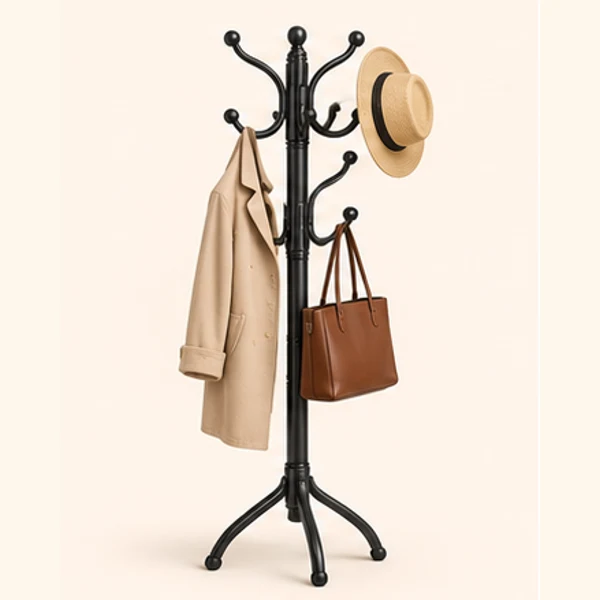
Adjustable eight-hook coat stand
Allow room around the base.
View on Amazon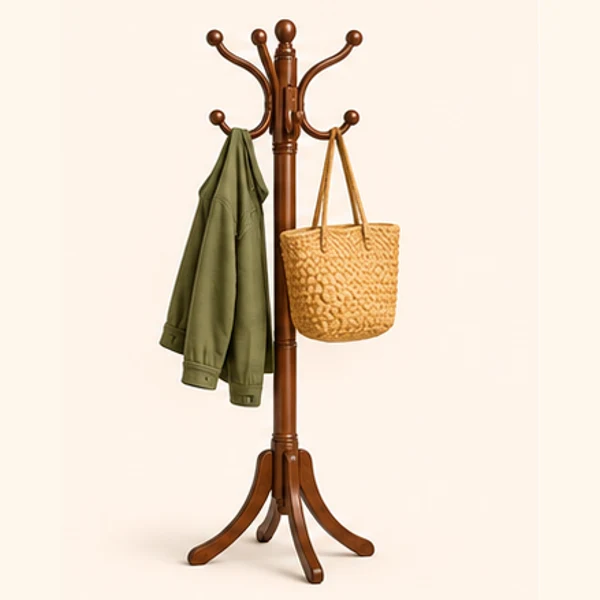
Pipishell wooden coat stand
Check stability and distribute loads evenly.
View on AmazonStart with your traffic pattern
An entryway’s first job is to let people pass through safely. Wall hooks can keep the floor clear and place frequently worn coats at a convenient reach height, while a freestanding coat stand avoids permanent wall attachment in some situations. Neither is inherently better for small homes. A coat stand occupies floor area and can tip or become unstable when heavy bags are hung unevenly; wall hooks rely on a sound, compatible mounting method.
Think about who arrives through the door, what they carry and where they pause. A system that looks tidy with two light jackets may be overloaded when winter coats, backpacks, umbrellas and grocery bags all arrive at once. Count realistic items before deciding how many hooks or branches you need.

Measure door swing, reach and circulation
Measure the entry from door trim to the nearest obstruction and trace the door as it opens. Then draw the projected depth of coats hanging from hooks, not just the thickness of the hook plate. For a coat stand, measure the base footprint and how far a loaded coat projects beyond it. Walk the actual route with a laundry basket or shopping bags to test pinch points.
Household members may need different reachable heights. Put frequently used items at heights they can reach without climbing or stretching, while keeping clothing clear of door hardware and heaters. General accessible-route references are useful prompts, but a private home’s appropriate clearance depends on its occupants and applicable building requirements.
Capacity and daily behavior
Wall hooks spread weight along a wall when installed properly and can separate children’s belongings from adults' coats. But a long row of overloaded hooks may become a crowded wall that snags backpacks. A coat stand concentrates several items in one place and can be moved for cleaning or rearrangement, though its branches may obscure the items at the center.
Try a simple no-purchase experiment: place a chair or taped marker where a coat stand would go, and track the coats or bags used for one week. Alternatively, identify a secure existing closet rod or shelf for occasional coats, keeping only the daily items in the entry. If the storage demand disappears when surplus items move elsewhere, neither new hooks nor a stand may be necessary.
Mounting, stability and renter choices
Wall-mounted hooks need fasteners appropriate to the wall material and the manufacturer’s rated loads. Adhesive hooks can fail depending on surface preparation, conditions and weight; they should not be treated as a universal substitute for secure mounting. Some leases prohibit drilling, so obtain permission before changes. A freestanding stand should have a stable base, model-specific loading instructions and a position away from the door's impact zone.
If children are present, consider whether the stand could be pulled or climbed and whether bags create entanglement risks. A securely mounted hook can be safer than an unstable stand in some homes, but both need appropriate installation and use. Check return conditions before ordering unusually large or assembled furniture.
Best fit by household
Choose wall hooks when floor space is scarce, the wall can accept the correct installation and items can be kept within a manageable load. Choose a freestanding stand when you need to avoid wall alterations and there is enough floor space for its base and loaded radius. If you rent and lack a safe location for either, use existing closet storage instead of forcing an unsafe solution.
Use the narrow hallway guide for traffic checks and the entryway bench guide if seating is a separate requirement. Keep the path to the door clear in both alternatives.
Frequently asked questions
Practical answers about entryway hooks vs. coat stand, fit and everyday use.
Entryway hooks vs. coat stand: which is better for me?
Compare safe installation, floor space, overloaded hooks, coats and bags in a busy entry.
Do wall hooks save more space than a coat stand?
Often in floor footprint, but hanging coats still project into the room and can interfere with doors.
Are adhesive hooks a good no-drill alternative?
Only within a specific product’s rated use and compatible surface conditions; they can fail under heavy coats or bags.
Can a coat stand tip over?
Yes. Consider base design, placement, loading and any manufacturer warnings, particularly around children.
Are wall hooks or a coat stand better for heavy winter coats?
Neither has a universal advantage. Compare installed hook ratings and coat-stand stability against the actual garments and frequency of use.
Can entryway hooks serve children and adults at different heights?
Use separate reachable mounting levels where the wall and walking route permit; avoid dangling bags where they become trip hazards.
Sources and verification
General public guidance is linked below. These sources do not verify particular products or installations.
Independent decision guide, not a firsthand test or professional installation plan. Check current manufacturer instructions and specific wall, electrical, plumbing and property conditions. Affiliate disclosure.