Buying advice / Entryway
Hallway Storage Ideas: Organize a Narrow Hallway Without Blocking the Walkway
A hallway is a route first and a storage space second. The right organizer solves the daily pile of coats, bags, keys or shoes while keeping circulation clear for everyone who uses the home.
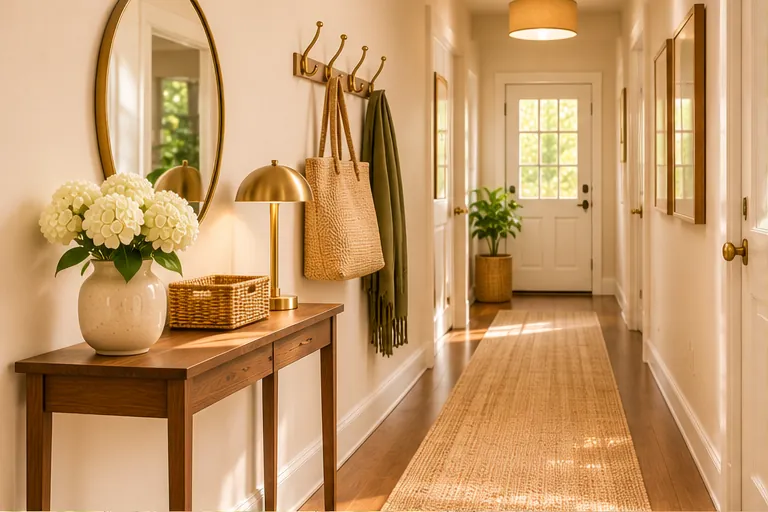
Shop this guide
Products to consider
As an Amazon Associate I earn from qualifying purchases. Product illustrations are representative; check Amazon for actual photos, sizes and current details before you buy.
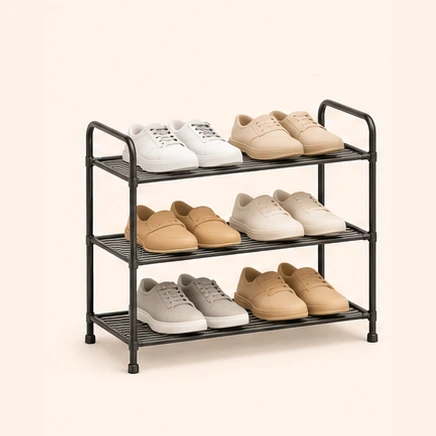
3-Tier Long Shoe Rack for Closet Metal Shoe Organizer for Entryway, Wide Stackable Shoe Storage Shelf with…
This long, stackable three-tier metal rack is an option when there is room for several pairs across each level.
View on Amazon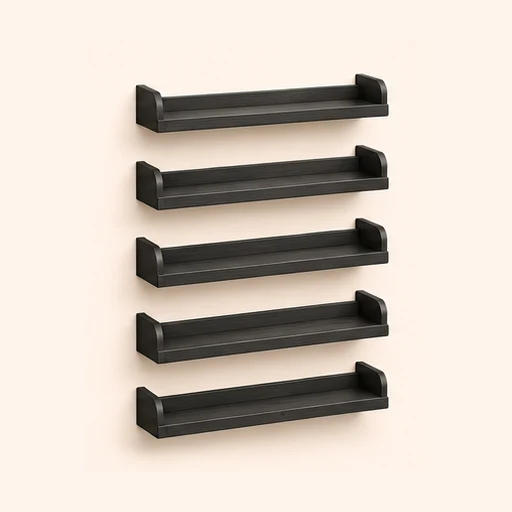
RICHER HOUSE 5-Set Floating Shelves with Lip, Black Wall Mounted Wood Shelf
RICHER HOUSE's five black wood shelves feature a raised lip that helps define the front edge of a display.
View on Amazon
Corner Floating Shelves Wall Mounted Set of 4, Black
Four black corner shelves put otherwise unused wall corners to work; check the corner angle and mounting surface.
View on Amazon
Command Display Ledges, Holds up to 2 lb, Quartz, 2 Ledges with 8 Medium Strips, Damage-Free Hanging Floating…
Two quartz Command display ledges include eight medium strips and are listed for up to two pounds; follow surface instructions.
View on AmazonMeasure the walking path, not just the wall
Measure the hallway at its narrowest usable point, including trim, radiators, projecting door handles and open doors. Then draw the footprint of any proposed cabinet on paper or mark it with removable tape. Carry a laundry basket or shopping bags through the space to see whether the route still feels comfortable.
Consider everyone who uses the route, including people with mobility equipment, children, caregivers and visitors. The U.S. Access Board describes minimum clear widths for accessible routes in covered settings; those rules are not a blanket approval for a residential hallway that happens to measure the same width. Local building and fire requirements, actual turning needs and the building’s intended use still govern.
Do not place furniture where it would impede escape, a doorway, a stair landing or access to safety equipment. In a narrow hallway, declining to add storage can be the best solution.
Choose hooks, shallow cabinets or a bench by the problem
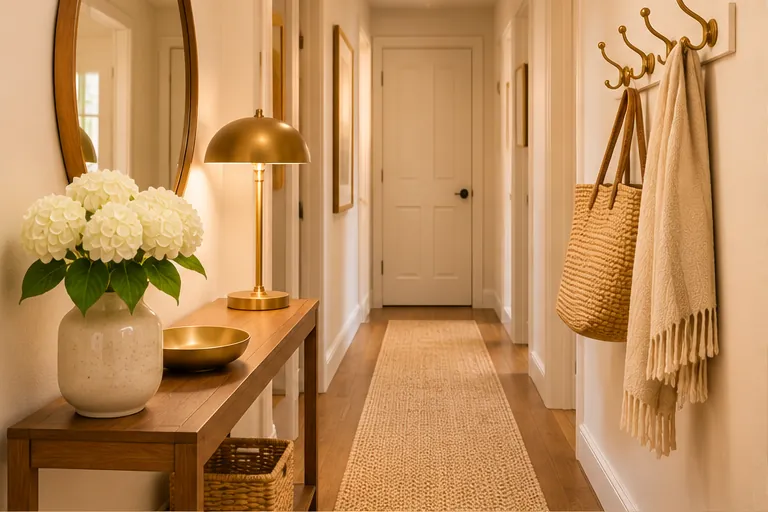
Wall hooks use very little floor area, but coats and handbags project outward more than the hook itself. Measure the bulk of actual winter coats, not merely the metal hardware. Put hooks at a comfortable reach and check whether hanging items brush against people passing.
A slim shoe cabinet may hide clutter, but its drawers and hinged doors occupy additional space when open. Inspect the open-depth specification and the size of shoes it holds. Some flip-front designs have small compartments that do not fit bulky boots or larger footwear. Consider whether household members will actually close the doors.
A narrow bench can assist with shoes where there is enough space for someone to sit and another person to pass. If the hallway is too tight, a bench may create a bottleneck; placing seating in an adjacent room can be a better answer. Check stability, stated weight capacity, and whether the bench requires anchoring.
Plan an entry routine before buying hardware
Observe the first 30 seconds after everyone comes home. Keys may need a small dish, bags one assigned hook, shoes a washable mat, and mail a separate recycling location. Most entryway clutter is generated by a few repeat actions; do not buy a large organizer for objects that are better stored somewhere else.
Try a one-week no-purchase test. Remove unused footwear, give each person one designated drop spot, and relocate seldom-used coats. Only after that should you measure how much capacity remains necessary. A labeled basket inside an existing closet may solve the issue with no hallway furniture.
For rentals, confirm whether drilling is allowed. Freestanding furniture can avoid wall holes but may tip, slide, or interfere with the route. Wall hooks and shelves still require hardware and installation appropriate to the wall and expected load.
Beware protrusions and open doors
Draw every door in its fully open position: front door, closet, bathroom and any nearby cabinet. A storage piece can clear a closed door but collide when somebody opens it. Do not count a doorway swing zone as consistently available floor space.
If children use the area, avoid unstable tall racks and furniture that can be climbed. Follow manufacturer anti-tip instructions for cabinets, chests and similar items. Avoid sharp or protruding hooks at face or shoulder height, and consider easy-to-clean materials in a wet-shoe area.
If an installer recommends moving an electrical switch, outlet or other building fixture, that is not a simple decor change. Obtain appropriate professional advice and permissions.
Before checkout
Check the outside and open dimensions, required walking clearance, attachment method, footwear capacity and actual load ratings. Look for a return policy that allows the item to be evaluated before installing it, since drilling or assembly can affect return eligibility.
Save your measurements with My Room Project. Use Free Tools to sketch fit questions and Before You Buy to capture delivery, mounting and return details. The goal is a clearer route, not a fuller hallway.
Frequently asked questions
Practical answers about hallway storage ideas, fit and everyday use.
What should I check before adding a hallway shoe cabinet?
Measure the narrowest walkway and door swings, including the cabinet's open drawers or doors. Avoid reducing safe passage or access to other rooms.
How narrow can a hallway be before adding storage?
There is no universally safe furniture allowance. Measure the actual clear path and confirm building and accessibility requirements, turning needs and emergency egress before adding anything.
Do slim shoe cabinets work for boots?
Some do not. Compare each compartment’s interior dimensions and the cabinet’s depth while fully open with the footwear you own.
Are wall hooks better than a hallway bench?
Hooks use less floor space but hanging coats project into circulation. A bench works only where seating and passage can coexist safely.
Can a hallway console double as a charging station?
Only if cords can be routed without crossing the walkway and outlets remain accessible. Avoid charging devices beneath piles of coats or paper.
How should narrow hallway storage handle winter boots?
Use a washable low-profile tray at the entry and move off-season pairs elsewhere rather than expanding storage into the walking route.
Sources and further reading
These sources support general safety and planning guidance, not the performance of a specific item.
Independent educational guidance, not a hands-on product review. Verify exact-model specifications, mounting requirements, care instructions, and retailer policies before purchase. Disclosure.