Buying advice / Bedroom
Jewelry Storage Ideas: Trays, Stands, or Closed Storage?
The right jewelry organizer prevents the same two problems from returning every morning: losing small pieces and untangling items before you can wear them. Think about your collection and where you get dressed before buying a decorative stand.
Shop this guide
Products to consider
As an Amazon Associate I earn from qualifying purchases. Product illustrations are representative; check Amazon for actual photos, sizes and current details before you buy.
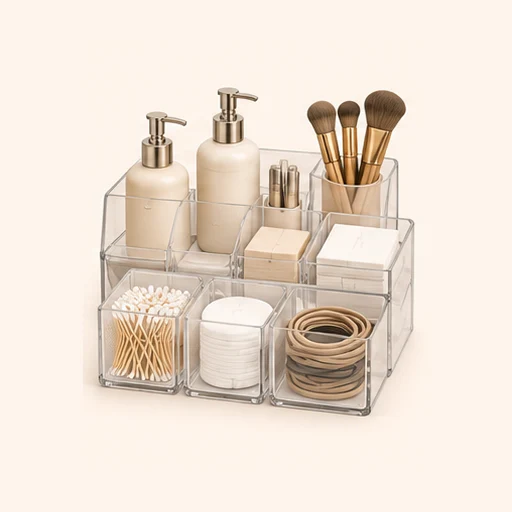
【Military Grade】 A-LuGei Drawer Organizer for Vanity Bathroom Makeup Desk
A-LuGei's drawer-organizer set is intended for vanity, bathroom or desk items; compare individual bin dimensions with the drawer.
View on Amazon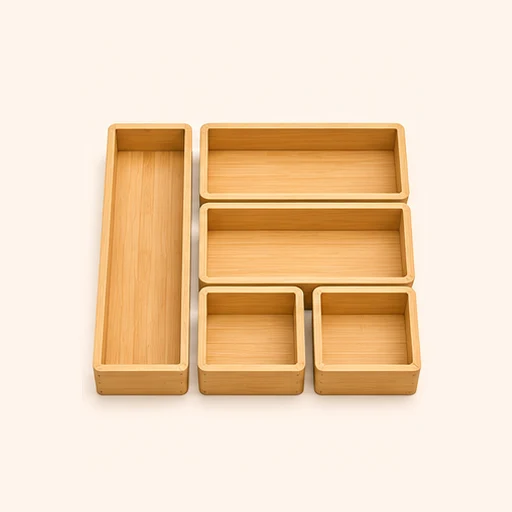
Bamboo Drawer Organizer Set, Individual Wood Storage Organizers
Individual bamboo trays let you arrange wooden storage compartments around stationery rather than use one fixed layout.
View on Amazon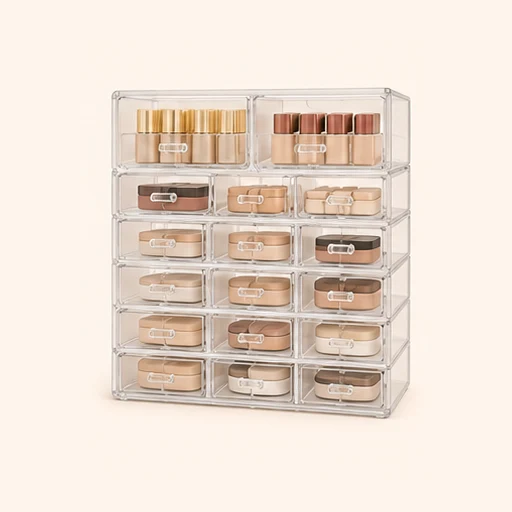
Acrylic Makeup Organizer with 19 Drawers,Storage Drawer Organizer
Nineteen acrylic drawers offer a way to separate many small craft supplies or cosmetic items on a desktop.
View on Amazon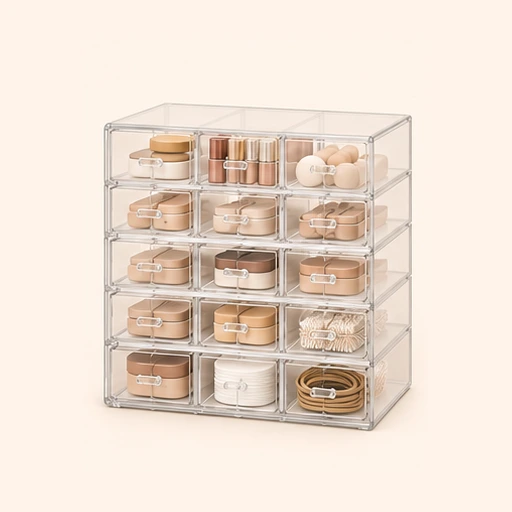
Acrylic16-Drawer Storage & Makeup Organizer for Desk
Sixteen clear acrylic drawers make small items visible while keeping different types of accessories separated.
View on AmazonSort your collection before choosing a container
Start by separating necklaces, chains, rings, earrings, bracelets, watches, and items worn only on special occasions. You may discover that a handful of daily pieces need quick access while everything else needs protection and clear labeling.
Lay a clean cloth on a table and group pieces by how they are used. Photograph or inventory valuable items if that is helpful for your own records, but avoid storing sensitive details in a public or shared computer. A repurposed small dish or divided box might handle daily pieces without any new purchase.
Be cautious about using a beautiful open organizer simply because it photographs well. Dust, sunlight, accidental knocks, curious pets, and household traffic can make an exposed display impractical.
Compare trays, upright stands, and covered cases
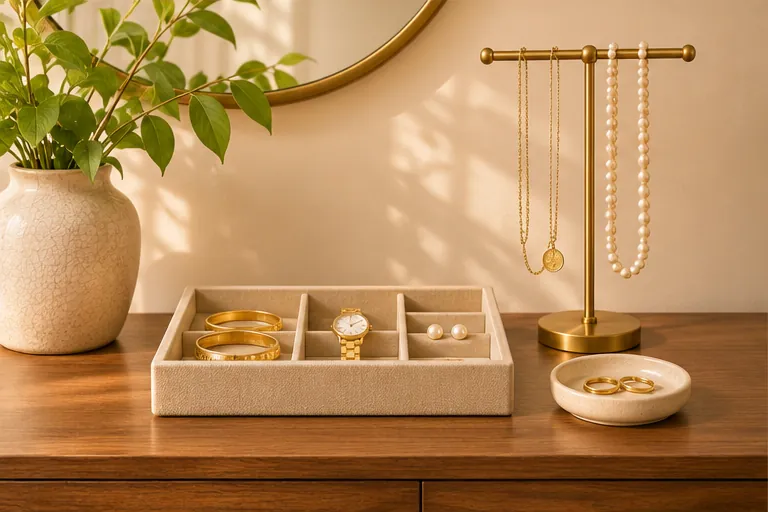
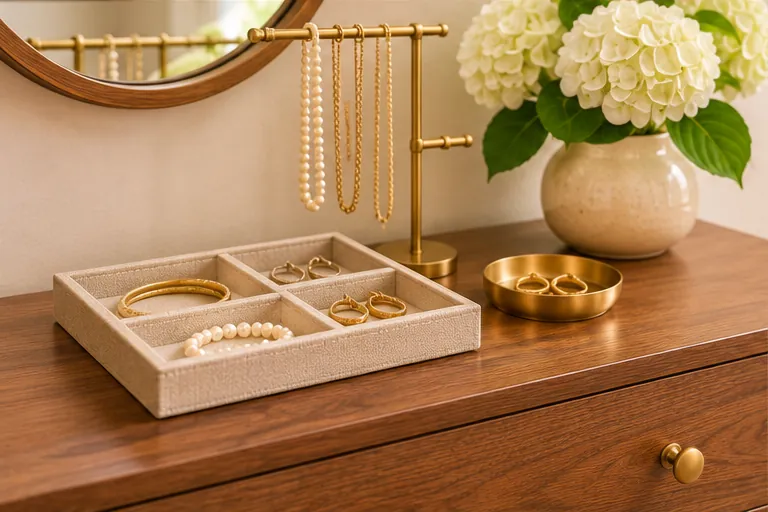
Flat compartment trays work well inside a drawer for rings, studs, and bracelets. Measure the drawer’s usable inside width, depth, and especially height before buying. A high divider or padded lid that looks shallow in pictures can prevent the drawer from closing.
An upright necklace stand allows chains to hang separately and can reduce tangling when properly spaced. But long pendants need enough drop, the stand base needs stability, and open display leaves pieces exposed to household conditions. Count the hang points rather than assuming every hook holds one chain comfortably.
Covered boxes and cases are useful for occasional or delicate items. Check whether compartments are long enough for necklaces and whether internal dividers are soft, removable, or adjustable. A large box with one open compartment may not improve organization much.
Protect finishes and materials
Different metals, stones, finishes, and costume materials have different care requirements. Some jewelry can be affected by moisture, household chemicals, rubbing against other pieces, or inappropriate cleaning methods. For valuable or delicate pieces, follow a jeweler’s care instructions rather than assuming every padded tray is suitable.
Check lining materials and closures. Rough seams, exposed metal hooks, loose magnets, or a lid that slams shut may be poor choices for fragile pieces. A breathable, dry storage area is generally more useful than storing jewelry beside a steamy bathroom sink, but the correct environment depends on the item.
If young children or pets can reach the organizer, consider secure storage and small-piece hazards. A lock on a decorative box should not be confused with a theft-resistant safe.
Make the arrangement easy to maintain
Place everyday pieces near your dressing routine, but away from a sink splash zone. Keep frequently worn earrings paired and necklace chains separated. Leave a little unused space: organizers packed to capacity become hard to use and can make daily cleanup feel like work.
Try one category at a time. A shallow tray for studs and rings plus a separate section for chains is often more useful than a large “everything” organizer. If multiple people share a dresser, assign zones rather than mixing collections.
Once arranged, test the system for a week before buying more inserts. If you keep putting pieces down somewhere else, the organizer may be in the wrong place, not the wrong size.
What to verify before ordering
Retail listings may give outside dimensions but not the useful internal compartment measurements. Look for both. Confirm drawer clearance, hook height, overall weight and stability, closures, lining/care directions, and return conditions.
For travel cases, measure the items you actually pack and consider how a case closes under pressure. For wall-mounted organizers, check whether the mounting method suits your wall and rental rules. Record your dimensions in My Room Project and use the purchase checklist.
Frequently asked questions
Practical answers about jewelry storage ideas, fit and everyday use.
How can I prevent necklaces from tangling in a drawer?
Use individual compartments or hooks that keep chains separated. Fasten clasps before storing and keep delicate pieces away from moisture.
What are simple DIY jewelry organization ideas?
Use a divided tray in a drawer, small hooks on the inside of a closet door, or a shallow box with egg-carton style dividers for rings and earrings.
Are open jewelry stands better than boxes?
Neither is universally better. Open stands can help keep daily necklaces separated; covered boxes can protect pieces from dust and contact but may hide what you own.
What should I measure for a drawer jewelry tray?
Measure the drawer’s actual inside width, front-to-back depth, and available height beneath the closed drawer above it. Compare with the tray’s complete outside dimensions.
Will one organizer prevent every necklace from tangling?
No. Chains need enough separate hanging points or divided storage, and handling matters. Very fine chains may require individual protection.
How should I store necklaces without dedicated jewelry furniture?
Use individual hooks, small compartments or soft pouches so chains do not tangle; keep metals away from moisture.
Can jewelry organizers go in a bathroom?
Steam can be hard on some metals and finishes. A dry drawer or bedroom surface is usually easier to protect from moisture.
Sources and further reading
These sources support general care, safety, or consumer guidance, not the performance of any particular product.
Independent educational guidance, not a hands-on product review. Verify exact-model specifications, mounting requirements, care instructions, and retailer policies before purchase. Disclosure.