Buying advice / Entryway & Closet
Shoe Storage Ideas: Racks, Cabinets, or Under-Bed Bins?
A shoe organizer only saves space if it holds your actual shoes, stays usable in the busiest part of your day, and does not introduce a tripping or tipping problem.
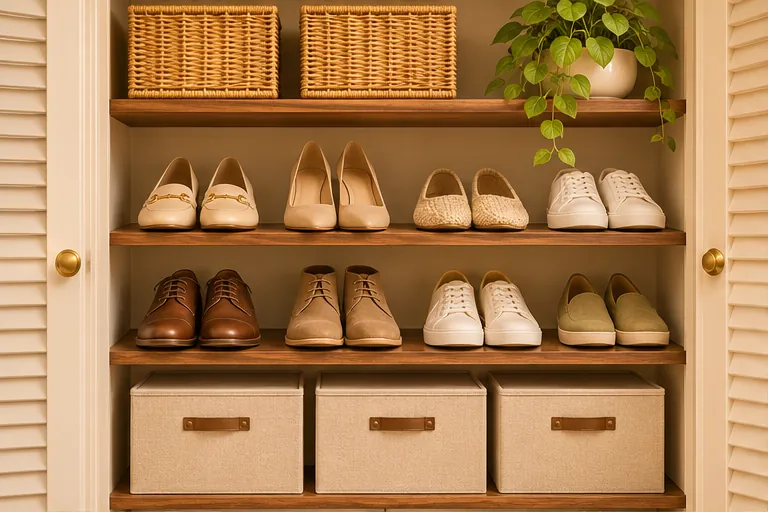
Count the shoes you really use
Make a quick inventory by type instead of trusting the “holds 24 pairs” claim. Boots, high-tops, wide shoes and athletic sneakers occupy different footprints; adult shoes may not fit in a narrow slot designed around smaller footwear. Set aside the pairs used every day, each week and only seasonally. Those groups do not need the same storage location.
Measure the largest shoes heel to toe, across the widest portion, and in total height. Make a paper template of a pair on the shelf or floor. A rack that fits six pairs of slim shoes may only fit four pairs of broad sneakers. Leave enough hand room to retrieve the back pair without tipping the shelf.
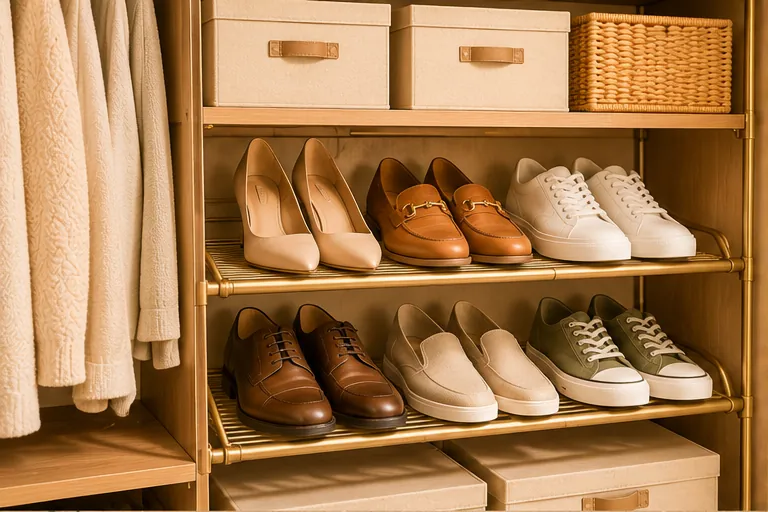
Pick a form that matches your habits
Open racks are convenient for daily shoes and allow wet footwear to dry, but they also show dirt and can collect dust. A closed shoe cabinet looks calmer in an entryway; check usable interior depth, door swing and whether air can circulate. Do not put dripping wet shoes into a sealed cabinet and assume they will dry.
Over-door pockets can work for lightweight slippers or accessories if the door has clearance above and beside it. Measure the entire door movement and inspect the hanger hardware so it does not damage the frame. Under-bed boxes suit occasional or seasonal footwear, but only when bed clearance and pulling space are sufficient. Our under-bed storage guide covers that decision in detail.
Plan the entry path, ventilation and cleaning
Shoes are often left exactly where people need to walk. Measure the corridor after a rack is placed, not before; allow room for doors to swing and people to pass with bags or a mobility aid. A shallow rack beside the entrance may be more useful than a much larger rack in an inaccessible closet.
For wet shoes, prioritize an easily cleaned tray or washable mat and air circulation. Let shoes dry before using enclosed storage. The EPA emphasizes moisture control when preventing mold; an organizer cannot solve persistent dampness in the home. Check materials and finishes for how readily they wipe clean after muddy days.
Look past capacity claims
Compare the outside footprint with the space available and the inside slot dimensions with your largest pair. Review whether shelves are adjustable for boots or removable for cleaning. A slim, tall cabinet may need anchoring to resist tip-over, especially around children; follow the actual manufacturer’s instructions, rather than relying on its appearance in a product photo.
Before ordering, confirm assembly tools, door handedness, anchoring hardware, floor contact and return conditions. Flat-pack cabinets can be awkward to return once assembled. If your hallway is narrow, use our Before You Buy checklist for delivery and packaging questions.
Try a one-week arrangement first
Put only frequently worn shoes in a taped-off footprint where the organizer would stand. Keep other pairs in a box or closet. After one week, observe whether the shoes return to that zone naturally, whether cleaning is easy, and whether the setup crowds the door.
You may find that reducing the number of shoes left in the entryway solves the problem without buying a rack. If you do purchase, record the actual footprint in My Room Project before opening a retailer page.
Products to compare
As an Amazon Associate I earn from qualifying purchases. These are related options from our buyer-guide research, not hands-on tested rankings. Check current listing details, fit and availability before ordering.
- Kitsure Shoe Rack - Non-Woven Shoe Rack Shelf, 27.5" Wide - 3 Tier, Black — Kitsure's black three-tier nonwoven shoe rack spans 27.5 inches, grouping everyday footwear in one low unit. View on Amazon (paid link).
- 3 Tier Bamboo Shoe Rack for Closet Free Standing Wood Shoe Shelf Storage Organizer for Entryway Small Space… — A freestanding three-tier bamboo rack adds warm wood styling to the closet floor or entryway shoe area. View on Amazon (paid link).
- Expandable Shoe Rack, Heavy Duty Metal Shoe Organizer for Closet — The expandable metal shoe rack can be adjusted to suit the width of an available closet floor section. View on Amazon (paid link).
See the complete buyer guide for more options and fit checks.
Frequently asked questions
Practical answers about shoe storage ideas, fit and everyday use.
What are good entryway shoe storage ideas?
A shallow rack or bench for daily pairs, a washable tray for wet shoes, and a closet or under-bed bin for everything else.
What works for entryway shoe storage in small spaces?
Slim tilt-out cabinets, wall-mounted racks and narrow benches save floor space. Measure the walkway with the item in place before buying.
Which shoe storage solutions hold the most pairs?
Closed cabinets and tall racks hold the most, but only if the slots fit your actual shoes; measure your widest and tallest pairs first.
How many pairs fit on a shoe rack?
Capacity depends on your shoes’ actual width and height, not simply the advertised pair count. Measure your widest and tallest pair and compare with each shelf’s usable dimensions.
Are enclosed shoe cabinets better?
They conceal clutter but are not ideal for storing wet shoes. Dry footwear first and check the cabinet’s ventilation and internal depth.
Are over-door shoe organizers safe for every door?
No. Check the door, jamb, hinge clearance, weight limits and mounting method before using one.
How do I store wet shoes without damaging a cabinet?
Dry footwear first and use an easy-to-clean tray; enclosed cabinets should not trap wet shoes without ventilation.
What is the best shoe storage approach for mixed shoe sizes?
Measure your bulkiest boots and longest shoes before buying; nominal pair counts often assume smaller shoes.
Can under-bed shoe storage replace an entryway rack?
It works for rarely worn pairs, but daily shoes should remain convenient to access without blocking the entry.
Sources and further reading
These sources inform general planning and safety guidance; they do not verify a particular retail product.
Independent educational guidance, not a hands-on product test. Verify exact-model specifications, materials, mounting requirements, delivery and return rules before purchase. Affiliate disclosure.
More planning tips
Measure the hallway at its narrowest
Leave a safe walking route with drawers or tilt-out doors fully open. Include baseboards, stair landings and the swing of nearby doors.
Test your largest shoes
Tall boots, large sneakers and heels do not always fit the same compartments. Measure a representative pair and check the manufacturer’s dimensions.
Prioritize safe mounting
Slim cabinets are often tall and may need wall anchoring. Follow the product-specific instructions and confirm your wall’s ability to accept the chosen fittings.
Account for dirt and airflow
Choose surfaces that can be wiped clean. Consider a separate washable tray for wet or muddy shoes and do not seal damp shoes in an unventilated enclosure.
Manufacturer reference
IKEA identifies the STÄLL shoe cabinet with four compartments (item 605.302.66) on its U.S. site. Confirm current specifications and installation requirements for that item before purchase.
Compare tilt-out cabinets and open shoe racks
Measure your longest pair of shoes, including bulky soles, before selecting a shallow cabinet. Tilt-out compartments save floor depth but still require clearance in front when opened. Open racks provide easier access and airflow, while closed cabinets conceal clutter. Check whether shelves are adjustable and whether the cabinet must be anchored. Leave a clear walking path with doors or compartments open, and follow the manufacturer’s installation instructions, especially for tall or narrow furniture.