Educational Comparison / Shoe Rack With Sitting
Shoe Bench vs. Enclosed Shoe Cabinet: Which Suits Your Entryway?
Choose between a shoe bench and slim enclosed cabinet by seating needs, ventilation, floor space and actual shoe capacity.
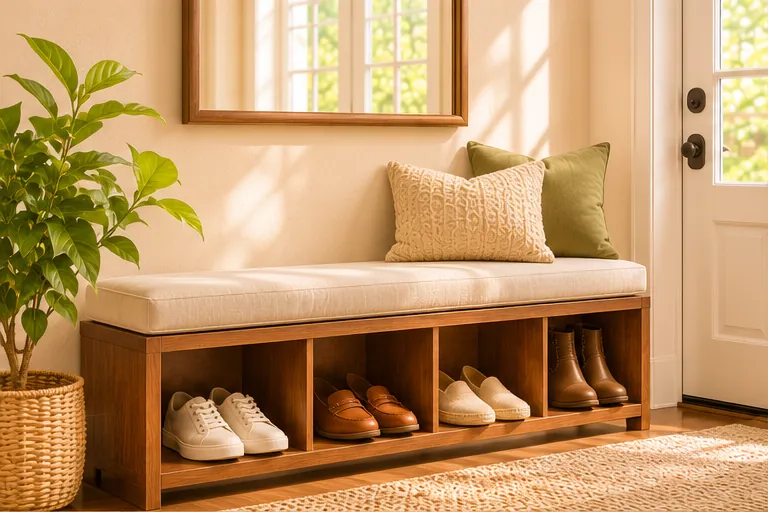
Shop this guide
Products to consider
As an Amazon Associate I earn from qualifying purchases. Product illustrations are representative; check Amazon for actual photos, sizes and current details before you buy.
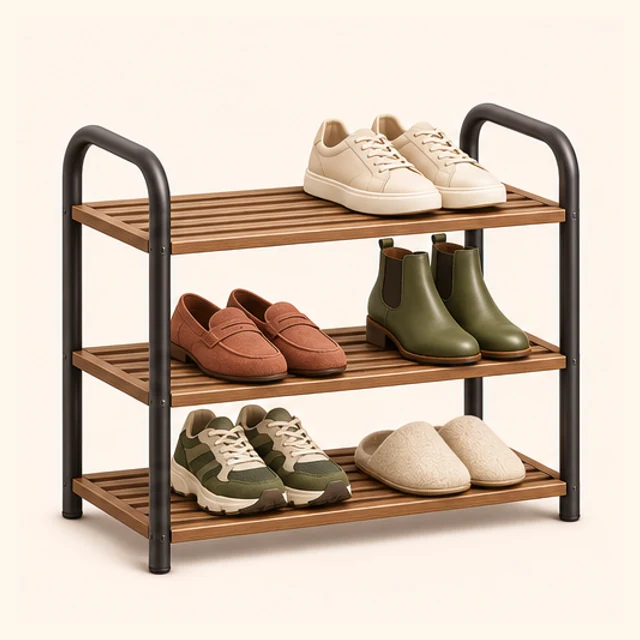
Kitsure three-tier shoe rack
Best for: keeping frequently worn pairs together on a clear stretch of closet floor.
View on Amazon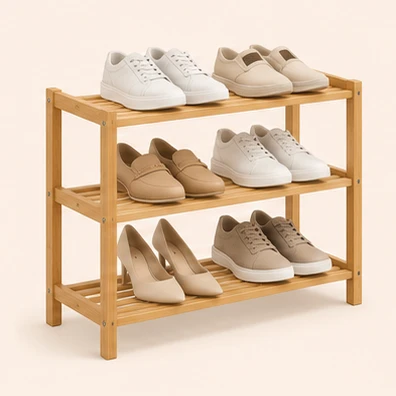
3 Tier Bamboo Shoe Rack for Closet Free Standing Wood Shoe Shelf Storage Organizer for Entryway Small Space…
A freestanding three-tier bamboo rack adds warm wood styling to the closet floor or entryway shoe area.
View on Amazon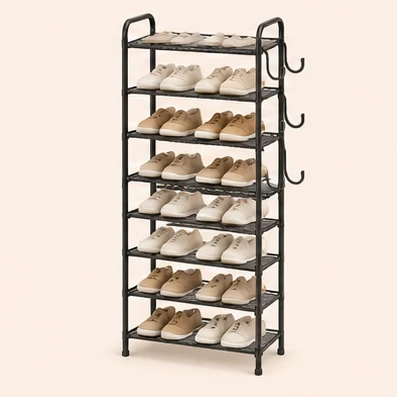
VTRIN 10 Tier Shoe Rack Tall Large Capacity Wide Shoe Organizer with Two Hooks Sturdy Metal Shoe Shelf for…
VTRIN's ten-tier metal shoe tower includes two hooks and suits a closet with more vertical than floor space.
View on Amazon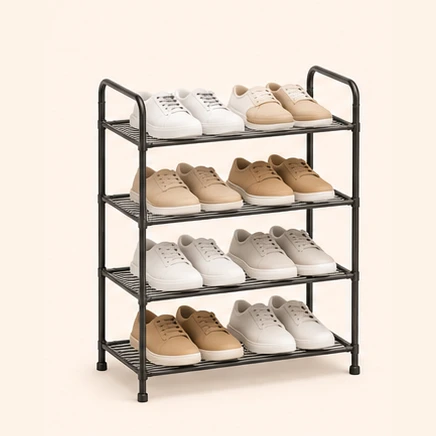
Expandable Shoe Rack, Heavy Duty Metal Shoe Organizer for Closet
The expandable metal shoe rack can be adjusted to suit the width of an available closet floor section.
View on AmazonDecide whether seating is essential
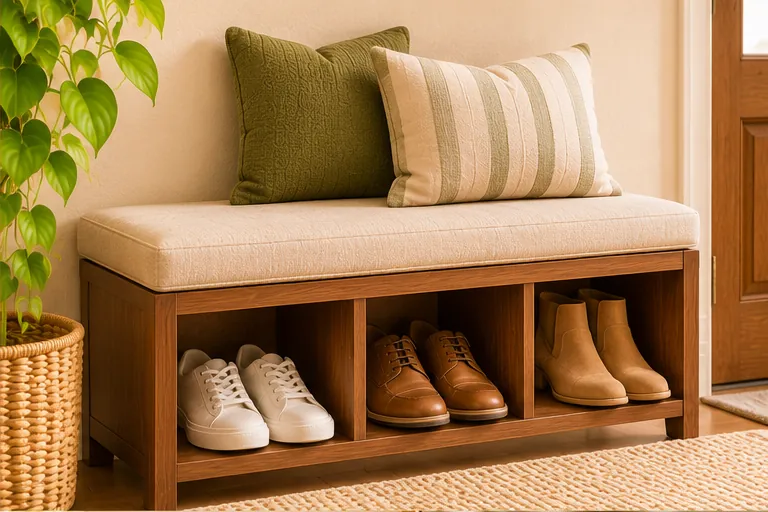
A shoe bench gives someone a place to sit while changing footwear and may store pairs below the seat. An enclosed shoe cabinet conceals shoes and can reduce visual clutter, but most models do not provide a rated seating surface. Buying a cabinet and sitting on it anyway can create a safety hazard.
Observe whether members of the household actually sit to put on shoes. If someone needs seating for balance or mobility, treat a suitable stable seat as a separate primary requirement. A decorative cubby bench may not meet that person’s needs; review actual model instructions and seat-load specifications.
Compare usable footprint, not width alone
Draw the full entry door swing, corridor route and where a seated person’s feet will extend. A bench may be shallow but needs knee and foot space for use. A slim tilt-out cabinet can appear very narrow until a compartment opens; a hinged door adds a swing zone.
Count pairs, including boots, larger sizes and wet shoes. Generic product photos often show compact footwear. Measure real pairs on the floor, then compare the cabinet’s usable interior depth, compartment height and divider positions. A bench with one open tier may hold fewer pairs than an enclosed cabinet but keep daily shoes more accessible.
Moisture and smells
Open bench shelves let wet footwear air out more readily, though they leave dirt visible. Enclosed cabinets can trap dampness if wet shoes go straight inside. Check the model’s ventilation design and the condition of the entry; do not promise a closed cabinet will eliminate odors.
Create a simple wet-shoe landing spot with a washable mat or tray before investing in concealed storage. Let shoes dry appropriately before closing them away. A cabinet may keep the entry tidier, but footwear care continues to matter.
Stability and everyday traffic
A bench used as a seat needs a rated seat surface, secure construction and suitable placement away from a swinging door. Tall slim cabinets may require manufacturer-specified anchoring. Drawers and doors should not open into the only exit route.
For children, confirm that movable shelves and doors will not invite climbing or pinch fingers. A floor mat that slips under a bench can also create problems. Review any instructions for leveling, assembly and attachment before deciding.
Which earns the space?
Prefer a bench if sitting is important and the entry has enough depth for seated use. Prefer an enclosed cabinet if hiding many shoes is the main goal, wet pairs can be dried elsewhere and opening clearances work. If neither fits, a shallow rack inside a nearby closet may be preferable.
See the entryway bench buying guide for choosing seating; see shoe storage options for different formats.
Frequently asked questions
Practical answers about shoe bench vs. shoe cabinet, fit and everyday use.
Shoe bench vs. shoe cabinet: which is better for me?
Choose between a shoe bench and slim enclosed cabinet by seating needs, ventilation, floor space and actual shoe capacity.
Can I sit on any shoe cabinet?
No. Sit only on products specifically rated and intended for seating.
Which holds more shoes?
Depends on the actual interior dimensions and shoe sizes, not the product category name.
Will an enclosed cabinet stop shoe odor?
Not by itself; shoes should be dried and cleaned appropriately before enclosed storage.
Can a shoe bench replace a separate entryway chair?
It can if the seat has a verified load rating, suitable height and stable construction. Decorative shoe cabinets should not be used as seats unless designed for that purpose.
Which hides shoe odors better, a bench or closed cabinet?
Closed doors hide clutter but can trap moisture; ventilation and drying habits matter more than concealment.
Sources and verification
General public guidance is linked below. These sources do not verify particular products or installations.
Independent decision guide, not a firsthand test or professional installation plan. Check current manufacturer instructions and specific wall, electrical, plumbing and property conditions. Affiliate disclosure.