Buying advice / Storage & Utility
Utility Cabinets: Materials, Loads, and Safer Organization
Utility cabinets often promise to tidy up everything at once. In reality, cleaning supplies, tools, linens, and seasonal gear have different requirements. Choose storage based on what belongs together, what must stay separated, and where the cabinet can be installed safely.
Shop this guide
Products to consider
As an Amazon Associate I earn from qualifying purchases. Product illustrations are representative; check Amazon for actual photos, sizes and current details before you buy.
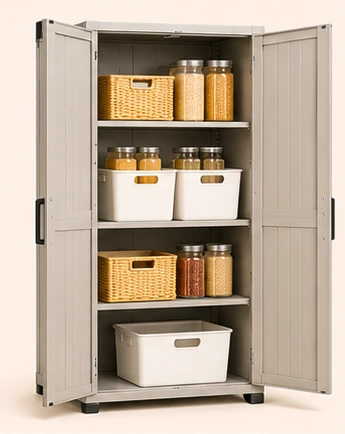
71"Metal Pantry Storage Cabinet with Doors & 4 Adjustable Shelves
This 71-inch metal cabinet includes doors and four adjustable shelves for arranging supplies of different heights.
View on Amazon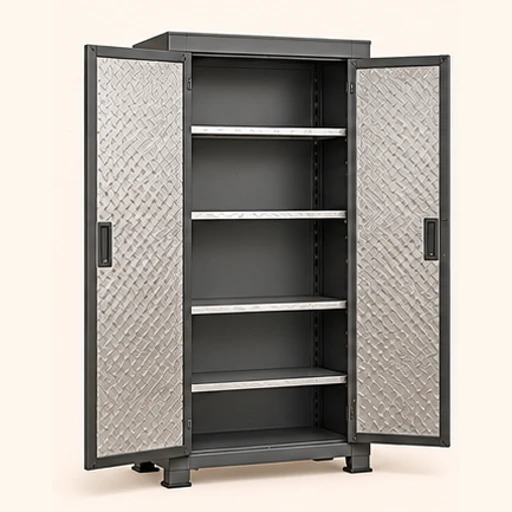
Metal Storage Cabinet with Adjustable Shelves, Garage Storage Cabinets with Doors and Shelves, File Cabinets…
Adjustable metal shelves behind cabinet doors make this a flexible option for utility or pantry supplies of different heights.
View on Amazon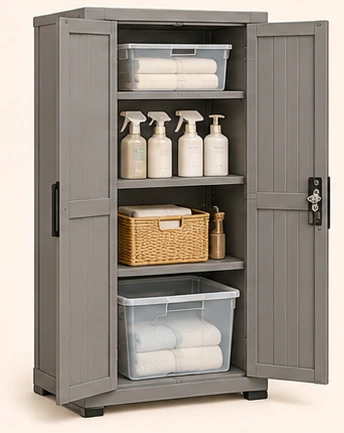
Sterilite 4 Shelf Cabinet, Lockable Utility Storage, Gray
Sterilite's gray four-shelf lockable utility cabinet provides enclosed vertical storage for household supplies.
View on AmazonBegin with contents, not cabinet marketing
List the kinds of things you actually need to store: cleaning products, paper supplies, hand tools, sports equipment, extra linens, and seasonal items. Group only things that can be safely stored together. Some products must be kept in original labeled containers and away from children and incompatible materials.
Do not choose an enormous cabinet merely because the current utility area looks cluttered. First discard what is no longer used according to appropriate disposal guidance, then try reorganizing one shelf with existing bins.
Make a simple inventory of the tallest item, widest item, and items that must remain locked or otherwise inaccessible. If you cannot describe what will go on each shelf, you are not ready to buy a cabinet.

Choose material for the location and maintenance
Metal: Often chosen for utility settings because it can be wiped down, but thin metal can dent and some finishes may corrode when coating is damaged or moisture persists. Verify the coating and intended use.
Plastic or resin: May be easy to clean and useful where splashes occur, but temperature, UV exposure, shelf sag, and fastener design matter. A plastic cabinet is not automatically safe for chemicals or high heat.
Wood or engineered board: Can look better in a laundry or mudroom but exposed edges may be sensitive to moisture. Determine how the unit is finished and whether the maker permits use in a humid location.
No material is universally best. Compare the actual product’s environment rating, care requirements, warranty limitations, and load capacity—not generic category promises.
Make heavy-item access and weight ratings central
Store heavy tools and bulky supplies only on shelves rated for them. Understand whether a rating is per shelf or for the entire cabinet, and whether it assumes an evenly distributed load.
Consider the height of a heavy toolbox, not just its weight. If you must lift something over shoulder level or stand on a chair to retrieve it, rethink the layout or store it elsewhere. Keep frequently used supplies within comfortable reach.
Do not attach a pegboard, hook, or additional shelf to a cabinet unless the manufacturer supports that installation. Modified loads and holes can undermine the stability or warranty of the unit.
Plan for children, pets, moisture, and tip-over
A keyed door can slow access, but a cabinet labeled “lockable” does not establish that it is suitable for every hazardous product or that its lock is childproof. Follow each product label and applicable safe-storage instructions.
Tall cabinets need special attention to anti-tip requirements. Follow the manufacturer’s anchoring instructions and consult CPSC guidance. Never rely on a cabinet being packed with heavy objects as a replacement for required anchoring.
Check whether the cabinet blocks an outlet, shutoff valve, furnace access, utility meter, or egress. In a garage, laundry, or basement, investigate water intrusion and required clearances before placing storage.
Try the layout before you commit
Mark the cabinet’s footprint with painter’s tape and use cardboard to visualize the door swing. Carry a laundry basket or your largest planned object through the route. Open nearby appliance doors and check that utility controls remain accessible.
Compare shipping weights, assembly help, replacement parts, and seller return conditions. Cabinets can arrive as heavy or multiple parcels, so delivery instructions matter.
Save measurements in My Room Project and take the Before You Buy checklist through the final decision. If simple labeling and a reshuffle solve the problem, skip the cabinet.
Frequently asked questions
Practical answers about utility cabinet, fit and everyday use.
Should I choose metal or plastic utility storage?
Match the material to the location, cleaning routine, temperature, moisture, and verified load rating. Neither category is automatically more durable for every use.
Can I store cleaners in a utility cabinet?
Follow each cleaner’s label and safe-storage instructions, including separation, ventilation, original packaging, and protection from children and pets.
What measurements matter for a utility cabinet?
Measure the floor footprint, full door swing, accessible shelf space, largest stored item, and the route through which the cabinet or boxes must travel.
How do I keep a utility storage cabinet from becoming a junk closet?
Assign labeled categories and reserve one small area for incoming items; review that area regularly instead of adding more bins.
Can cleaning products share a cabinet with paper towels?
Follow every product's storage instructions and keep chemicals secured away from children. Separate supplies that could leak or contaminate other materials.
What makes garage storage cabinets different from indoor cabinets?
Humidity, temperature swings and floor conditions can be harder on cabinet materials and hardware; check the maker's intended-use guidance.
Sources and further reading
These sources support general safety and moisture guidance, not endorsements of products. No retail item has been independently tested for this guide.
Independent educational guidance, not a product review. Confirm exact model specifications, installation requirements, and store policies before purchase. Disclosure.