Buying advice / Kitchen & Counters
Kitchen Countertop Organizers: Trays, Risers, or Utensil Holders?
More countertop storage is not automatically more usable counter space. The right organizer earns its footprint every day.
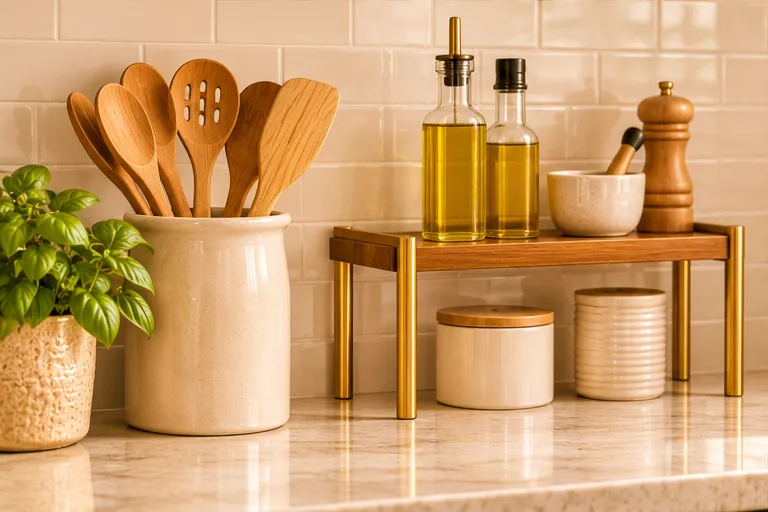
Shop this guide
Products to consider
As an Amazon Associate I earn from qualifying purchases. Product illustrations are representative; check Amazon for actual photos, sizes and current details before you buy.
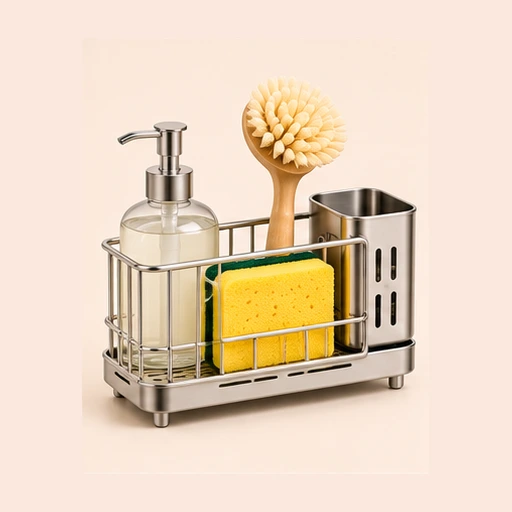
Maifan Sink Caddy Sponge Holder for Kitchen with Brush Holder and Stainless Steel Self Drain Tray, Rustproof…
Maifan's sink caddy includes a brush holder and stainless self-draining tray for grouping dishwashing accessories.
View on Amazon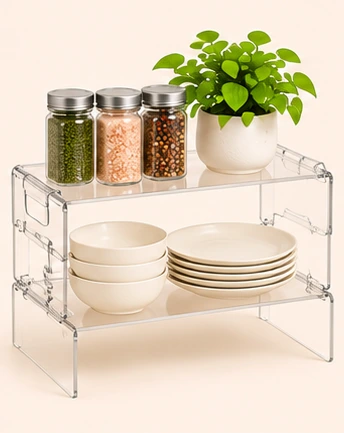
2 Pcs Cabinet Organizer Shelf, Stackable Kitchen Counter Shelves, Spice Rack,Countertop Organizers, Clear…
Two stackable clear cabinet risers add another usable level for small supplies or seasoning jars.
View on Amazon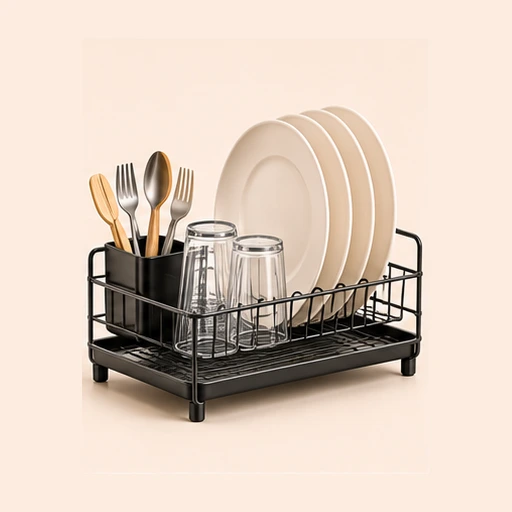
Kitsure Dish Drying Rack for Kitchen Counter, 12''W x 15.5''L, Black
Kitsure's black 12 × 15.5-inch countertop dish rack offers a compact draining area for dishes.
View on Amazon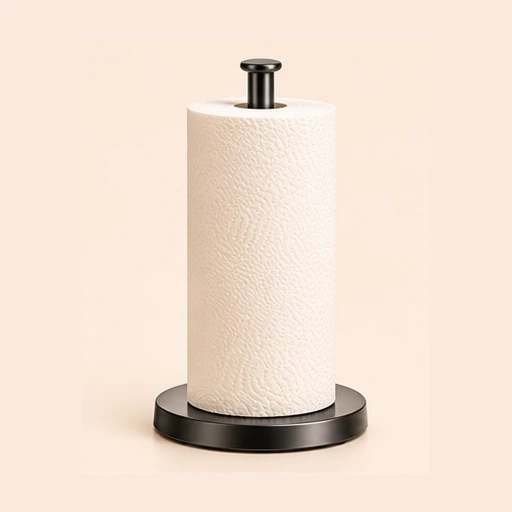
Paper Towel Holder Black Stainless Steel Kitchen Countertop Roll Organizer
The black stainless countertop paper towel stand is freestanding, an option when under-cabinet mounting is impractical.
View on AmazonStart with a countertop map
Clear a single work zone and measure its usable width and depth, excluding the sink rim, cooktop and the space needed to open cabinet doors. Put painter’s tape where a proposed tray or riser would sit. Then prepare an ordinary meal. If the tape leaves nowhere to set a board, mixing bowl or groceries, the organizer is too large for that location.
Count which items you touch multiple times a day. Keep those close to the point of use; rarely used appliances, spare mugs and decorative canisters often belong elsewhere. The goal is not to display everything that fits on a shelf, but to reduce the number of steps between a routine task and a clean worktop.
Match the organizer to the problem
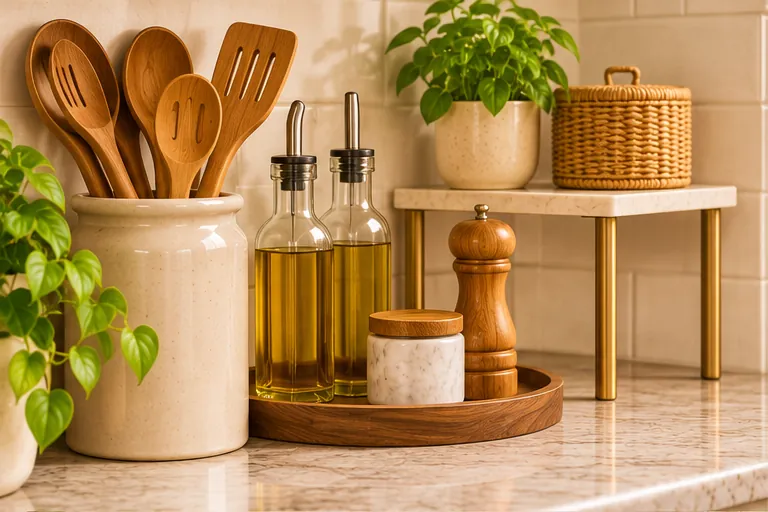
A low tray contains oils, seasonings or coffee supplies that otherwise scatter. It is simplest when you want to lift everything at once for cleaning. A tiered riser makes small jars easier to see, but it raises the center of gravity and can hide the back row if installed below shallow wall cabinets. Measure cabinet clearance above the riser and the height of your tallest jar.
A utensil crock keeps frequently used spatulas upright; check its weight, opening diameter, stability and whether long tools will hit an overhead cabinet. Divided organizers look orderly but sometimes make odd-shaped tools harder to retrieve. For mugs or fruit, an open stand must still leave enough room for ventilation, cleaning, and safe movement around heat sources.
10 kitchen counter organization ideas
Kitchen counter organization works best when the counter holds only what you use every day and everything else has a home nearby. These ideas start with free changes and end with things to buy.
- Clear one full working zone. Keep at least one stretch of counter beside the stove or sink completely empty for prep.
- Keep only daily items out. If an appliance or jar is used less than a few times a week, give it a cabinet home.
- Corral with one tray. Oils, salt and a utensil crock on one tray lift off in one move when you wipe the counter.
- Use the wall, not the counter. A rail with hooks or a magnetic strip for knives frees surface space, if it is mounted securely.
- Go up with a riser. A small two-tier riser in a corner doubles space for spices or mugs without spreading out.
- Set up a coffee zone. Group the machine, mugs and supplies in one place. See coffee station ideas and coffee bar organizers.
- Move small appliances into cabinets. A pull-out shelf in a base cabinet can hold a mixer or air fryer. See kitchen cabinet organization.
- Tame the sink area. One caddy for sponge, brush and soap keeps the edge dry. See sink caddies.
- Store mail and paper elsewhere. Kitchens collect paper; a family command center near the door keeps it off the counter.
- Add a cart if counters are tiny. A rolling cart or fold-down surface adds prep space only when needed. See kitchen carts for small kitchens.
Protect prep and cleaning space
Grease splatter, water and crumbs make countertop storage different from closet storage. Smooth, washable surfaces and removable inserts are more practical near a cooktop than absorbent fabric or hard-to-reach decorative grooves. Do not assume wood or coated metal can be repeatedly soaked; check care instructions for the exact finish.
Keep organizers away from stove flames, hot burners, electrical outlets, and the path of water around the sink. Electrical appliances need the clearances specified by their manufacturer. If a shelf or riser requires assembly, verify that its feet sit flat on your counter and do not scratch the surface.
Choose the right size, not the largest
Record the usable counter footprint, the organizer’s external dimensions, the internal tray dimensions, and the maximum height with items loaded. Pay special attention to cabinet-door swing, faucet reach and the place where a dishwasher door opens. A three-inch change in depth can make a previously workable counter feel cramped.
Check whether a tray lifts without spilling, whether jars slide off a rotating platform, and how easily everything can be wiped underneath. A product listing that offers only an overall width and a styled photograph lacks enough information to confirm useful capacity. Request interior measurements or choose a better-documented alternative.
Run a no-spend trial before purchase
Gather the proposed items on a dinner plate or shallow box for a week. If it becomes a clutter magnet, the better solution may be reducing duplicates or moving the items into a drawer. If you naturally lift the whole group for cleaning, a washable tray may be worth buying.
Take a photo of the taped-off counter, and save the dimensions in My Room Project. Our kitchen drawer organization guide can help move visual clutter into accessible storage. Before ordering, check actual dimensions, finish, return terms and your ability to lift the organizer when full.
Frequently asked questions
Practical answers about countertop organizer, fit and everyday use.
Are countertop risers good for small kitchens?
Only when they improve access without taking away a useful prep area. Tape their actual footprint and check clearance below upper cabinets.
Should I keep cooking utensils on the counter?
Keep only what is used regularly and can be cleaned easily. Tools used less often may work better in a drawer.
What material is easiest to maintain?
Look for a smooth, wipe-clean material that the manufacturer approves for your location and cleaning routine; finishes vary by product.
How can countertop organizers leave room for cooking?
Set a minimum clear preparation zone first, then limit organizers to the edges where you naturally reach for supplies.
Are stacked countertop risers safe for glass jars?
Only if the structure is stable and loaded within its stated capacity; keep breakable and heavy items low.
When should I skip a countertop organizer entirely?
If it hides outlets, blocks cleaning or creates more visual clutter than it solves, move less-used items into a drawer instead.
Sources and further reading
These sources inform general planning and safety, not the performance of any specific retail item.
Independent educational guidance, not a hands-on product test. Verify exact-model specifications, mounting instructions, load limits, delivery and retailer policies before purchase. Affiliate disclosure.