Educational Comparison / Very Small Kitchen Ideas
Kitchen Cart for a Small Kitchen: Rolling Prep Cart vs. Fold-Down Counter
Compare a movable kitchen cart against a fold-down worktop for prep space, walking clearance and installation commitment.
Shop this guide
Products to consider
As an Amazon Associate I earn from qualifying purchases. Product illustrations are representative; check Amazon for actual photos, sizes and current details before you buy.
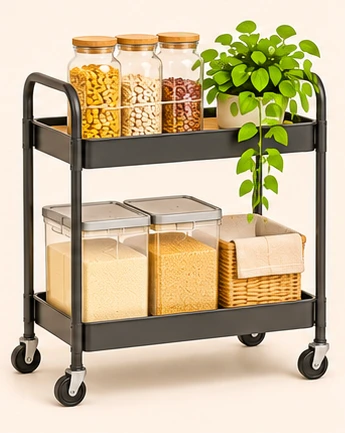
2-Tier Expandable Rolling Pantry Cart with Wheels, Adjustable Floor Organizer for Kitchen Pantry, Can Organizer…
This two-tier expandable rolling cart combines adjustable floor storage and mobility for pantry cans or other supplies.
View on Amazon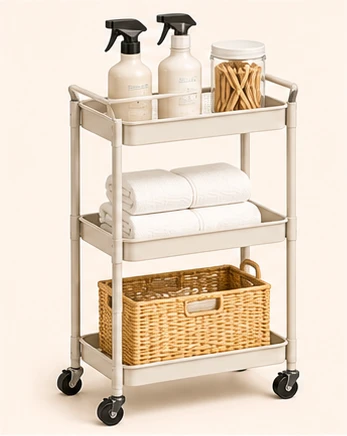
Slim 3 Tier Rolling Storage Cart, Metal Narrow Laundry Cart with Wheels
The narrow three-tier metal rolling cart offers mobile shelf space for supplies beside laundry appliances.
View on Amazon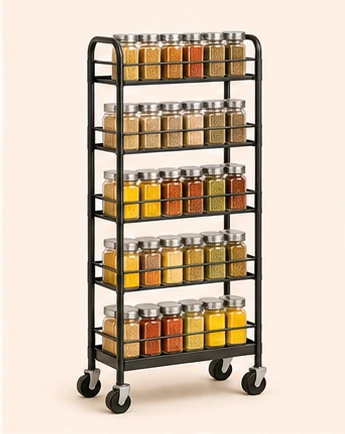
Slim Rolling Storage Cart with Wheels, Metal 6 Tier Spice Rack Mobile Shelving Unit Organizer Kitchen Utility…
A six-tier slim metal rolling cart creates mobile spice storage in narrow areas with sufficient wheel clearance.
View on AmazonMovable work surface versus fixed wall commitment
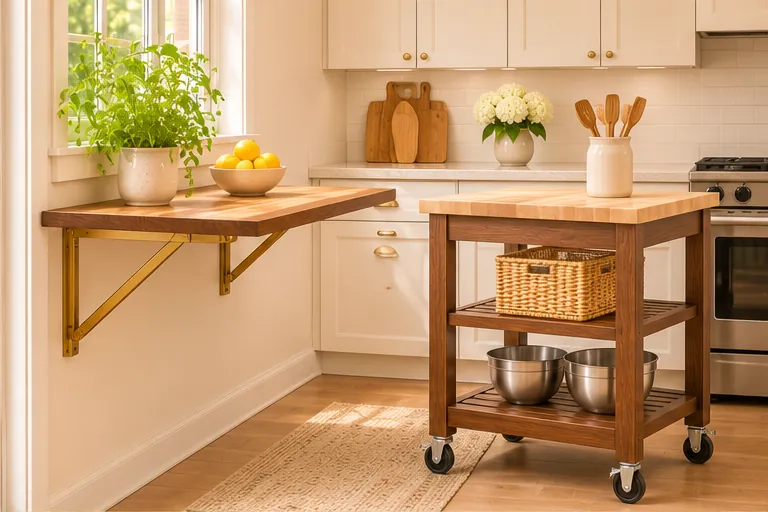
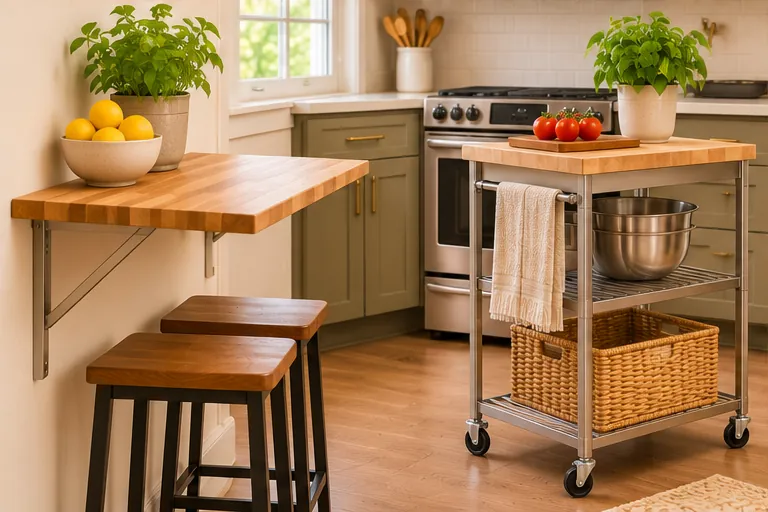
A rolling cart can move beside a prep area and may store utensils below. A fold-down counter offers work surface when needed and folds away, but requires a properly supported wall and hardware. Neither will automatically improve cooking if the kitchen’s primary congestion comes from appliances or clutter.
Before shopping, notice when you truly need a second surface. Is it for chopping, setting down groceries, plating food or supporting a heavy appliance? Worktops and carts differ in suitable uses, stability and heat resistance. Do not assume every decorative shelf is rated as a work counter.
Tape out both configurations
Measure the cart’s maximum body size, handles, wheels and the path needed to move it. Tape its footprint on the kitchen floor and walk through with a bag of groceries. For a fold-down surface, draw its extended projection, the movement of support legs or brackets, and the space needed by a standing cook.
Measure doors, cabinet fronts, oven access, dishwasher openings and appliance ventilation. A worktop that blocks the refrigerator while open may defeat its purpose. Check whether the cart can be stored safely without obstructing exits, and where the folded panel will rest.
Stability, surfaces and cleaning
Rolling carts need level flooring and appropriate wheel-locking or stability features for their designed tasks. Do not use a cart for cutting or equipment loads unless its instructions and construction permit that use. Fold-down counters depend on proper structural anchorage and model-rated brackets; fasteners suited to one wall are not universal.
Kitchen surfaces should be cleanable and appropriate for intended food handling. A cart with open shelves may collect cooking grease; a folding top may trap crumbs at hinges. Consider cleaning access, countertop height, joint edges and what happens when water splashes.
Renting and total installed cost
A cart is often more portable and may avoid drilling, though its delivery, assembly and storage still matter. A wall-mounted top can be more visually unobtrusive when folded, but installation, permitted alterations, possible wall repair and professional labor can raise cost.
Compare the actual complete cost: cart plus any accessories, or fold-down panel plus structural hardware, correct installation and finishing. In a rental, obtain written permission if the plan changes the building. Try temporarily clearing and rearranging existing countertop items first.
Best fit by cooking habit
Choose a cart if flexibility is valuable, the floor route permits movement, and the chosen model is rated for the intended kitchen tasks. Choose a fold-down counter if wall support can be verified, extended clearance is adequate, and the household will consistently fold it away.
Our small-kitchen task-zone tutorial can identify whether extra prep space is really necessary before purchasing either option.
Frequently asked questions
Practical answers about kitchen cart for small kitchen, fit and everyday use.
How much clearance does a rolling kitchen cart need?
Measure its full footprint including handles, then test the planned route and cabinet-door swing. Choose a parking spot that does not obstruct cooking or passage.
Are rolling carts safe for chopping?
Only if the model is stable and intended for that use; never assume wheels or a lock make any cart suitable.
Can I mount a fold-down counter into drywall alone?
Follow a qualified installation plan and the maker’s structural mounting requirements; drywall alone is not a universal support.
Which is better for renters?
A cart is often easier to remove, but it still must fit and be stable; always check lease restrictions.
Can a rolling kitchen cart replace a permanent island?
It can add occasional work surface, but wheel locks, stability and aisle clearance determine whether it works for your routine.
Will a fold-down counter interfere with dining chairs?
Possibly. Measure its open and closed projection plus chair movement before installing it.
Sources and verification
General public guidance is linked below. These sources do not verify particular products or installations.
Independent decision guide, not a firsthand test or professional installation plan. Check current manufacturer instructions and specific wall, electrical, plumbing and property conditions. Affiliate disclosure.