Buying advice / Kitchen
Dish Drying Mats: Microfiber vs Silicone, Size, and Keeping Them Clean
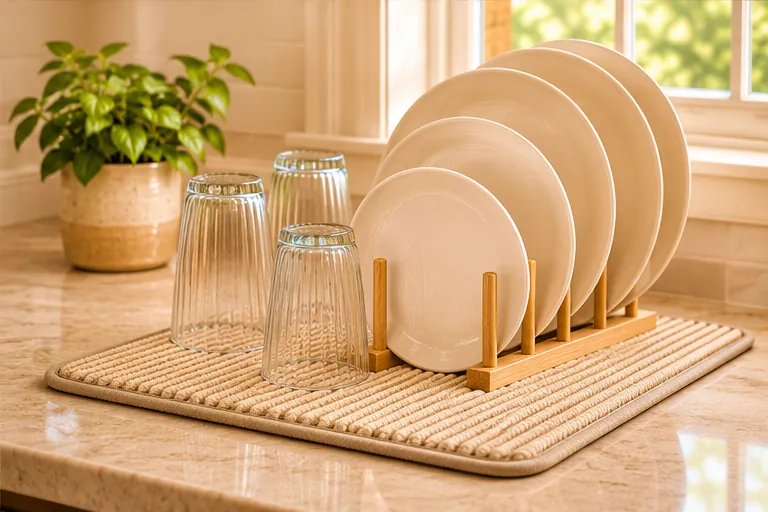
A dish drying mat is a simple fix for a small kitchen, but a mat that stays damp turns musty. Choose the material for how often you wash, and dry the mat between uses.
Shop this guide
Products to consider
As an Amazon Associate I earn from qualifying purchases. Product illustrations are representative; check Amazon for actual photos, sizes and current details before you buy.

2-Tier Over the Sink Dish Drying Rack, 30"-33.9" L, Black
This black two-tier over-sink dish rack adjusts from 30 to 33.9 inches in length; check sink and faucet clearance.
View on Amazon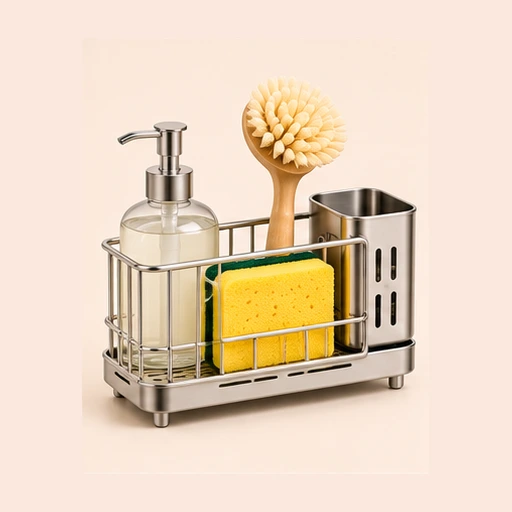
Maifan Sink Caddy Sponge Holder for Kitchen with Brush Holder and Stainless Steel Self Drain Tray, Rustproof…
Maifan's sink caddy includes a brush holder and stainless self-draining tray for grouping dishwashing accessories.
View on Amazon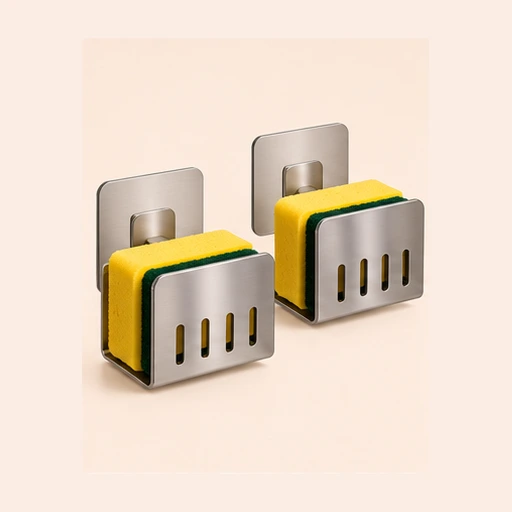
2-Pack Stainless Steel Sponge Holder for Kitchen Sink - Rustproof Brushed SUS304 Sponge Caddy Organizer,…
Two brushed SUS304 stainless sponge caddies provide a matched pair for keeping wet sponges off the counter surface.
View on Amazon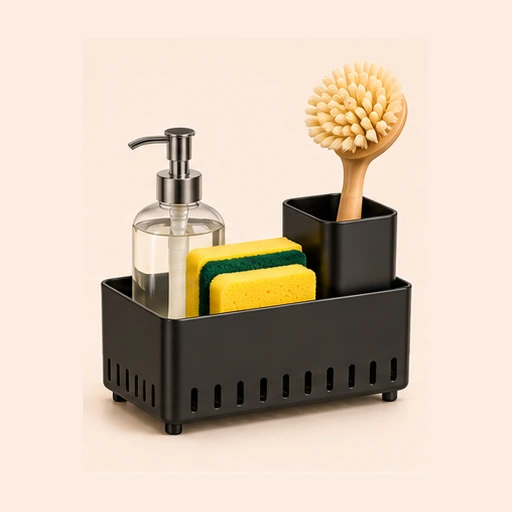
Cisily Sponge Holder for Kitchen Sink, Sink Organizer with Brush Holder
Cisily's sponge holder includes a brush compartment, keeping different sink-cleaning tools together.
View on AmazonMicrofiber or silicone
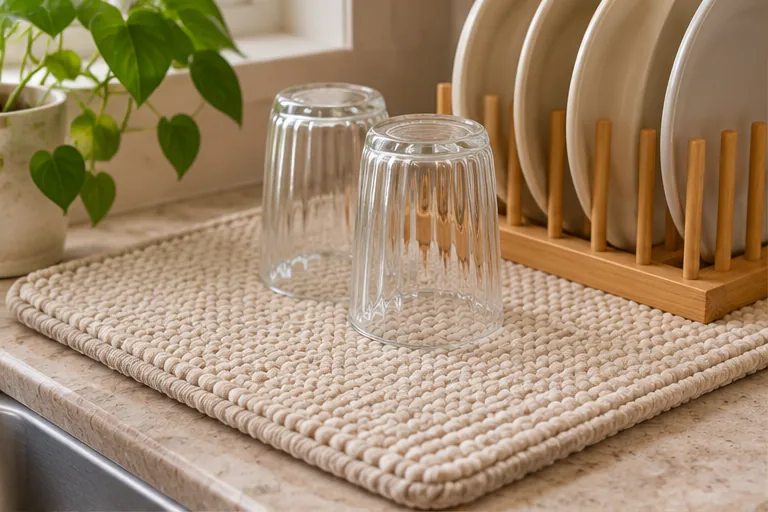
Microfiber absorbs water quickly and is quiet under dishes, but needs regular machine washing and drying. Silicone does not absorb water; ridges let dishes drain and it wipes or rinses clean, and many can double as a trivet. Some mats combine both.
Size it to the counter
Measure the counter space beside the sink. A mat that hangs over the edge drips onto the floor; one too small leaves dishes on the bare counter. Roll-up racks that sit over the sink add space in tiny kitchens.
Keep it dry
A mat that never dries can grow mildew. The EPA's mold guidance stresses controlling moisture; for a mat that means hanging it to dry, washing it regularly and not leaving it folded while wet.
Mat or rack?
Mats suit people who hand-wash a few items. If you wash full loads by hand, a rack holds more upright. See our sink caddies and counter organization guides.
Check care instructions
Follow the maker's washing and heat limits, especially for silicone used as a trivet.
Checklist before you buy
- Counter length and depth beside the sink.
- How many items you usually hand-wash at once.
- Machine-washable (microfiber) or dishwasher-safe/rinse-clean (silicone).
- Heat rating if you want a silicone mat to double as a trivet.
- Somewhere to hang the mat so it dries between uses.
A simple routine keeps mats fresh: hang microfiber mats to dry after each use and wash them often; rinse silicone mats and let them dry upright.
Frequently asked questions
Practical answers about dish drying mats, fit and everyday use.
Should I choose a silicone or microfiber dish drying mat?
Silicone can be rinsed and may provide raised drainage channels; microfiber absorbs water. Whichever you choose, allow the mat and counter beneath it to dry between uses.
Is microfiber or silicone better?
Microfiber absorbs quickly but needs regular washing; silicone drains and rinses clean.
How often should I wash a dish drying mat?
Regularly, and always let it dry fully between uses.
Why does my drying mat smell?
It is staying damp; hang it to dry and wash it.
What size mat do I need?
Measure the counter beside the sink so the mat does not overhang.
Can a silicone mat be a trivet?
Many can; check the maker's heat rating.
Sources and further reading
These sources inform general planning and safety guidance; they do not verify a particular retail product.
Independent educational guidance, not a hands-on product test. Verify exact-model specifications, materials, mounting requirements, delivery and return rules before purchase. Affiliate disclosure.