Practical How-To / small kitchen layout ideas
Small Kitchen Organization Ideas: Map Storage Around Daily Tasks
Organize an existing small kitchen around preparation, cooking, cleaning and retrieval rather than buying more cabinets.
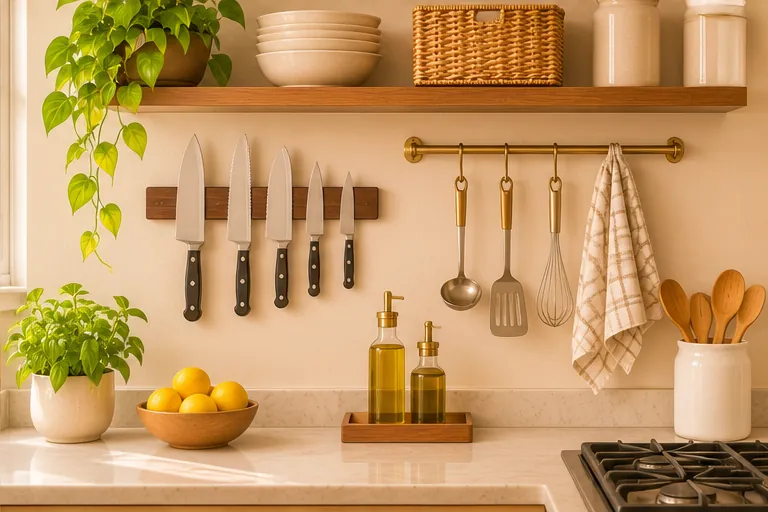
1. Trace one real meal from start to finish
Choose a common weekday meal and watch where you retrieve ingredients, wash produce, chop, cook, serve and clean up. Mark every point where you double back across the kitchen. Note cabinet doors that collide, drawers that cannot open while someone stands at the sink, and objects that block a counter corner.
Measure the usable prep surfaces and fixed appliance projections. The goal is not to chase an idealized kitchen triangle; it is to make daily tasks work with your actual layout and household.
2. Assign zones by activity and safety
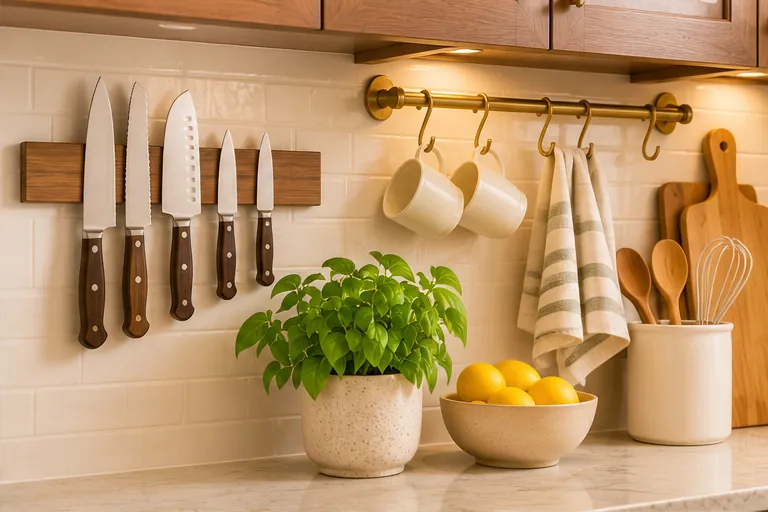
Store frequently used cooking utensils near the appropriate preparation area, but away from burner flames or hot surfaces. Group everyday dishes near the normal unloading route when possible. Keep raw-food preparation, ready-to-eat items and cleaning chemicals appropriately separated.
Avoid moving sharp tools to an exposed location just to save a step. If children use the kitchen, consider safe reach and secure storage. Keep exits and access to necessary electrical or plumbing points clear.
3. Reclaim work surfaces with a subtraction pass
Clear the counter and put back only appliances used often enough to justify permanent space. Check an appliance's manufacturer-required ventilation and clearance before placing it near a wall or cabinet. A compact appliance can still require more operational space when lids, doors and cords are open.
Try storing occasional equipment on an existing shelf, provided its weight and access are safe. Do not pack heavy glass or cookware high above comfortable reach. Mark a designated empty counter section for food preparation; resist filling every inch with tiered racks.
4. Fix one bottleneck at a time
If the cutting board is always carried across the room, move one group of tools closer. If plastic containers spill from a drawer, sort their lids before buying dividers. If the sink area is crowded, reduce duplicate cleaning bottles and return dry equipment to cabinets.
Test drawer and cupboard access when another person is cooking. Make a written list of repeated friction points, with a no-spend change next to each. Many problems come from where supplies are stored, not from a lack of overall cubic feet.
5. Measure and prioritize any remaining purchases
After two weeks, identify the single friction point that remains. If an organizer could solve it, measure the inside opening as well as hinge and drawer clearance. A storage product that creates another hard-to-reach layer may make the kitchen less useful.
Use our kitchen drawer guide, countertop buyer guide and purchase checklist for distinct buying decisions. Keep a record of the tested layout in My Room Project.
Products to compare
As an Amazon Associate I earn from qualifying purchases. These are related options from our buyer-guide research, not hands-on tested rankings. Check current listing details, fit and availability before ordering.
- Metal Magnetic Spice Rack for Refrigerator Black, 4 Pack — Four black magnetic spice racks utilize a compatible refrigerator surface for seasonings instead of occupying the counter. View on Amazon (paid link).
- KLM Pull Out Spice Rack Organizer for Cabinet,Rustic Wood Top with Wire Basket Storage,Kitchen Countertop… — KLM's pull-out spice rack combines a rustic wood top and wire basket for storing seasonings in a cabinet or on a counter. View on Amazon (paid link).
- Maifan Sink Caddy Sponge Holder for Kitchen with Brush Holder and Stainless Steel Self Drain Tray, Rustproof… — Maifan's sink caddy includes a brush holder and stainless self-draining tray for grouping dishwashing accessories. View on Amazon (paid link).
See the complete buyer guide for more options and fit checks.
Frequently asked questions
Practical answers about small kitchen organization ideas, fit and everyday use.
How can I gain work space in a small kitchen?
Move infrequently used appliances off the counter and group tools near where they are used. Preserve a clear prep area and avoid obstructing appliance ventilation.
Should every small kitchen use a work triangle?
No. Focus on actual tasks, clear access and efficient routes in your specific layout rather than one universal diagram.
What should stay on the countertop?
Only items used often enough to justify the space, with all manufacturer-required safe operating clearances.
Do I need more cabinet organizers?
Not until you have tried removing duplicates, grouping by task and measuring where a specific bottleneck remains.
Can a small kitchen use the dining table as prep space?
Only when the surface can be cleaned appropriately for the task and food-preparation practices remain safe; avoid crowding electrical cords.
How should left-handed cooks organize kitchen task zones?
Place regularly reached tools on the natural working side while preserving safe separation from hot surfaces and sharp edges.
Sources and further reading
These are general safety and consumer references, not verification of an individual product.
Independent educational guidance, not a hands-on product test. Check manufacturer instructions, property rules and applicable safety requirements. Affiliate disclosure.