Educational Comparison / Over The Toilet Storage Ideas
Over the Toilet Storage: Freestanding Rack vs. Wall Cabinet
Compare over-toilet racks and wall cabinets by clearance, secure mounting, bathroom moisture and cleaning reach.
Shop this guide
Products to consider
As an Amazon Associate I earn from qualifying purchases. Product illustrations are representative; check Amazon for actual photos, sizes and current details before you buy.
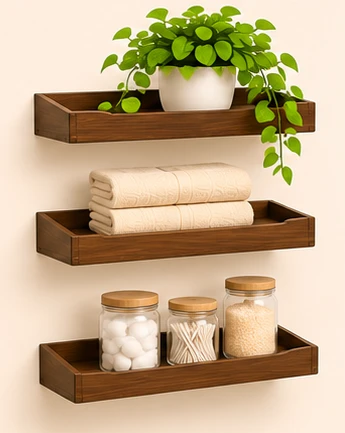
QEEIG Bathroom Shelves Over Toilet Wall Mounted (Brown, Set of 3, 15.7")
QEEIG's three brown 15.7-inch over-toilet wall shelves create a matching display above the toilet without using floor space.
View on Amazon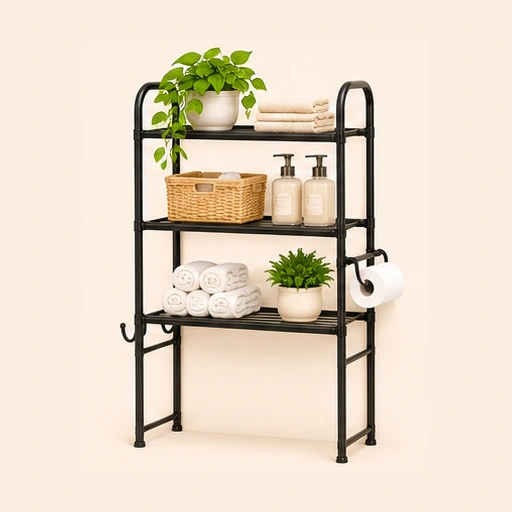
Kitsure Over Toilet Storage Rack, 63.2"H Space-Saving, Holder & Hooks
Kitsure's 63.2-inch over-toilet rack includes a holder and hooks; measure tank and lid clearance before buying.
View on Amazon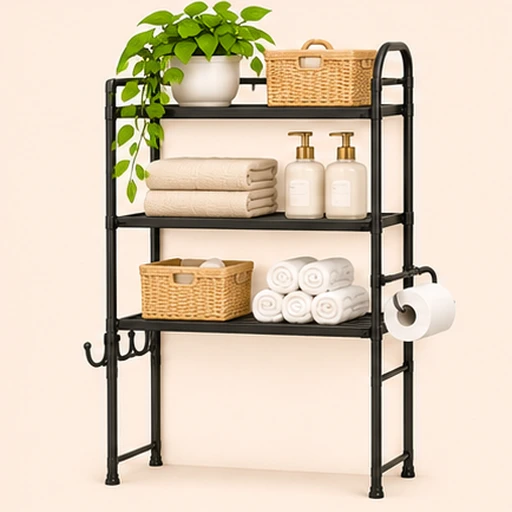
Simple Trending Over The Toilet Storage Cabinet, Metal Bathroom Shelf Organizer with Paper Holder and Hooks, 3…
Simple Trending's metal over-toilet shelving includes a paper holder and hooks, adding several storage functions above the tank.
View on Amazon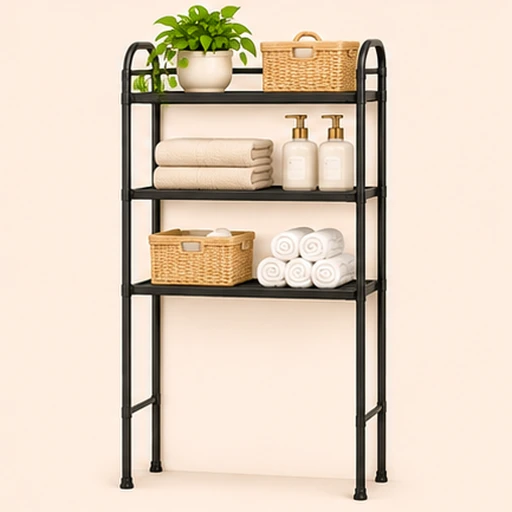
3-Tier Over Toilet Storage Cabinet, No Drilling, 64" H, Black
The black three-tier 64-inch over-toilet organizer is listed as no-drill; verify stability, tank clearance and assembly guidance.
View on AmazonTwo different commitments above the toilet
An over-toilet freestanding rack puts storage on tall legs or a frame around the fixture. A wall cabinet uses building support above or beside it. The rack may avoid some wall construction work, but its legs can interfere with cleaning and floor access. A wall cabinet preserves floor space but requires a suitable mounting plan.
Neither format should turn the toilet area into a stack of falling objects. Everyday toiletries belong within comfortable reach without climbing onto the fixture. A tall, freestanding piece can create significant tip-over concerns if it is not secured as the manufacturer requires.
Measure the complete toilet zone
Measure the tank height, width, lid opening, water supply valve and any shelving already present. Record the distance from the toilet to walls, vents and doors. For a freestanding frame, measure leg positions relative to baseboards, the tank and the floor. Check whether the rack can be assembled around the toilet or needs to slide behind it.
For a cabinet, sketch the cabinet body plus door swing and the space needed to take items out. Check whether the tank lid can still be removed for repairs and a plumber can reach the shutoff. Do not mount storage where it blocks ventilation, necessary service access or required clearances.
Mounting and stability
The fact that a rack stands on the floor does not mean it is safe unanchored. Follow the actual unit’s attachment and anti-tip instructions; avoid loading the highest shelf with heavy bottles. Wall cabinets need fastening appropriate to wall structure, cabinet weight and contents.
Check for concealed plumbing, wiring or waterproofing before drilling. If you cannot establish a safe fixing method, a professional installer may be appropriate. Temporary adhesive hardware should not be substituted for structural cabinet mounting unless an entire approved product system explicitly allows it.
Moisture, cleaning and access
Bathrooms are damp environments. Open rack shelves expose towels to splashes and dust; enclosed cabinets can conceal supplies but still require clean, dry conditions and adequate airflow. Materials, coatings and fasteners vary in their moisture resistance.
Try moving infrequently used supplies into a linen closet first. If an over-toilet shelf must stay, reserve it for lightweight, rarely needed items and position daily necessities lower. Consider reach and balance for anyone who has difficulty turning or raising an arm.
Decision and no-purchase alternative
Choose a freestanding rack only where its frame truly fits, its stability requirements can be met and cleaning remains possible. Choose a wall cabinet where structural support and appropriate installation are available and the family needs enclosed storage.
Our small-bathroom storage buyer guide covers wider furniture choices. The medicine-cabinet guide is about a different location and installation choice.
Frequently asked questions
Practical answers about over the toilet storage, fit and everyday use.
Do freestanding racks need wall anchoring?
Follow each product’s safety instructions; freestanding does not always mean anchoring is unnecessary.
Can a cabinet block toilet repairs?
Yes. Keep access to the tank, shutoff and other service points available.
Which stays cleaner?
Both require maintenance; rack legs and exposed shelves can be harder to clean around, while cabinet interiors need moisture control.
Is over-the-toilet storage safe near a window?
Keep the unit clear of window operation and install it according to its mounting requirements; avoid blocking ventilation or emergency access.
Can a toilet tank lid still be removed under a rack?
Check the vertical clearance for servicing before buying, along with shutoff access and cleaning space.
Which is better for spare towels: an open rack or cabinet?
Enclosed storage can reduce splashes and dust, while open racks are convenient; moisture control and cleaning remain important.
Sources and verification
General public guidance is linked below. These sources do not verify particular products or installations.
Independent decision guide, not a firsthand test or professional installation plan. Check current manufacturer instructions and specific wall, electrical, plumbing and property conditions. Affiliate disclosure.