Buying advice / Bathroom
Small Bathroom Storage Ideas: Cabinets, Slim Carts, or Wall Shelves?
In a small bathroom, the right storage is not necessarily the narrowest cabinet. Choose a location that stays dry enough, allows the door and drawers to open, and does not make the room harder to use. Start with the floor space and daily routine before spending money.
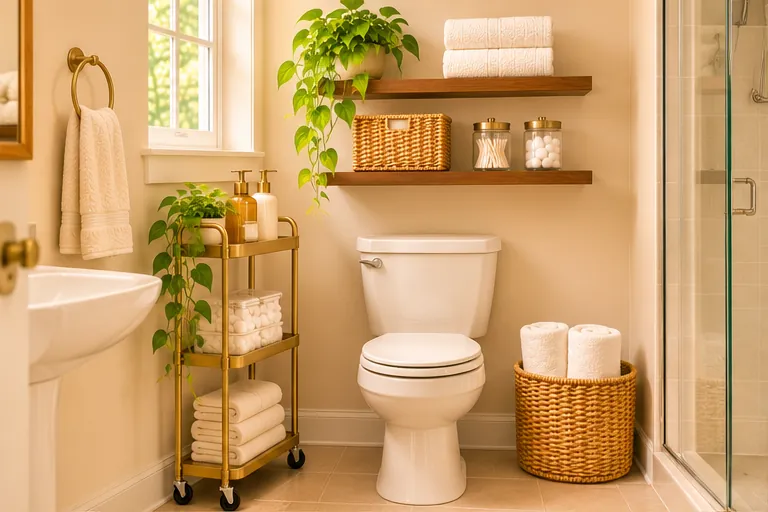
Map the space where people actually move
Measure the bathroom with doors, drawers, and the shower enclosure in their open positions. A cabinet can fit between two walls and still block a door, a towel reach, or a person turning around. Use a sheet of paper or painter’s tape on the floor to mark the proposed footprint, then practice using the sink, toilet, and shower.
Measure the tightest usable point rather than the widest-looking gap. Record the baseboard projection, vanity overhang, pipes, outlet locations, and any floor slope. An advertised product width may not include handles, feet, or drawer pulls.
Do not narrow a required access route or block safety equipment. If accessibility or permitted clearances are relevant, use the applicable local building requirements instead of relying on a generic decorating rule.
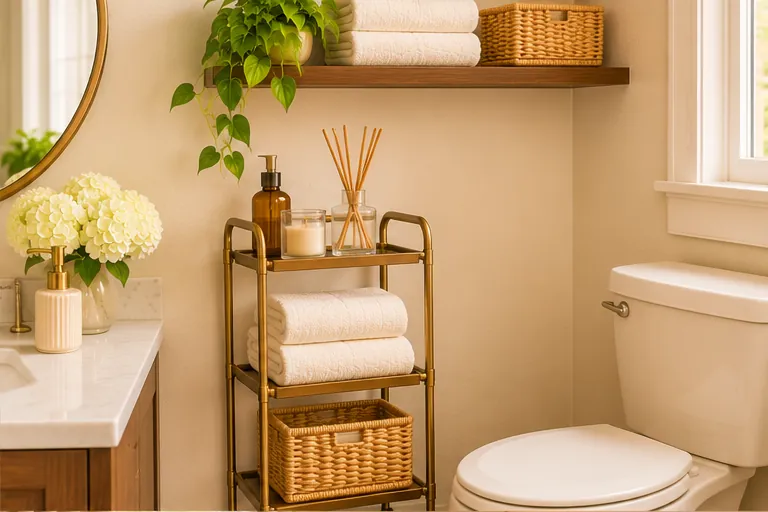
Decide what truly belongs in this bathroom
Sort objects into daily essentials, occasional supplies, cleaning supplies, and things that would be better stored elsewhere. In a very small room, a month of extra toiletries may take up the only easy-to-reach space. Keep a small daily kit at eye or hand level and move backups to a dry, reachable location if possible.
Try a no-buy reset: remove duplicates, place a small washable container inside the vanity, and hang only the towels used frequently. Notice what still has no reliable home after a week. That missing function—not the room’s visual style—should define the shopping list.
Preserve safe storage of medicines and chemicals as directed on their labels, including storage away from children when appropriate; a decorative open shelf is not automatically safe for every item.
Compare a narrow cart, a cabinet, and a wall shelf
Slim rolling cart: Useful for light, regularly accessed items where floors are smooth, dry, and unobstructed. It is often a poor choice across raised thresholds, uneven tile, or routes where someone may bump into it. Check wheel locks and stability; a cart on wheels is not a grab bar.
Freestanding cabinet: Useful when you need concealed storage and cannot mount shelves. But doors and drawers require swing room, tall units can tip, and particleboard edges may suffer in damp areas. Assess manufacturer anchoring requirements and how easily the floor below can be cleaned.
Wall shelves or a medicine cabinet: Can free floor area while keeping daily objects visible. The tradeoffs are drilling, wall material, fastener selection, reach, and moisture exposure. A shelf’s published capacity applies only under its stated mounting conditions.
12 small bathroom storage ideas, by where the space is
Once you know what needs a home, look for unused space in this order: walls first, then inside cabinets, then the floor. Each idea links to a guide with the measurements to check.
- Over the toilet. A freestanding rack needs no drilling; a wall cabinet keeps the floor clear. Leave room to lift the tank lid. See over the toilet storage.
- Shallow wall shelves. Shelves 4 to 8 inches deep hold toiletries without crowding the walkway. See bathroom shelves.
- A medicine cabinet. Recessed cabinets save space but need a suitable wall cavity; surface-mounted ones are simpler to fit. See how to choose a medicine cabinet.
- Behind the door. Hooks for robes and towels use space that is otherwise empty, if the door still opens fully. See bathroom towel storage ideas.
- Vanity drawers. Dividers stop small items sliding into a jumble; measure around any plumbing cut-outs. See bathroom drawer organizers.
- Under the sink. Work around the trap and keep shutoff valves reachable; stackable bins or a two-tier unit can double the usable floor. See under sink organization ideas.
- The shower. Use an existing niche well before adding a caddy, and compare a corner shelf with a hanging caddy. See shower niche ideas and shower storage ideas.
- One countertop tray. A single tray corrals daily items and lifts in one move for cleaning. See our Bathroom Countertop Trays: Materials, Fit and Splash Zones.
- A slim cart in a gap. A narrow gap beside the toilet or vanity can take a rolling cart for light items, on a smooth, dry floor with wheel locks.
- A slim cabinet. A shallow cabinet adds closed storage where shelves would look cluttered; anchor tall units. See our Narrow Bathroom Cabinets: Measure Before You Buy.
- Skincare and hair tools. Give them their own small containers so they do not take over the counter. See skincare organizers and hair tool organizers.
- Store backups somewhere else. Spare towels and bulk toiletries often fit better in a hall or linen closet. See linen closet organization ideas.
Treat moisture as a buying criterion, not an afterthought
If condensation regularly collects on the mirror or walls, fix ventilation and moisture sources before enclosing more belongings. The EPA advises ventilation and moisture control to help prevent mold. A storage product will not cure a humidity problem.
Compare exposed edges, hardware, and ease of wiping surfaces; inspect the actual retailer specifications instead of assuming that “bathroom style” means waterproof. Keep paper goods and products with moisture-sensitive packaging out of splash zones.
Choose a cabinet that lets you inspect and clean behind it. A unit perfectly fitted against every surface may leave hidden damp areas that are difficult to discover.
Run the purchase test before choosing a finish
Write down the object dimensions, the clear door swing, the storage you need, and where a person will stand to open it. Sketch the path from sink to door. Ask whether the new piece creates more useful access than its footprint takes away.
If wall mounting is involved, read the installation instructions and confirm wall structure; seek appropriate professional advice when needed. For tall freestanding furniture, follow the maker’s anti-tip instructions and CPSC furniture-anchoring guidance.
Use My Room Project for measurements and Before You Buy to verify the seller, delivery details, and return conditions. Skip the purchase if the taped outline already feels crowded.
Products to compare
As an Amazon Associate I earn from qualifying purchases. These are related options from our buyer-guide research, not hands-on tested rankings. Check current listing details, fit and availability before ordering.
- Kitsure Over Toilet Storage Rack, 63.2"H Space-Saving, Holder & Hooks — Kitsure's 63.2-inch over-toilet rack includes a holder and hooks; measure tank and lid clearance before buying. View on Amazon (paid link).
- VASAGLE Small Storage Corner Floor Cabinet with Door, Cloud White — VASAGLE's cloud-white corner floor cabinet uses a corner footprint for enclosed bathroom storage. View on Amazon (paid link).
- Narrow Bathroom Storage Cabinet with 2 Doors and Shelves, 9.8" W Small Storage Cabinet for Toilet Paper… — At 9.8 inches wide, this narrow two-door bathroom cabinet is intended for gaps beside a toilet or vanity. View on Amazon (paid link).
See the complete buyer guide for more options and fit checks.
Frequently asked questions
Practical answers about small bathroom storage ideas, fit and everyday use.
Can over-toilet storage fit every bathroom?
No. Measure toilet height, tank access, wall clearance and floor space, including baseboards. Check anchoring requirements and maintain access for cleaning and repairs.
What bathroom cabinet organizers work best?
Stackable bins and small turntables for under the sink, drawer dividers for vanity drawers, and shallow shelves inside tall cabinets.
What is the best storage for a very narrow bathroom?
Start with door swings and walking space, then compare a slim cabinet or wall storage against a no-purchase reorganization. The best option leaves everyday movement and cleaning unobstructed.
Are rolling storage carts good for bathrooms?
They can work for light items on a smooth, dry floor, but check wheel locks, stability, thresholds, and whether they obstruct an access route.
Is bathroom storage furniture waterproof?
Not necessarily. Check the manufacturer’s exact material and care instructions, and address recurring moisture or ventilation issues before buying.
How can small bathroom storage survive daily splashes?
Place moisture-tolerant, easy-to-clean items in splash zones and move paper, spare linens and electronics farther from water.
Should a bathroom storage cabinet hide the toilet shutoff?
No. Leave the shutoff valve and plumbing access visible and reachable; a cabinet that blocks repairs creates a bigger problem than clutter.
Sources and further reading
These sources support general safety and moisture guidance, not endorsements of products. No retail item has been independently tested for this guide.
Independent educational guidance, not a product review. Confirm exact model specifications, installation requirements, and store policies before purchase. Disclosure.