Practical How-To / Family rooms
Playroom Organization Ideas: A Playroom Children Can Help Reset
A playroom works better when children can find one activity, play safely and help put it away. Make the reset simple enough to repeat, not decorative enough for a photograph.
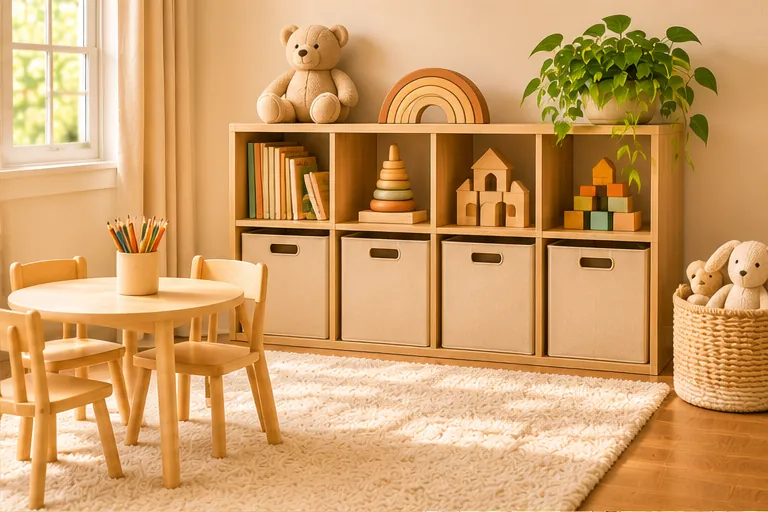
1. Check age, hazards and who uses the room
Before choosing containers, list the ages and needs of children who use the space. Separate anything with small parts that could be hazardous to younger children and follow the manufacturer's labeled age recommendations. Toys used by older siblings should not automatically remain accessible to toddlers; small detached pieces, marbles and similar objects are especially important to assess.
Walk the room at a child's eye level. Look for tip-prone furniture, unsecured televisions, cords, loose batteries, window coverings, sharp corners and cluttered exits. Keep supervision appropriate for each child and activity. The CPSC publishes toy small-parts guidance and a furniture tip-over prevention program; use them rather than relying on a storage product's marketing claims.
2. Keep visible categories small
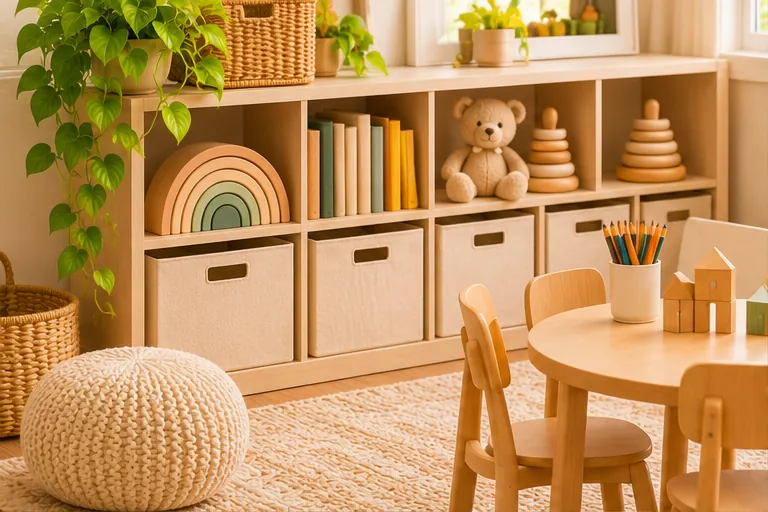
Choose a few broad toy groups that fit the way children play: building pieces, pretend-play objects, books, art materials and larger movement toys. Count what is currently used rather than assigning a separate box to every toy. Put out a modest, manageable selection and store extra sets safely for rotation; avoid using a toy's size as the sole rule for whether it is suitable for a child.
Use labels children can understand, such as a simple picture paired with a word. You can draw the labels on paper or use existing folders instead of purchasing printed decals. Closed containers may keep dust out but can hide what is inside; open ones can invite dumping. Try both with containers already available, and make sure any box does not create an entrapment or lid hazard.
3. Position heavy and daily items safely
Keep everyday approved toys where the intended child can reach without climbing. Heavy toys and larger bins belong lower, while adult-supervised supplies should stay securely out of reach. Tall shelving, dressers or other tip-prone furniture require the manufacturer's recommended anchoring, even if you plan to store only light toys on them. A low shelf is not automatically safe merely because it is low.
Leave clear paths between the entrance, play surface and seating. Avoid bags with long loose straps, dangling cords, unstable stacks and anything that blocks the door. Place washable activity surfaces where cleanup is practical, but check that rugs or mats lie flat and do not become trip hazards. A playroom may need different arrangements as children grow.
4. Teach a three-minute reset by demonstration
Invite children to choose one category at a time, bring it to a defined play area and return it before starting the next activity. Show where each category belongs; don't expect a young child to decode an elaborate organizing system. Model the process together, then gradually reduce help as the child becomes capable. The goal is a repeatable habit, not perfect independence.
Try one short song-free timer or a simple 'books away, blocks away, floor clear' sequence. Adjust the number of available toys if putting them away takes too many steps. Keep tiny loose pieces away from children who should not use them. Avoid turning clean-up into a race that encourages throwing hard objects or climbing to reach storage.
5. Evaluate the setup after a week
Watch which categories reliably return home and which spread across the floor. If a toy set becomes hard to put away, perhaps its container is too small or its storage spot is too far from where it is used. Revise the layout with the furniture on hand before buying another organizer. Rotate the available selection only when the stored toys can be kept safely.
Before purchasing storage, check the exact dimensions, product age guidance, closure hazards, anchoring instructions, cleaning needs and return terms. Our toy storage buyer guide explains container tradeoffs; this project focuses on teaching the routine. Save room measurements in My Room Project.
Products to compare
As an Amazon Associate I earn from qualifying purchases. These are related options from our buyer-guide research, not hands-on tested rankings. Check current listing details, fit and availability before ordering.
- LEGO Storage Brick 4 green 5.6L — The green LEGO Storage Brick 4 holds 5.6 liters and adds brick-shaped storage to the playroom. View on Amazon (paid link).
- 16L organizers and lego storage box removable tray — This 16-liter brick-storage box includes a removable tray, letting smaller pieces be separated from the larger compartment. View on Amazon (paid link).
- Stackable Brick Sorter & Sifter — Stackable brick sorter and sifter trays help group toy bricks by size rather than mixing all pieces in one bin. View on Amazon (paid link).
See the complete buyer guide for more options and fit checks.
Frequently asked questions
Practical answers about playroom organization ideas, fit and everyday use.
How do I make playroom cleanup easier for children?
Use a small number of clearly labeled, reachable containers for broad toy categories. Rotate excess toys and secure furniture as directed.
How many toy categories should I create?
Start with just a few groups a child can recognize; subdivide only if the routine becomes easier.
Are cube shelves always safe for children?
No. Check the specific manufacturer instructions and tip-over risk; anchor tip-prone furniture as directed.
Can older children’s toys share the same shelves as toddler toys?
Keep small parts and other age-inappropriate items secured away from younger children; follow labeled age guidance.
What belongs in a playroom calm-down corner?
Use a small, uncluttered area with soft age-appropriate items and no heavy unsecured furniture or dangling cords.
How do I keep tiny toy parts separate from toddler toys?
Store age-inappropriate small pieces in secured upper storage and follow toy age labels and choking-hazard warnings.
Sources and further reading
These sources support general planning and safety guidance, not any retail-product endorsement.
Independent educational guidance, not a hands-on product test. Check official safety information, manufacturer instructions, local requirements, and current retailer policies as applicable. Affiliate disclosure.