Buying advice / Family & Playrooms
Toy Storage Ideas: Bins, Cubes, or Shelving That Children Can Use Safely
Toy storage works only if children can find their things, put them away and move safely through the room.
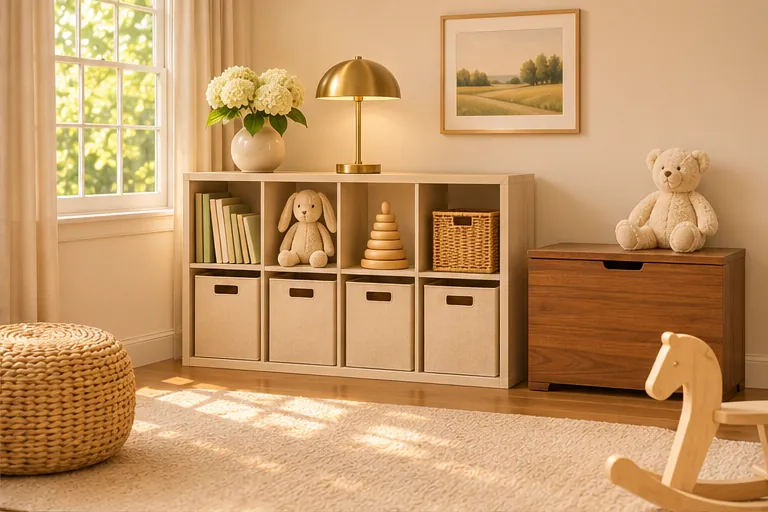
Start with the play pattern, not the furniture
Watch where toys actually get used during a normal week. Separate large wheeled toys, small construction pieces, art materials, stuffed animals and books. A giant mixed bin may make cleanup look fast, but small parts settle at the bottom and everyone dumps the whole container to find one item.
Choose a short list of toy categories and note which ones need adult supervision. Store tiny pieces, batteries, magnets, sharp craft tools and other age-inappropriate items according to their hazards and the children in the home. For young children, clear pictures paired with simple labels are usually more useful than decorative handwriting.
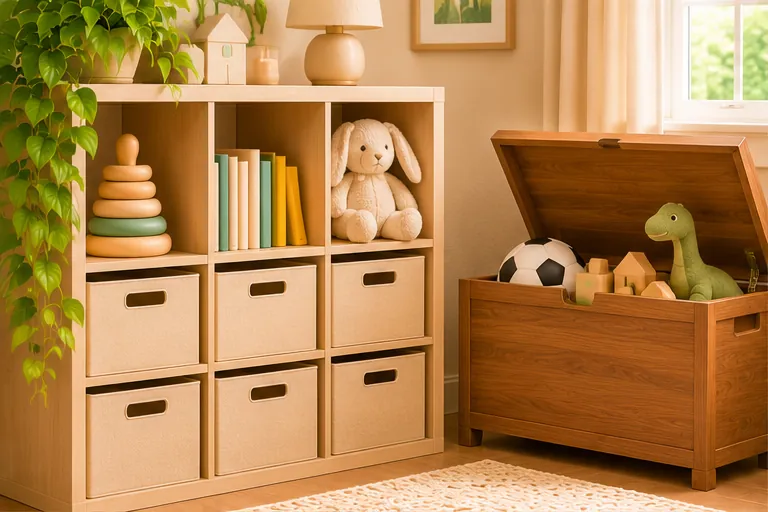
Check reach, bin weight and safe lifting
Measure the child’s comfortable access height while standing and sitting; do not assume every low-looking shelf is reachable once bins are packed. Use a cardboard box or an existing basket to test whether a child can pick it up and return it without lifting it overhead. Keep large or heavy containers low and avoid lid designs that could trap fingers.
Measure the intended cubby opening and the bin’s usable inside dimensions. A basket may slide into a cube but have too little opening to reach blocks. Test whether handles are secure, edges are smooth and the bin can sit on the floor without tipping. A fabric bin is not automatically safer: frame components and stitching also warrant inspection.
Compare bins, cube units and closed cabinets
Floor-level bins suit larger soft toys and may be inexpensive to rearrange. Cubes provide visible categories and more vertical capacity, but the furniture itself may require anchoring. Open shelves display books and favorite objects while also inviting climbing; keep tempting items off tall furniture.
Closed cabinets reduce visual clutter but their doors, hinges and heavy drawers introduce additional pinch and tip-over considerations. Read all instructions and warnings for a particular unit rather than assuming a generic cube organizer is child-safe. Check for recalls on the exact model and review assembly hardware before use.
Treat furniture anchoring as a requirement, not an option
The U.S. Consumer Product Safety Commission emphasizes anchoring furniture with drawers, doors and shelves to prevent tip-over injuries and deaths. Especially where children are present, follow the manufacturer’s approved anchoring instructions and use suitable hardware for the actual wall structure. Never encourage children to climb storage furniture.
Do not place favorite toys on top of a tall bookcase or cabinet. Ensure any wall installation avoids hidden utilities and is completed correctly. If anchoring is prohibited by a lease, consult the landlord about a safe installation or choose truly floor-level alternatives that do not create an unsafe unanchored tower. No organizer substitutes for child supervision or age-appropriate product selection.
Test a rotation system before buying more storage
Move seldom-used toys into a safe, supervised reserve area and leave only the toys that can be put away easily in the play zone. Reassess after two weeks; the issue may be volume rather than missing furniture. Use boxes you already own as trial categories and label them with words and pictures.
If purchasing, compare exact assembled dimensions, interior openings, weight and shelf ratings, supplied anchoring system, recall status, return conditions and whether replacement bins will remain available. Save the play-area and doorway measurements in My Room Project. The buyer checklist will help document unanswered questions before checkout.
Products to compare
As an Amazon Associate I earn from qualifying purchases. These are related options from our buyer-guide research, not hands-on tested rankings. Check current listing details, fit and availability before ordering.
- LEGO Storage Brick 4 green 5.6L — The green LEGO Storage Brick 4 holds 5.6 liters and adds brick-shaped storage to the playroom. View on Amazon (paid link).
- 16L organizers and lego storage box removable tray — This 16-liter brick-storage box includes a removable tray, letting smaller pieces be separated from the larger compartment. View on Amazon (paid link).
- Stackable Brick Sorter & Sifter — Stackable brick sorter and sifter trays help group toy bricks by size rather than mixing all pieces in one bin. View on Amazon (paid link).
See the complete buyer guide for more options and fit checks.
Frequently asked questions
Practical answers about toy storage ideas, fit and everyday use.
What toy storage is easiest for children to use independently?
Choose reachable containers with simple openings and labels that match broad categories. Follow age guidance, avoid unsafe lids and secure furniture as instructed.
What are good living room toys storage ideas?
Low baskets or a cube unit with fabric bins hides toys quickly; keep only a small rotation of toys out and store the rest elsewhere.
What is better for toddlers: bins or shelves?
Low, accessible storage can help, but safety depends on the exact product, age, contents and installation. Anchor furniture as instructed and keep hazards out of reach.
Do cube organizers need to be anchored?
Follow the model’s manufacturer instructions and CPSC tip-over guidance; do not assume a freestanding cube unit is safe because it is short or wide.
How can I reduce toy clutter without buying furniture?
Sort by type, remove broken or outgrown items, rotate some toys and trial labeled existing boxes before purchasing anything.
Are clear toy bins better for children than opaque bins?
Clear bins show contents but can display clutter. Large picture labels on opaque bins may work better for younger children.
How should I organize toys with missing pieces?
Create a small temporary parts container and review it regularly rather than scattering unidentifiable pieces across every bin.
Sources and further reading
These sources inform general planning and safety, not the performance of any specific retail item.
Independent educational guidance, not a hands-on product test. Verify exact-model specifications, mounting instructions, load limits, delivery and retailer policies before purchase. Affiliate disclosure.