Buying advice / Pantry
Walk-In Pantry Ideas: Layouts, Aisle Width, and Shelf Depth That Work
A walk-in pantry works when you can step in, see everything and reach it without moving three things first. Size the aisle and the shelf depth before you think about bins or labels.
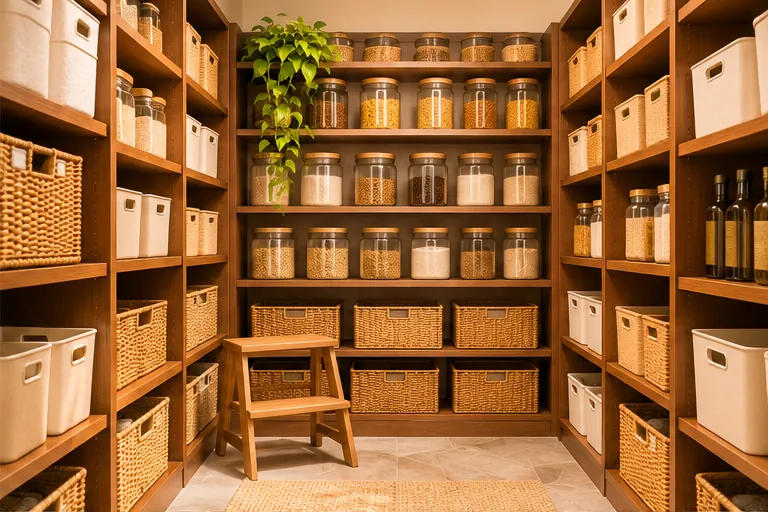
Check the size you really have
Measure the floor inside the door, the door swing, and the ceiling height. Common guidance treats about 5 feet by 5 feet as the minimum for a walk-in pantry, which leaves room for shelves and a 30- to 36-inch center aisle. A smaller closet can still be a very good reach-in pantry; it just needs a different plan.
If more than one person uses the pantry at once, or someone uses a step stool or wheelchair, plan a wider aisle. Planning references suggest at least 48 inches for extra accessibility, and about 60 inches of clear space for wheelchair use.
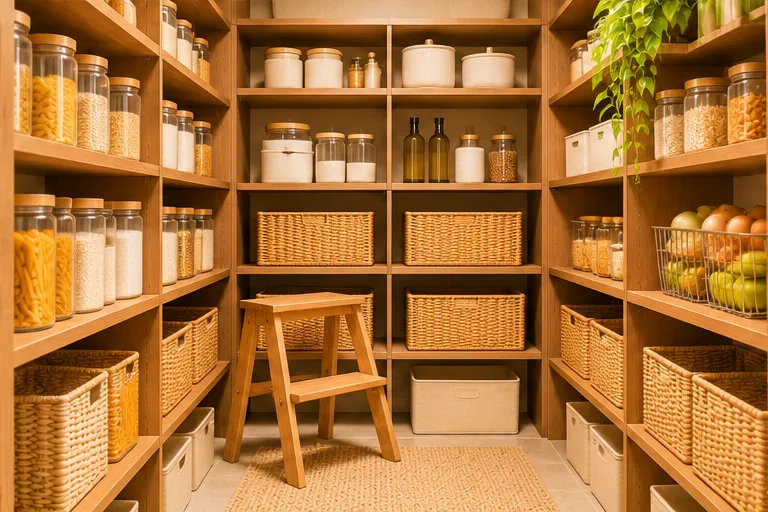
Choose a layout: U, L, or two walls
U-shaped shelving on three walls gives the most storage and suits roughly square pantries. L-shaped shelving on two adjoining walls leaves one wall free for a door swing, a step stool or a freestanding cart. Two facing walls with a center aisle suit long, narrow rooms.
Corners are the weak spot in U and L layouts: items in the back corner are hard to see. Use that corner for bulk backups, or fit a turntable. Our guide to a lazy susan for cabinets covers round and rectangular options.
Keep shelves shallow enough to see
Deep shelves hide food. One planning reference puts the ideal pantry shelf depth at about 14 inches, because shelves that are too deep make items at the back hard to reach. Cans and jars rarely need more than 12 inches. A deeper bottom shelf, 16 to 20 inches, can hold small appliances, bulk bags or a step stool.
Remember that shelf depth comes out of the aisle. With 14-inch shelves on two facing walls, the room must be several inches wider than the aisle you want. Measure from wall to wall, subtract both shelf depths, and check what is left.
Zone by how you cook
Put everyday items between waist and shoulder height closest to the door: breakfast, snacks, oils and spices you reach for daily. Heavy items such as bottled water and flour bins belong low. Seasonal baking, party supplies and backups go high, where the top shelf's reach is often around 69 to 76 inches.
Group by use, not by package type. A baking zone, a breakfast zone and a dinner-starters zone are easier to restock than one shelf of all cans. Our pantry layout ideas and small pantry organization ideas go further.
Add organizers last
Before buying bins, live with the zones for a week. Then add only what solves a real problem: shelf risers for cans you cannot see, clear bins for loose packets, baskets for produce that needs air. Compare formats in pantry baskets, bins, or shelf risers.
Good lighting matters more than people expect. A dark back corner wastes shelf space. If you add a light, keep wiring work to a licensed electrician.
Products to compare
As an Amazon Associate I earn from qualifying purchases. These are related options from our buyer-guide research, not hands-on tested rankings. Check current listing details, fit and availability before ordering.
- Vtopmart 8 Pack Food Storage Organizer Bins, Clear Plastic, 4 Compartments — Eight Vtopmart clear plastic bins with four compartments help separate small packaged foods within visible storage zones. View on Amazon (paid link).
- Kitchen Details 3 Tier Can Organizer — Kitchen Details' three-tier can organizer dedicates a stepped storage area to canned goods; check can sizes. View on Amazon (paid link).
- 12 PACK Multi-Use Clear Storage Bins, Pantry Kitchen Cabinet Organizer Bins — Twelve multipurpose clear storage bins provide enough separate containers to establish multiple pantry categories. View on Amazon (paid link).
See the complete buyer guide for more options and fit checks.
Frequently asked questions
Practical answers about walk in pantry ideas, fit and everyday use.
How do I decide between U-shaped and L-shaped pantry shelving?
Measure the room, doorway and clear aisle with shelves in place. Choose the configuration that allows comfortable access to corners and avoids shelving that blocks movement.
What is the minimum size for a walk-in pantry?
About 5 by 5 feet is commonly suggested, allowing shelves and a 30- to 36-inch aisle.
How wide should a walk-in pantry aisle be?
30 to 36 inches for one person; 48 inches or more for two people, step stools or extra access; about 60 inches for wheelchair use.
How deep should pantry shelves be?
About 14 inches is a common recommendation; 12 inches suits cans and jars, deeper bottom shelves suit appliances.
What is the best walk-in pantry layout?
U-shaped for square rooms, L-shaped when one wall is needed for a door or cart, two facing walls for narrow rooms.
Where should heavy items go in a pantry?
On low shelves or the floor, so you are not lifting them overhead.
Sources and further reading
These sources inform general planning and safety guidance; they do not verify a particular retail product.
Independent educational guidance, not a hands-on product test. Verify exact-model specifications, materials, mounting requirements, delivery and return rules before purchase. Affiliate disclosure.