Educational Comparison / Kitchen Open Shelving
Open Shelving Kitchen Ideas: Open Shelves vs. Upper Cabinets
Compare kitchen storage visibility, cleaning, reach and installation before trading cabinets for open shelves.
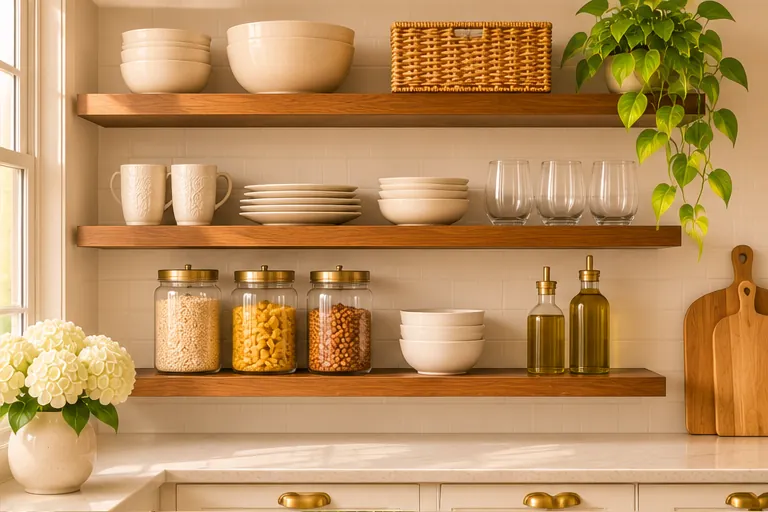
Shop this guide
Products to consider
As an Amazon Associate I earn from qualifying purchases. Product illustrations are representative; check Amazon for actual photos, sizes and current details before you buy.
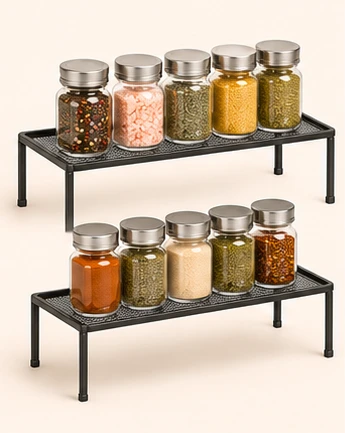
SONGMICS Cabinet Organizer Shelf, Set of 2 Spice Rack, Kitchen Storage
Two SONGMICS cabinet shelves provide additional levels for grouping seasonings or small kitchen items.
View on Amazon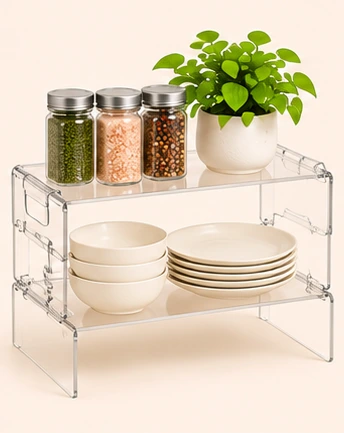
2 Pcs Cabinet Organizer Shelf, Stackable Kitchen Counter Shelves, Spice Rack,Countertop Organizers, Clear…
Two stackable clear cabinet risers add another usable level for small supplies or seasoning jars.
View on Amazon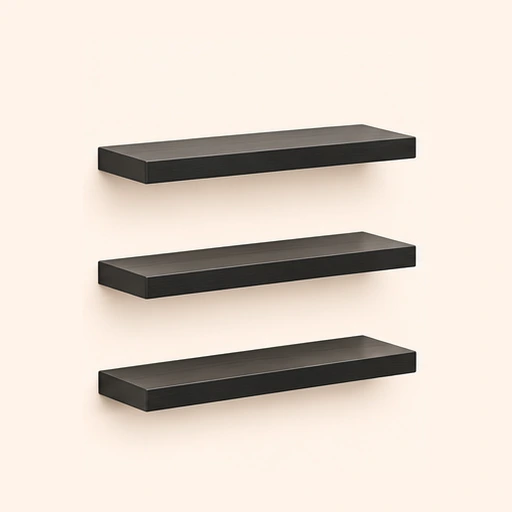
BAYKA Black Floating Shelves 15.7in, Set of 3, Wall Mount Wood Shelf
BAYKA's three black wood shelves are listed at 15.7 inches, offering a matching set for a compact wall display.
View on Amazon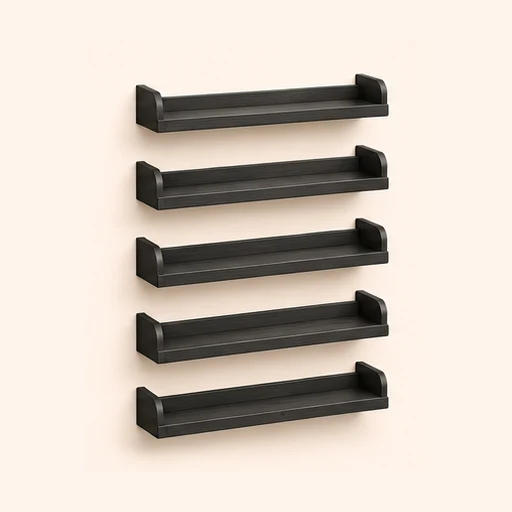
RICHER HOUSE 5-Set Floating Shelves with Lip, Black Wall Mounted Wood Shelf
RICHER HOUSE's five black wood shelves feature a raised lip that helps define the front edge of a display.
View on AmazonThe main trade-off is exposure versus enclosure
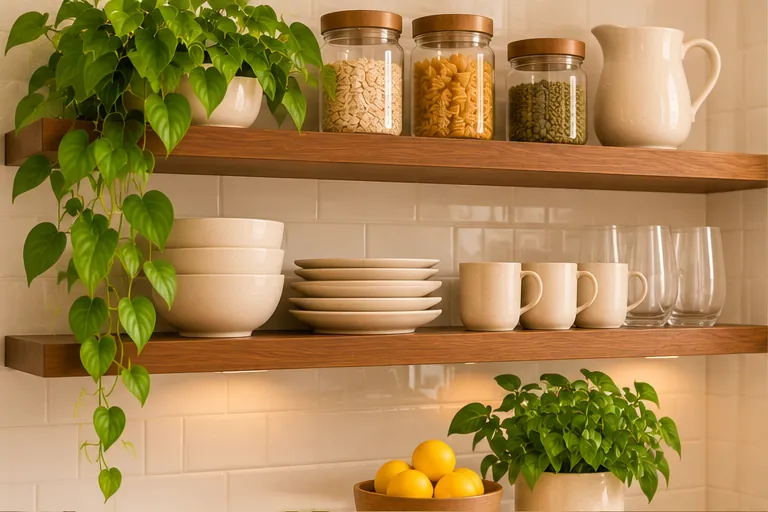
Open shelves place plates, jars and everyday tools in view. Upper cabinets keep many items out of sight and shield them from everyday cooking dust and splashes. A shelf can make a wall feel visually open, but it also asks you to curate what remains visible. Cabinet doors may make a kitchen look more continuous, yet they require door clearance and may conceal hard-to-reach contents.
The right answer is not determined by kitchen size alone. Think about what you store: everyday mugs and sturdy dishes are different from irregular packaged foods, cleaning supplies or rarely used equipment. A single open run often works better than removing every cabinet, especially if pantry space is already scarce.
Measure usable capacity, not a photograph
Measure the cabinet’s true interior width, depth and shelf spacing. Then sketch open shelves with the wall brackets and the gap needed to lift the tallest item safely. The shelf board's advertised depth is not automatically usable to the edge, and brackets or rails may reduce functional space. For cabinets, account for interior partitions, hinges and any inaccessible corners.
Set representative dishes and packages on a table to estimate the width of real storage groups. Avoid equating one stylish shelf photo with the amount of storage a full-depth cabinet previously provided. Check the rated load for the complete shelf-and-fastener system and the actual wall construction, not just a shelf-board material description.
Cooking residue and cleaning reality
Open shelves near a cooktop can accumulate grease and airborne residue. Items on those shelves may need more frequent wiping or washing. Cabinet fronts also need cleaning, but the interiors generally receive less direct airborne kitchen grime when doors are closed. Keep cleaning chemicals apart from food preparation tools and follow food-safe storage practices.
If you hate wiping every jar or lifting plates just to dust behind them, open shelves may be a poor fit for that zone. Try a temporary arrangement on an existing accessible shelf and observe the cleaning burden for two weeks before altering fixed cabinetry.
Access, installation and household needs
Open shelves remove the need to open a door, but a high shelf remains difficult to reach and may tempt climbing. Cabinets can include adjustable shelves and concealed storage; however, wide door swings can collide with a person or appliance. Neither option should block appliance ventilation, plumbing shutoffs or safe operating clearances.
Removing upper cabinets may reveal damaged finishes, electrical runs or conditions needing professional attention. Even a seemingly simple wall shelf needs appropriate fixing to structural support and a manufacturer-rated installation method. In a rental, alterations may not be permitted. A low-risk alternative is simply to remove some rarely used items from existing cabinets and make the everyday shelf easier to reach.
Which approach earns the space?
Prefer open shelves for a small, frequently used collection you are willing to keep clean and visible. Prefer upper cabinets for mixed supplies, irregular packaging and people who want less exposed clutter. Consider a hybrid arrangement for one attractive and convenient shelf without sacrificing all concealed storage.
List exactly what would move onto each shelf, measure the load and reach, and review installation risks before changing fixtures. Our wall-shelf selection guide covers hardware decisions, while kitchen task zoning helps decide what should live near each activity.
Frequently asked questions
Practical answers about open shelving kitchen ideas, fit and everyday use.
What should I store on open kitchen shelves?
Keep frequently used dishes or easy-to-clean items within comfortable reach. Avoid crowding shelves near grease and steam and respect mounting and load limits.
Do open shelves hold as much as cabinets?
Not necessarily. Compare the measured usable dimensions, shelf spacing and complete installed load rating rather than shelf length alone.
Are open shelves harder to clean?
They can be, particularly near cooking residue; the effect depends on location and usage.
Should I remove all my upper cabinets?
Test a small open area first; losing enclosed storage can be costly to reverse.
What is better for a rental kitchen: open shelves or upper cabinets?
Keep existing cabinets when possible. New open shelving may require wall attachment and lease approval, so test an existing shelf first.
Are open kitchen shelves a good place for glassware?
Only with secure mounting and stable placement. Keep frequently used breakables within easy reach rather than high above a cooking area.
Sources and verification
General public guidance is linked below. These sources do not verify particular products or installations.
Independent decision guide, not a firsthand test or professional installation plan. Check current manufacturer instructions and specific wall, electrical, plumbing and property conditions. Affiliate disclosure.